
Clean Form Nutrition Achieves NSF Certified for Sport® Certification with NNB Nutrition's Pürest Creatine™, Setting a New Benchmark for Creatine Purity
Source: PR Newswire
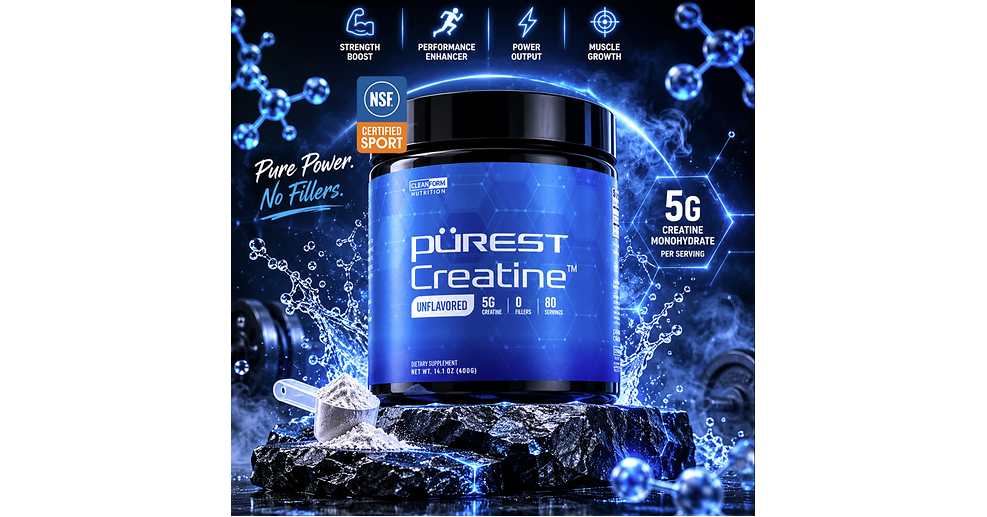
Clean Form Nutrition became the first brand to receive NSF Certified for Sport® finished-product certification for a product containing NNB Nutrition’s Pürest Creatine™, following the ingredient’s Informed Choice certification. Eurofins testing found DCD, DHT, and creatinine below quantification limits in all three tested Pürest lots; the premium comparator had measurable DCD and creatinine, while DHT was below the limit in both.
Analysis
The investable read-through is category economics, not a near-term earnings event for Eurofins Scientific (ERF). Third-party verification can help premium brands defend pricing and win athlete-sensitive distribution, while imposing testing, segregation, and documentation costs that are harder for low-price manufacturers to absorb. If brands adopt these standards broadly, certification providers and analytical-testing labs could see incremental demand; however, one product launch does not establish a material revenue contribution for ERF or a category-wide shift.
The evidence is narrower than the marketing conclusion: a small set of ingredient lots and a comparison against an unnamed competitor sample do not prove persistent supplier-level superiority or finished-product safety across production runs. The article is a company announcement, and the commercial impact of the certifications remains unverified. Finished-product certification may also be more valuable to athlete-focused niches than to mass-market creatine buyers, limiting industry-wide pricing power.
Near term, expect little fundamental impact absent disclosed customer wins or broader adoption. Over 1–3 months, watch for additional brands selecting certified ingredients and finished products, and for any repeat-order or volume evidence. Over 6–18 months, wider testing requirements could raise barriers to entry and favor suppliers with auditable quality systems. The thesis weakens if certification adoption remains isolated, consumers show no willingness to pay for verification, or subsequent testing fails to reproduce the reported purity results.
AllMind Terminal
AI-powered research, real-time alerts, and portfolio analytics for institutional investors.
Request TrialMarket Sentiment
Overall Sentiment
mildly positive
Sentiment Score
0.30
Ticker Sentiment
Key Decisions for Investors
- No trade in ERF on this announcement alone: the testing work is a possible demand signal, not evidence of a financially material contract. Reassess only with disclosed commercial scale, repeat business, or relevant segment commentary.
- Monitor premium sports-nutrition brands and certification uptake for evidence that verification supports pricing or distribution. Treat broader margin benefits as conditional until adoption and consumer willingness to pay are demonstrated.
- Use repeat-lot and finished-product testing, certification renewals, and brand/customer disclosures as falsification checks; a failure to reproduce results or limited adoption would undermine the premium-quality thesis.
More News
- South Korean carmaker Hyundai plans 'strategic' investment of $15.5 billion in India by 2032
- Applied Materials’ $5 billion AI lab aims to cut chip development time in half—and restore Silicon Valley’s edge
- Wells Fargo CFO on Earnings, Deals, Consumer Strength
- Bank of America hit with more than $1.2 billion in penalties over money-laundering violations
- Meta’s Muse models reach the AI frontier—and kill any hopes to ‘pace’ it
- Mainspring, AEP Strike Deal to Bring Power Online Faster
From AllMind Research
- Anthropic IPO Preview: Valuation, Timing, and What to Watch
- Shein After the IPO: Venue, Valuation, and What Must Be Proved
- What AI Research Tools Should a Small Hedge Fund Buy First?
- Can Hedge Funds Use ChatGPT? A Control Framework
- Palantir (PLTR) Q4 2025 Earnings: 70% Revenue Growth, Then an 11% Single-Day Crash