
Boeing selloff overdone despite CEO's production comments, BofA says
Source: proactiveinvestors.com
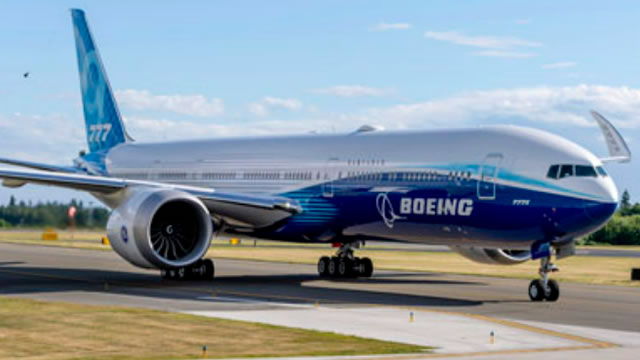
Boeing is on track to fall 6% for the week after CEO Kelly Ortberg cited persistent challenges ramping 737 and 787 production and announced a further delay in 777X certification. Bank of America characterized the selloff as overdone, arguing that Boeing's operational turnaround will be uneven rather than linear.
Analysis
The key equity issue is not another schedule revision; it is whether constrained delivery volume pushes Boeing’s free-cash-flow inflection beyond the market’s underwriting window. Each deferred 737 delivery delays high working-capital release, while widebody timing matters disproportionately because 787/777X mix drives margin recovery rather than merely revenue. A slower ramp also weakens Boeing’s negotiating position with airlines on escalation, compensation, and delivery-slot swaps, raising the risk that the eventual recovery carries lower-than-expected margins.
Airbus (AIR FP) is the clearest competitive beneficiary, but its own supply constraints cap near-term share capture; the more immediate beneficiary is Rolls-Royce (RR/ LN), where incremental A350 utilization and orders support aftermarket engine-hours economics. GE Aerospace (GE) is more mixed: delayed 737 MAX production constrains LEAP shipments and cash conversion, while 777X delays defer GE9X aftermarket annuity creation. Spirit AeroSystems exposure should be evaluated through the final integration and production-rate lens rather than as a standalone supplier trade; lower-than-planned narrowbody rates can create additional integration costs and inventory friction for BA.
Consensus may be too focused on certification headlines and insufficiently focused on liquidity durability. The bear case becomes materially worse only if lower deliveries force another capital raise, customer advances weaken, or management cannot demonstrate stable production quality for multiple consecutive months. Conversely, a credible monthly delivery cadence and unchanged medium-term FCF framework could re-rate BA quickly because the stock’s multiple is currently more sensitive to execution confidence than to a single program milestone.
Near term, avoid treating the selloff as automatically mean-reverting: order announcements are low-quality catalysts if delivery capacity remains the bottleneck. Over 1-3 months, monthly delivery data, supplier inventory trends, and any update on customer compensation are the relevant proof points. Over 6-18 months, the investable question is whether widebody and narrowbody ramps convert into positive FCF without incremental balance-sheet stress.
AllMind Terminal
AI-powered research, real-time alerts, and portfolio analytics for institutional investors.
Request TrialMarket Sentiment
Overall Sentiment
mildly negative
Sentiment Score
-0.32
Ticker Sentiment
Key Decisions for Investors
- Do not add outright BA exposure until monthly 737 delivery cadence shows at least two consecutive months of improvement and management reiterates a credible cash-flow path; use this as a watch-item rather than buying a headline-driven dip.
- For a 3-6 month relative-value expression, consider long AIR FP / short BA in equal beta-adjusted dollars. Airbus benefits from airline fleet-planning substitution while BA retains certification, production, and balance-sheet execution risk; exit if BA demonstrates sustained delivery improvement or Airbus announces a material production disruption.
- Prefer a small long RR/ LN position over a broad aerospace basket for a 6-18 month horizon, with the thesis tied to widebody substitution and installed-base utilization rather than Boeing-specific recovery. Key falsifier: deterioration in long-haul demand or airline deferrals that reduce engine flight-hour expectations.
- Maintain caution on GE until narrowbody engine shipment and spare-parts commentary confirms that Boeing-related volume pressure is offset by aftermarket pricing. A long GE / short BA pair is only attractive after confirming GE’s LEAP delivery exposure and current valuation spread; missing data on engine-production sensitivity prevents a firm recommendation today.
- Set a downside risk trigger on BA around any evidence of incremental equity/debt financing, rising customer-concession accruals, or another reduction in production-rate expectations; these would shift the debate from timing risk to structural FCF impairment and justify adding to the AIR FP / BA relative short.
More News
- 'Father Time Always Wins': Warren Buffett Steps Down as Berkshire Chairman After 56 Years
- BofA upgrades Equinor as higher gas prices boost cash flow outlook
- Warren Buffett’s road to investing glory
- Norwegian Cruise Line stock hits 52-week low at 14.18 USD
- GXO Logistics options sweep points to asymmetric bullish bet through January 2027
- Anthropic Is Expected to Go Public in October. The Brokerages Get Paid Either Way.
From AllMind Research
- Anthropic IPO Preview: Valuation, Timing, and What to Watch
- Shein After the IPO: Venue, Valuation, and What Must Be Proved
- What AI Research Tools Should a Small Hedge Fund Buy First?
- AI Research Systems for Hedge Funds: A Pilot Design
- Weekly Update: New Reporting Features, UI Improvements, and Chat Optimizations