
United Airlines: Higher Fares, Lower Profits, Still A 'Buy'
Source: seekingalpha.com
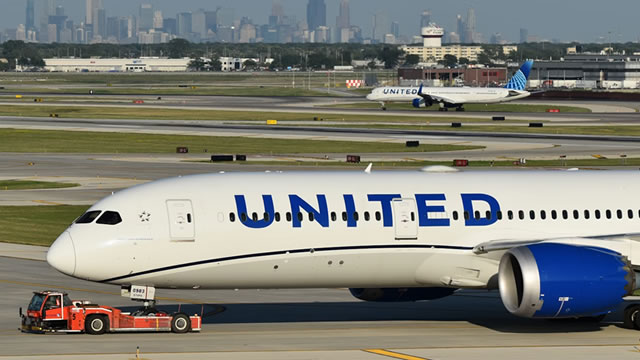
United Airlines' Q3 revenue is expected to rise 17.6% year over year, but EPS estimates have fallen 6.9% as elevated fuel costs and inflation outpace fare increases. Management has reduced capacity and ended Q2 with $19.6 billion in available liquidity; premium and loyalty revenues grew at double-digit rates. The article cites a Buy rating, alongside earnings-cost pressures.
Analysis
The key question is whether UAL can pass fuel and other cost inflation through before demand softens—not whether headline revenue grows. Capacity restraint could support industry fares and benefit carriers that keep seats disciplined; it also risks ceding share to competitors such as Delta Air Lines and American Airlines if their capacity response differs. UAL’s premium and loyalty mix may cushion weaker price-sensitive demand, but verify that growth converts into unit revenue and cash rather than relying on revenue growth alone.
Near term (days), the earnings setup is asymmetric: continued estimate cuts can overwhelm a strong revenue print if unit costs or fare realization disappoint. Over 1–3 months, watch management’s capacity plans, passenger unit revenue, and cost guidance alongside jet-fuel prices. Over 6–18 months, persistently high fuel and inflation would make capacity discipline and premium mix more important; liquidity is a buffer, not a substitute for operating margin recovery.
Contrarian angle: capacity cuts may be margin-protective rather than evidence of collapsing demand, but the market may over-credit them if competitors add seats or customers resist fare increases. No valuation or market-positioning data support a firm directional call. Falsify the cautious view if unit revenue holds up, cost growth moderates, and estimate revisions stabilize; strengthen it if costs keep outrunning fares or guidance weakens.
AllMind Terminal
AI-powered research, real-time alerts, and portfolio analytics for institutional investors.
Request TrialMarket Sentiment
Overall Sentiment
mixed
Sentiment Score
0.05
Ticker Sentiment
Key Decisions for Investors
- Do not chase the Buy rating ahead of Q3. Consider a small, defined-risk UAL call spread only after results if unit-revenue trends and cost guidance are stable and jet-fuel prices are easing; risk is limited to premium paid, with upside capped. Set strikes and sizing only after checking the live option market.
- For existing UAL longs, keep exposure sized for an earnings-related gap and avoid treating available liquidity as evidence that fuel pressure has passed. Reassess after the release against unit revenue, unit costs, and capacity guidance.
- Track Delta Air Lines and American Airlines capacity and fare trends as a read-through: if competitors add capacity while UAL trims, UAL may lose share without securing enough fare improvement to offset lower volume.
- Alert: verify Q3 unit-revenue and unit-cost disclosures, management’s fuel assumptions, and subsequent estimate revisions. A deterioration in unit revenue alongside persistent cost pressure would invalidate the capacity-discipline recovery thesis.
More News
- Major earnings reports are due next week, but strong results may not be enough to quell market fears
- Why did CoreWeave stock get crushed this week? Look to this corner of the debt market for clues
- AI stock sell-off ramps up over debt-fueled data center spending fears: ‘Full-blown crisis of confidence'
- Dow falls 189 points as AI stocks slide and oil prices surge
- Wall Street Anxiety Spreads as AI Rout Meets $110 Oil Shock
- Wall Street's fear gauge is ripping. Traders see it going even higher
From AllMind Research
- Anthropic IPO Preview: Valuation, Timing, and What to Watch
- Shein After the IPO: Venue, Valuation, and What Must Be Proved
- What AI Research Tools Should a Small Hedge Fund Buy First?
- Index and ETF Holdings Data for AI Research
- Capital Intensity as Gravity: The AI Trade Enters Its Industrial Era (Looking at Q3 2025 Earnings in Tech)