
ABEC lanza la plataforma ATB™-2100 para transformar la fabricación de terapias avanzadas
Source: PR Newswire
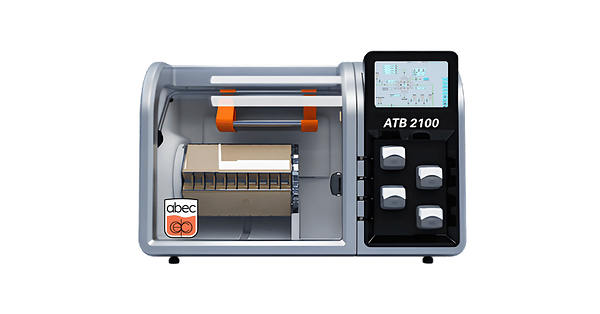
ABEC announced the commercial launch of its ATB™-2100 single-use bioreactor platform for advanced cell and gene therapies. The system is designed to scale processes from 200 ml to 10 l while maintaining a consistent membrane-surface-area-to-volume ratio; ABEC says this can reduce development timelines, technology-transfer risks, and time to market. The announcement provides no sales, adoption, or financial figures.
Analysis
Analysis — The investable signal is not the launch itself but whether ATB-2100 can move cell-therapy manufacturing economics from bespoke process development toward repeatable, transferable production. If customers validate the claimed scale continuity, the benefit could accrue to therapy developers through shorter process-transfer timelines and less manufacturing variability; for equipment suppliers, it would support a higher-value platform plus recurring single-use consumables. Those outcomes are conditional: the release provides no independent performance comparison, customer commitments, commercial installations, or evidence of improved cost per dose.
Competitive pressure would fall first on alternative cell-expansion platforms from suppliers such as Thermo Fisher Scientific, Cytiva, Sartorius, and Miltenyi Biotec, but adoption is likely process-specific rather than a wholesale equipment substitution. The 200 ml–10 l range may also leave a scale-out requirement for some commercial programs; if so, the bottleneck shifts to parallel operations, downstream processing, testing, and qualified consumables rather than disappearing. A closed single-use system can simplify operations while increasing dependence on validated disposable supply and potentially making consumables qualification a switching-cost issue.
Near term, this is a low-information product catalyst, not a basis for repricing broad biotech exposure. Over 1–3 months, seek named customer evaluations, GMP-relevant validation, reproducibility data, and orders. Over 6–18 months, the thesis strengthens only if deployments translate into better batch consistency or cost per dose. The contrarian risk is that manufacturing equipment is not the binding constraint: clinical efficacy, reimbursement, and therapy-specific process variability may still dominate commercialization.
AllMind Terminal
AI-powered research, real-time alerts, and portfolio analytics for institutional investors.
Request TrialMarket Sentiment
Overall Sentiment
mildly positive
Sentiment Score
0.30
Key Decisions for Investors
- No immediate directional trade: ABEC has no supplied public-market identity, and the announcement contains no independently verifiable adoption or financial impact.
- Set an equipment-supplier watchlist rather than buying the healthcare theme. Reassess Thermo Fisher Scientific, Cytiva, Sartorius, and Miltenyi Biotec exposure only if customer wins or displacement evidence emerges; do not infer a material earnings threat from this launch alone.
- Track customer names, installed systems, repeat orders, consumables attachment, GMP validation, batch-to-batch variability, and cost per dose. These are the missing indicators needed to distinguish a credible platform from promotional claims.
- Falsify the constructive thesis if validation shows process redesign is still required across scales, performance fails to reproduce across cell types, or commercial users need extensive parallelization that erodes the claimed time and cost advantages.
More News
- Magnificent 7 loses $1 trillion. The most eye-popping stats from Thursday's tech stock plunge
- Tech stocks are suffering their biggest selloff since Covid, as investors see premature end to AI datacenter boom
- Wall Street’s best post-midterm rally in 44 years lasted just one day—then $3 trillion vanished as chip stocks plunged over AI fears
- AI stocks plunge after election, driving down US markets
- Qualcomm slides 9% after earnings, leading post-election chip stock sell-off
- Shield AI To Hit $28.8 Billion Value With $5.3 Billion Radar Acquisition