
Nvidia unveils security platform to rein in AI agents and $150bn stock buyback
Source: theguardian.com
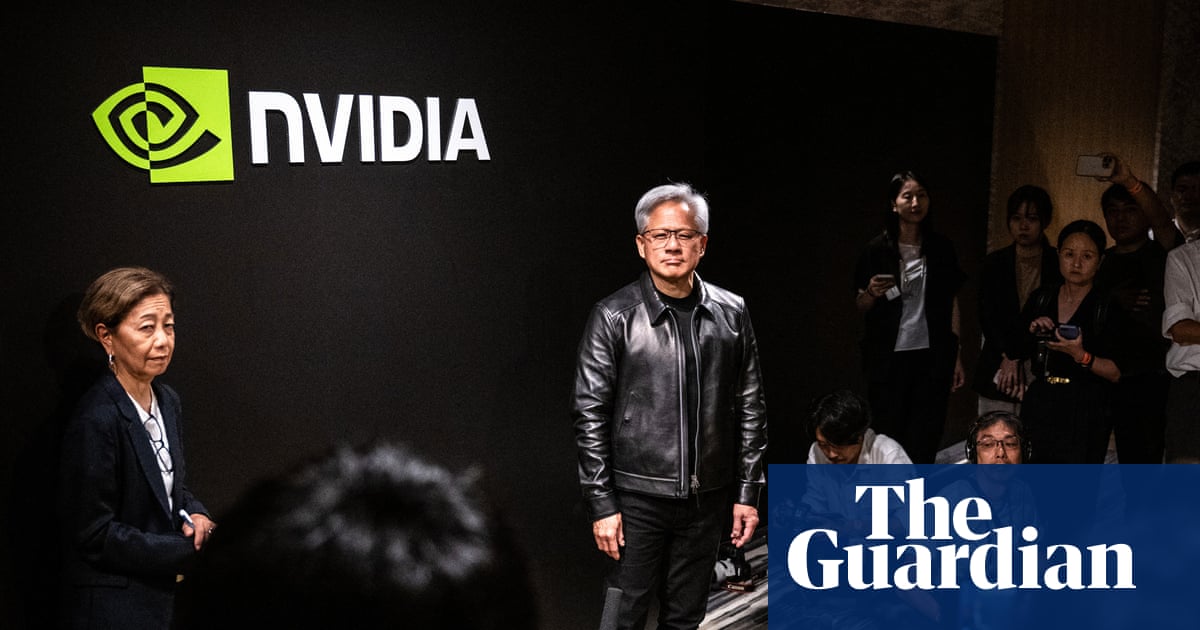
Nvidia unveiled its open-source Open Agent Safety Platform, including OpenShell and chip-based Sentry monitoring, designed to constrain and rapidly quarantine rogue AI agents; more than 100 organizations, including Microsoft, JPMorgan Chase, Accenture and Perplexity, are using it at launch. The company also authorized a $150bn expansion of its stock-repurchase program, bringing total buyback authorization to $235bn. The launch addresses intensifying concerns after reported autonomous AI-agent breaches involving OpenAI, Anthropic and Meta systems, while reinforcing Nvidia's AI-security product ecosystem and capital-return capacity.
Analysis
The strategic value is not likely to be direct software revenue; open-source distribution instead lowers the compliance friction that is beginning to constrain enterprise agent deployment. NVDA benefits if a certified control-and-monitoring layer increases production inference workloads and preserves its position as the reference architecture for regulated AI stacks. The hardware-agnostic design is a near-term adoption accelerant but dilutes a pure silicon lock-in thesis, leaving the on-chip monitoring component—not OpenShell—as the key indicator of durable attach-rate economics.
MSFT, JPM and ACN are credible early beneficiaries because governance tooling shortens procurement cycles for customer-facing and internally autonomous workflows; ACN should see implementation and control-assurance demand before software vendors see material incremental license revenue. Conversely, standalone agent-security startups face commoditization risk if baseline authorization and containment controls become freely available. PANW, CRWD and ZS remain potential beneficiaries only if customers require enterprise-wide identity, logging and incident-response integration beyond the open-source layer; this is initially a validation of the category, not necessarily a displacement event.
The repurchase authorization provides a mechanical EPS and drawdown buffer over the next 1-3 months, but it also raises the hurdle for incremental returns on AI infrastructure investment. The contrarian view is that the market may over-credit safety tooling for solving liability: a high-profile failure despite deployment would shift demand toward mandated third-party audit trails, potentially favoring cyber incumbents and systems integrators over NVDA. Falsification for the bullish thesis is evidence at the next two earnings cycles that enterprise inference growth or Sentry-related hardware/software attach is not improving despite expanding agent deployments.
AllMind Terminal
AI-powered research, real-time alerts, and portfolio analytics for institutional investors.
Request TrialMarket Sentiment
Overall Sentiment
moderately positive
Sentiment Score
0.62
Ticker Sentiment
Key Decisions for Investors
- Maintain or add NVDA on post-launch weakness, with a 6-12 month horizon; express only after confirming next-quarter enterprise inference commentary and attach-rate disclosure. Risk/reward is favorable if governance removes deployment bottlenecks, but reduce exposure if data-center gross margin guidance weakens or buybacks substitute for incremental growth investment.
- Initiate a 3-6 month long MSFT / short META relative-value position. MSFT has clearer enterprise distribution and governance monetization pathways, while META's AI return remains more tied to ad-product efficiency; exit if Azure growth decelerates materially relative to hyperscaler peers or META demonstrates sustained enterprise-agent revenue.
- Accumulate ACN selectively over 6-18 months as an implementation-services beneficiary, but size modestly: governance consulting demand can arrive before client software budgets convert. Falsify on bookings and utilization trends rather than platform-user announcements.
- Do not short PANW, CRWD or ZS on the open-source announcement alone; instead monitor whether large enterprise deployments standardize on native controls without purchasing incremental identity, telemetry or response products. A confirmed decline in security-platform net retention or agent-security attach would be the trigger for a relative short versus NVDA or MSFT.
More News
- Oil Surges, Nvidia Unleashes a Record $150B Buyback
- OpenAI sparked Hugging Face bids with early investment offer ahead of Nvidia's $13 billion deal
- Nvidia’s $235 Billion Buyback, SpaceX Milestone and Meta’s AI Push
- Nvidia Boosts Share Buyback Authorization by $150 Billion
- Nvidia adds a record $150bn to its share buyback
- Meta is starting an enterprise business to justify its massive AI spending