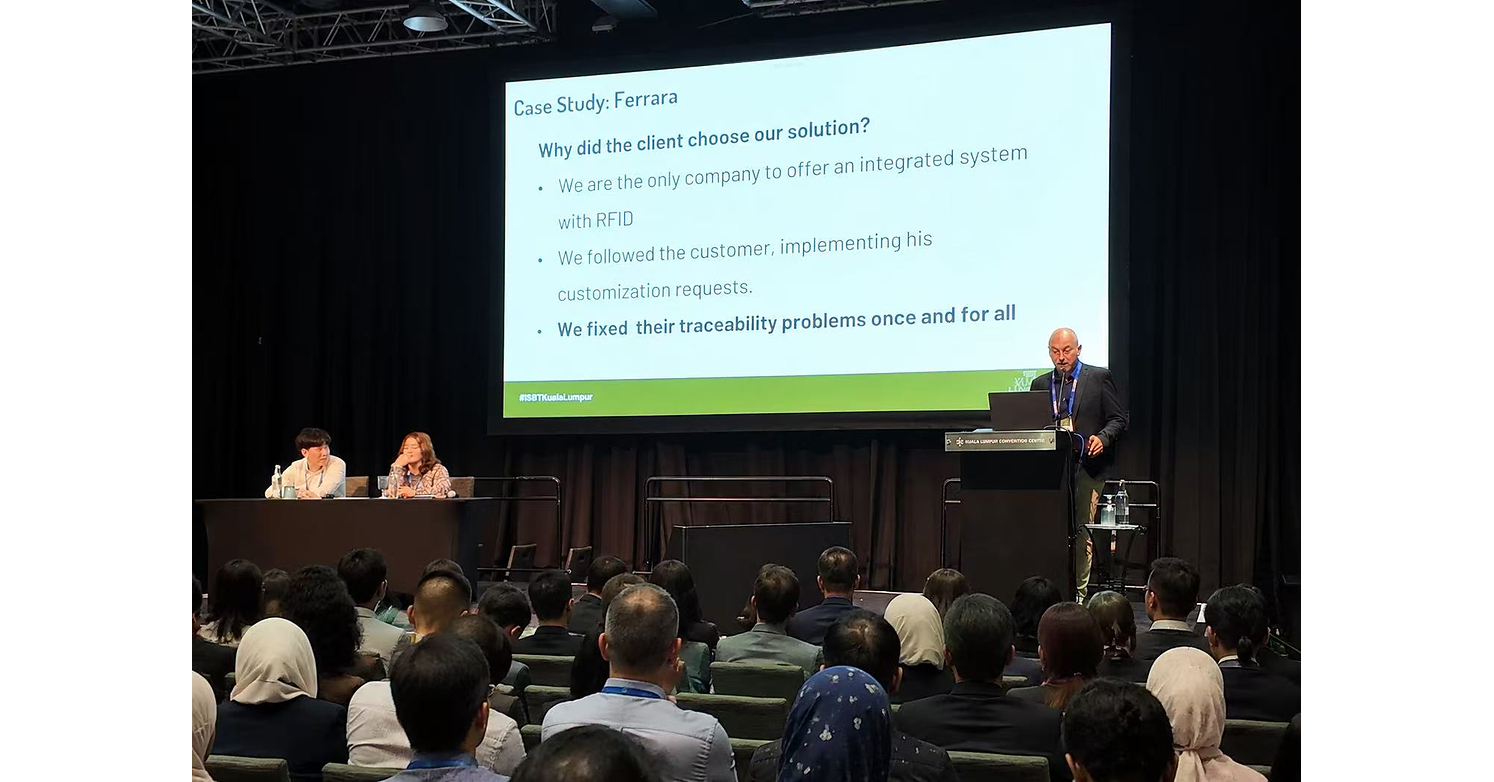
Haier Biomedical presentó en el congreso ISBT 2026 su plataforma digital U-Blood y una solución integrada de gestión de sangre basada en IA, automatización e IoT, con trazabilidad completa y localización instantánea de bolsas. En el Hospital Arcispedale Sant'Anna (Italia), la digitalización con refrigeradores automatizados RFID redujo los tiempos de recuperación a menos de 1 minuto y sustituyó registros en papel por solicitudes y pruebas de compatibilidad electrónicas. La compañía reporta adopción en varios países (p.ej., Alemania, Italia, Filipinas y Brasil), reforzando su posicionamiento como socio integral en gestión de flujos de trabajo transfusionales.
The investable signal here is not the demo itself; it is the attempt to move from one-off capital equipment into embedded workflow software and service lock-in. If Haier can convert blood-handling hardware into a sticky operating layer, the margin profile should improve over 6-18 months through higher software/service attach and lower price sensitivity on future tenders. The market usually underprices this transition early because conference visibility does not equal backlog, but it can matter once procurement teams start standardizing on a single digital stack.
Second-order, this is more threatening to regional point-solution vendors than to diversified medtech incumbents. Small local equipment makers and standalone RFID/workflow software providers are the most exposed, because bundled systems raise switching costs and compress their ability to compete on unit price alone. The flip side is that the more connected the blood bank becomes, the more procurement friction shifts into IT/security review; any data privacy or system uptime issue could slow adoption fast.
Catalyst timing is uneven: near-term price reaction is likely limited, but 1-3 month evidence of tenders, installed-base expansion, or service revenue disclosure would matter more than the conference narrative. The contrarian view is that investors may be over-optimistic about international expansion; healthcare buyers often prefer validated local integrators, and a non-trivial portion of the value proposition can be captured by hospital IT and automation partners rather than the hardware vendor itself. What would falsify the thesis is a lack of order conversion or any sign that adoption remains pilot-only rather than standardized procurement.
AI-powered research, real-time alerts, and portfolio analytics for institutional investors.
Request TrialOverall Sentiment
mildly positive
Sentiment Score
0.20
