
Why Nvidia shares have fallen over 2% on Wednesday?
Source: invezz.com
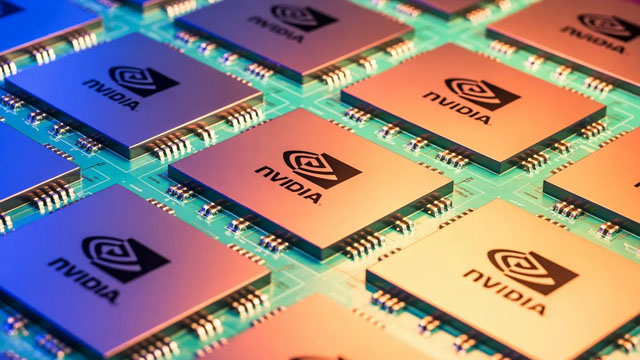
Nvidia shares fell more than 2% Wednesday after hotter-than-expected U.S. inflation data triggered a broader market sell-off. The decline marked the fifth lower session for the stock in six sessions, adding to pressure on semiconductor stocks that had struggled throughout the week.
Analysis
The move is more informative as a rates-and-positioning shock than as evidence of weaker AI demand. Higher real yields can compress the present value investors assign to distant growth, so highly owned, long-duration semiconductor exposure may remain vulnerable even if near-term demand is unchanged. The five-of-six-session pattern raises the risk of systematic de-risking, but a short run of down days alone does not establish a durable trend.
Over the next few sessions, the key transmission is Treasury yields and broader risk appetite; over 1–3 months, inflation releases and Federal Reserve guidance could keep multiples under pressure. Over 6–18 months, the more important test is whether NVIDIA’s reported demand, customer spending, and forward guidance continue to validate AI-related expectations. Competitors may face the same discount-rate headwind; the article provides no evidence of a company-specific share shift.
Contrarian point: treating this macro-led decline as a change in NVIDIA’s fundamentals risks selling on the wrong signal. Conversely, buying solely because the decline is modest ignores the possibility of further de-risking if yields rise. No company-specific trade is justified on this evidence alone.
AllMind Terminal
AI-powered research, real-time alerts, and portfolio analytics for institutional investors.
Request TrialMarket Sentiment
Overall Sentiment
mildly negative
Sentiment Score
-0.28
Ticker Sentiment
Key Decisions for Investors
- Avoid adding to NVDA solely on the pullback; wait for Treasury yields and risk appetite to stabilize, or for company-specific evidence that demand and guidance remain intact.
- For portfolios with outsized semiconductor beta, consider a temporary hedge using a semiconductor-sector vehicle rather than assuming NVDA-specific news is driving the move; remove the hedge if yields retreat and the sector stabilizes.
- Watch upcoming inflation data, real yields, and NVDA’s next demand and guidance disclosures. A renewed rise in yields alongside weaker forward guidance would strengthen the downside thesis; falling yields with resilient guidance would falsify the macro-only bearish read.
More News
- We're exiting our remaining stake in an industrial stock spin-off gone wrong
- ASML Boosts Outlook as Demand Outpaces Supply
- Tech giants race to get AI gadgets on shelves for holiday rush
- Exclusive: Honeywell Technologies launches a ‘brain behind the building’ with Nvidia and Dell. Its CTO says humans will run it for now
- Cisco, Nvidia team up to build fatter, faster pluggable
- Meta’s Muse models reach the AI frontier—and kill any hopes to ‘pace’ it