
Should Investors Avoid Alaska Air Stock Despite Q3 Earnings Beat?
Source: zacks.com
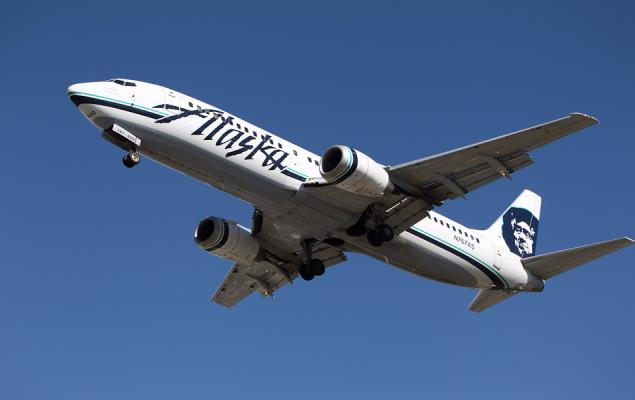
Alaska Air’s Q3 2026 adjusted EPS of $0.36 beat consensus by 2.9%, but fell from $1.05 a year earlier; revenue rose 14.4% to $4.31 billion and narrowly missed estimates. Operating expenses grew 16.8%, led by a 59.5% surge in fuel costs to $1.21 billion, weighing on profitability despite stronger premium and loyalty revenue. Shares are down 28.7% year to date, and estimates for Q4 2026 and full-year 2026–27 were revised lower; the article cites leverage, investment needs and execution risks and notes a Zacks Rank of #4 (Sell).
Analysis
The key issue is not whether ALK is optically cheap, but whether its revenue mix can protect margins when fuel resets higher. Premium and loyalty growth may support unit revenue, yet traffic lagging capacity points to weaker utilization; if demand softens, ALK could face pressure to discount before its new capacity and international routes earn adequate returns. The low sales multiple is therefore not a reliable floor without evidence that margins and cash generation are normalizing.
Near term, fuel and geopolitical headlines can dominate the stock; a de-escalation could quickly relieve the sector and punish an outright short. Over the next 1–3 months, watch guidance, unit-cost ex-fuel trends, load factor/yield, and whether estimate cuts stabilize. Over 6–18 months, the upside case depends on premium and loyalty growth translating into durable cash flow while expansion costs and fleet investment remain financeable. The article provides no hedge position, liquidity runway, or route-level economics, so those remain verification items.
Contrarian angle: the selloff may already discount a persistent fuel shock, while premium/loyalty momentum offers some resilience. But the earnings beat is too small to offset the sharp year-over-year EPS decline, and a low P/S can reflect structurally thin airline margins rather than mispricing. Falsification of the cautious view: sustained fuel-cost relief alongside improving load factor, ex-fuel unit costs, and upward earnings revisions.
AllMind Terminal
AI-powered research, real-time alerts, and portfolio analytics for institutional investors.
Request TrialMarket Sentiment
Overall Sentiment
strongly negative
Sentiment Score
-0.55
Ticker Sentiment
Key Decisions for Investors
- Keep ALK underweight rather than add on the valuation multiple alone; do not chase an outright short after the substantial year-to-date decline, given reversal risk if fuel prices fall.
- For an existing long, consider defined-risk downside protection only if fuel remains elevated and the next guidance update or estimate revisions deteriorate further. Check option pricing first; the article provides no implied-volatility or price data to assess cost.
- Reassess over the next 1–3 months against load factor, yield/RASM, unit costs excluding fuel, and cash generation. Stabilizing revisions plus better utilization would weaken the bearish thesis; further cuts despite easing fuel would strengthen it.
- Before sizing a 6–18 month position, verify debt maturities, liquidity, fleet capex commitments, and the profitability of new routes. These determine whether the current fuel shock is a temporary earnings hit or a balance-sheet constraint.
More News
- What investors need to know about Alphabet's stock-busting earnings report
- Our next steps for Alphabet stock after earnings disappoint at nearly every turn
- Budget 2026 speech
- Wendy's shares jump 15% as Nelson Peltz's Trian offers $1.4 billion to buy burger chain
- GE Vernova shares slip despite a beat-and-raise. What the sellers are getting wrong
- Microsoft's Big Bets on AI Start to Pay Off