
Universal's Newest Theme Park Integrates Floating Solar into Sustainability Strategy
Source: PR Newswire
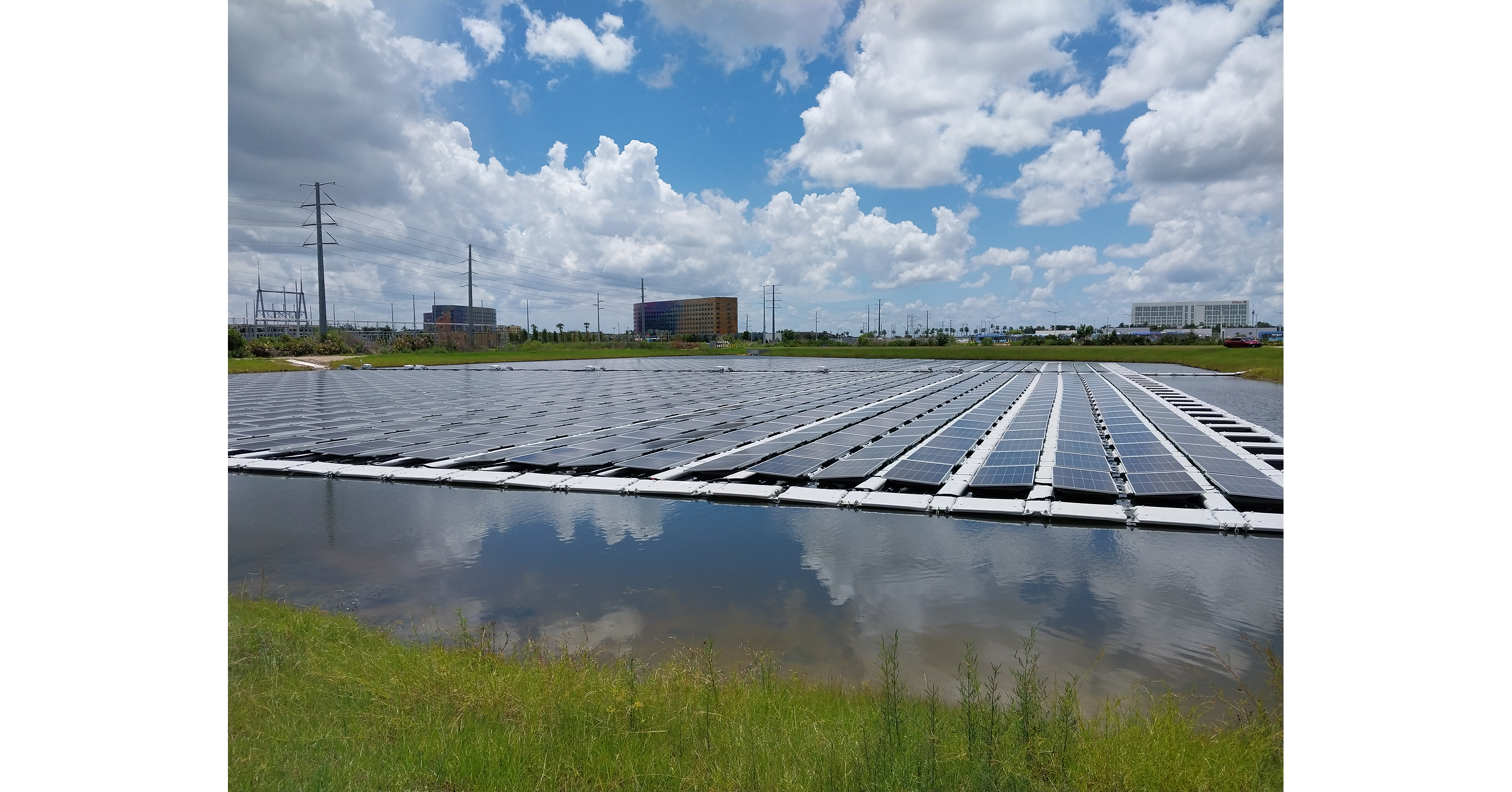
D3Energy deployed and energized a 1.4 MW floating solar system at Universal Epic Universe, one of three on-site installations totaling 3.7 MW. Universal expects the three installations together to generate more than 6.7 million kWh annually; the floating array supplies power for the park’s electric buses, with stored daytime energy used for nighttime charging. Epic Universe is the first theme park to achieve LEED Platinum certification under LEED for Communities: Plan and Design.
Analysis
This is a commercial proof point for floating PV, not yet evidence of a material demand inflection. The investable mechanism is incremental: floating arrays can avoid land-use conflicts and pair with existing water assets, but permitting, anchoring, interconnection, and water-body operating requirements may offset that advantage. A high-profile deployment could help D3Energy and Ciel & Terre in future bids; Qcells may benefit as a program integrator. Those effects depend on follow-on awards, which the announcement does not establish.
The battery-and-bus integration also makes project economics more dependent on storage utilization, charging schedules, and local electricity tariffs than on solar output alone. Verify realized savings and battery performance before treating the sustainability narrative as margin accretive. LEED recognition may support customer and employee value, but does not by itself imply a meaningful near-term earnings catalyst for Universal or its suppliers.
Near term, expect limited public-market read-through: the project is small relative to the broader power market, and D3Energy is not identified here as a listed security. Over 1–3 months, the useful catalyst is evidence of repeat contracts or a broader floating-solar pipeline. Over 6–18 months, adoption could expand where land is constrained, but permitting or weak project returns could stall it. The contrarian point is that a visible demonstration can attract attention faster than profitable, repeatable deployment; do not extrapolate from one venue.
AllMind Terminal
AI-powered research, real-time alerts, and portfolio analytics for institutional investors.
Request TrialMarket Sentiment
Overall Sentiment
mildly positive
Sentiment Score
0.30
Key Decisions for Investors
- No trade on this announcement alone. The direct developer is not identified as publicly investable in the supplied data, and no listed-company earnings exposure is demonstrated.
- Watch for additional floating-PV awards involving D3Energy, Ciel & Terre, or Qcells, plus disclosed project economics. Treat repeat orders and independently reported operating savings—not publicity or certification—as confirmation.
- If considering exposure to solar or storage suppliers, require evidence that floating projects are becoming a material part of their order pipeline; otherwise this is not a sector-level catalyst.
- Falsify the adoption thesis if follow-on contracts fail to emerge over the next 6–18 months, or if permitting, interconnection, maintenance, or storage costs prevent projects from meeting customer return hurdles.
More News
- Oman evacuates injured crew from attacked tanker in Strait of Hormuz
- Oil rises as concerns over Houthi attacks on Saudi Arabia eclipse supply recovery
- Rebounding oil exports through Strait of Hormuz are vulnerable to stepped-up Iranian tanker attacks
- Google teams with nuclear power giant to give reactors a tune-up
- Hormuz ship attacks surge: Are increased oil exports sustainable?
- Yemeni forces launch offensive to retake Houthi-held al-Waziiya in Taiz