
Intelligence-Driven Security for Macao: CTM and Huawei Partner to Fortify Network Security in the AI Era
Source: PR Newswire
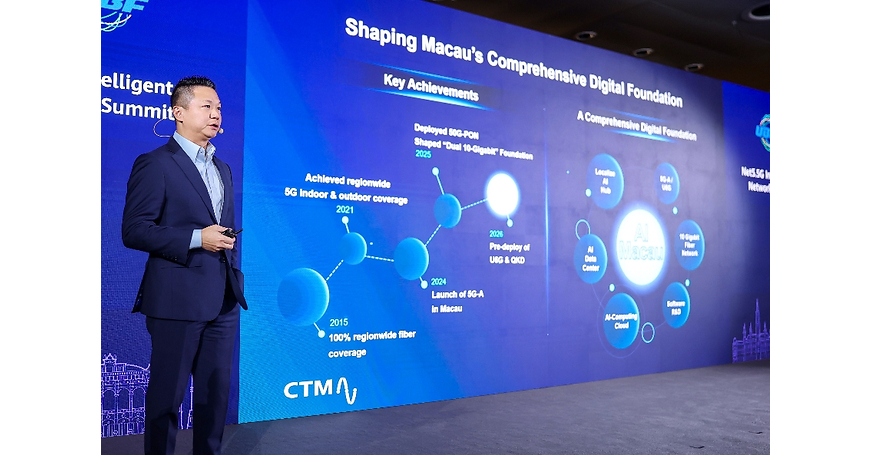
At Network X 2026, Macao telecom operator CTM outlined plans to develop intelligent, deterministic and secure network infrastructure, including AGW 2.0 with telemetry and AI analytics for automated optimization. CTM and Huawei also described a joint IP architecture integrating QKD communications to support quantum-safe network planning; the announcement provided no financial figures or quantified commercial outcomes.
Analysis
The investable signal is a possible shift in carrier economics, not evidence of material revenue for either partner. If CTM can steer traffic to reduce international bandwidth costs and sell managed security to enterprise and government customers, it could improve utilization and add higher-value services without relying solely on connectivity pricing. The offset is integration and operating risk: AI-led automation and embedded security require reliable telemetry, customer adoption, and proof that service revenue exceeds deployment and support costs. Huawei’s announcement is promotional; no contract value, rollout schedule, or customer commitments are disclosed.
The second-order risk for standalone cybersecurity vendors is channel competition: carriers could bundle DDoS defense, intrusion prevention, and anti-phishing into connectivity contracts. That is a potential medium-term pricing headwind, not yet a demonstrated displacement. Conversely, quantum-safe networking is a long-dated validation theme; QKD deployments face practical cost and scaling tests, while migration to post-quantum cryptography is a competing route. The announcement does not establish commercial superiority.
Near term, there is no clear security for a trade: CTM-specific economics and listed exposure are not established in the supplied data. Over 1–3 months, look for named deployments, pricing, and evidence of enterprise uptake. Over 6–18 months, assess whether automation lowers network operating costs and whether security becomes a material recurring service. The thesis weakens if rollout slips, customer adoption is limited, or reported service growth fails to offset implementation costs. Huawei’s role also leaves geopolitical and procurement restrictions as a potential constraint on replication beyond Macao.
AllMind Terminal
AI-powered research, real-time alerts, and portfolio analytics for institutional investors.
Request TrialMarket Sentiment
Overall Sentiment
mildly positive
Sentiment Score
0.20
Key Decisions for Investors
- No immediate position: treat this as a product roadmap announcement, not a confirmed earnings catalyst; the source is Huawei and provides no contract economics.
- Set an alert for CTM disclosures on deployment timing, enterprise security subscriptions, bandwidth-cost savings, and capex or operating-cost implications. Upgrade the view only if measurable adoption or financial contribution emerges.
- Monitor standalone cybersecurity providers for evidence that carrier bundles are pressuring pricing or renewals; absent such evidence, do not short the sector on this announcement alone.
- Track whether QKD pilots progress to commercial deployments and compare their cost and scale with post-quantum cryptography migration. A stalled rollout or no customer commitments would falsify the near-term monetization thesis.
More News
- Why did CoreWeave stock get crushed this week? Look to this corner of the debt market for clues
- AI stock sell-off ramps up over debt-fueled data center spending fears: ‘Full-blown crisis of confidence'
- Dow falls 189 points as AI stocks slide and oil prices surge
- Wall Street Anxiety Spreads as AI Rout Meets $110 Oil Shock
- Wall Street's fear gauge is ripping. Traders see it going even higher
- All the news about the iPhone Duo