
ADP National Employment Report: Private-Sector Employment Increased by 38,000 Jobs in August
Source: PR Newswire
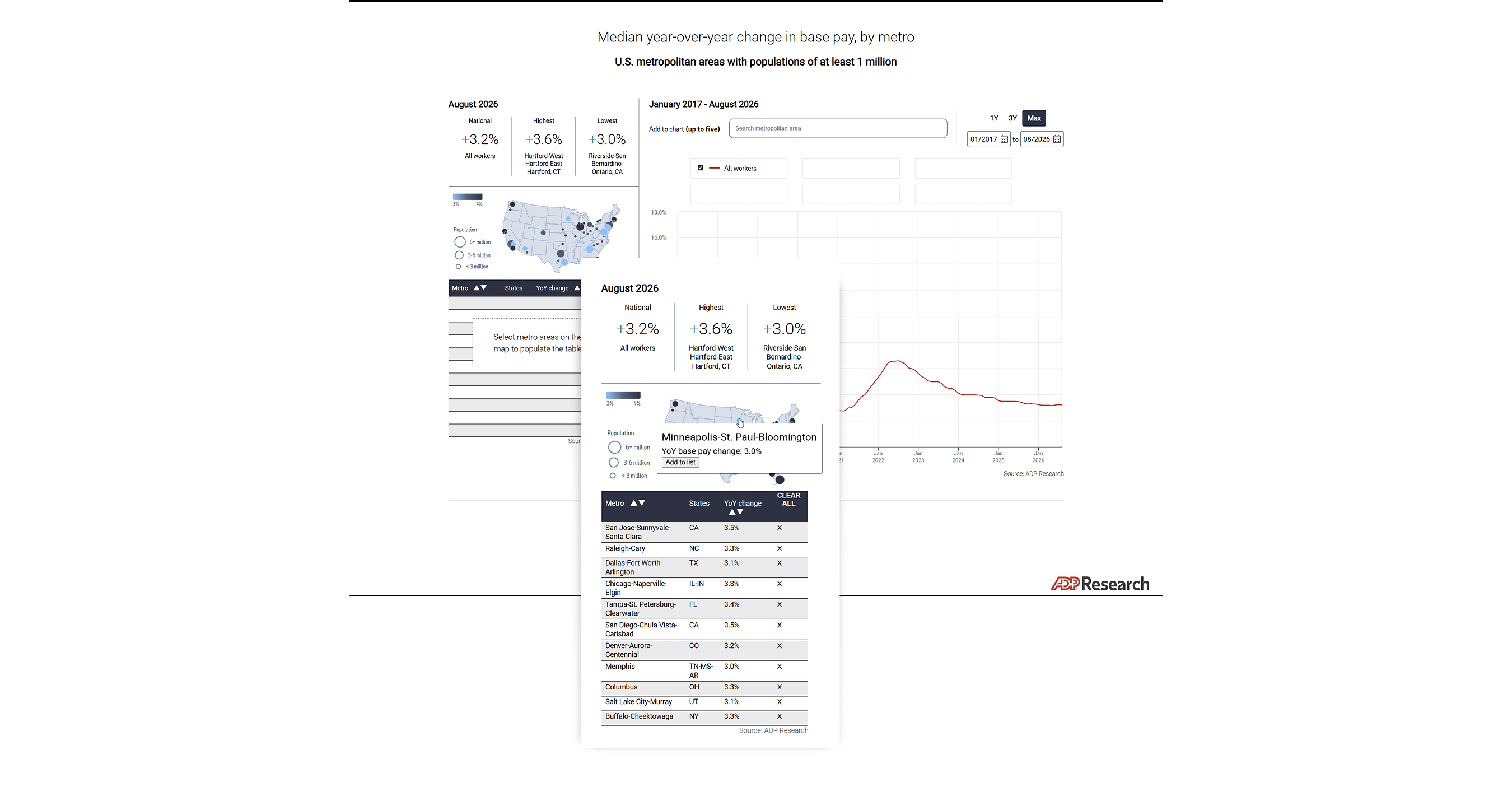
ADP reported U.S. private employers added 38,000 jobs in August (slowest job creation pace since January), with manufacturing and information shedding jobs. Wage growth was mixed but still elevated: base pay rose 3.2% YoY and gross pay rose 4.7% YoY, while job-changer base pay increased to 4.7% and job-changer gross pay eased slightly to 7.3%. The combination of slower hiring and persistent wage inflation signals a cautious labor-market backdrop that could influence rates expectations.
Analysis
This is a classic late-cycle signal: labor cools faster than inflation, which is constructive for duration but not automatically bullish for earnings. The immediate beneficiaries are rate-sensitive assets—long Treasuries, REITs, and the highest-multiple software names—because any incremental evidence of labor softening raises the odds the market pulls forward easing. The less obvious losers are labor-intensive cyclicals and hiring-adjacent businesses: staffing, freight, restaurants, and small-cap consumer names that depend on wage-supported traffic and hours worked.
The second-order effect is on the consumer ledger. Slower job-changer pay growth tends to show up first in reduced discretionary churn, softer advertising conversion, and weaker recruiting spend before it hits headline retail sales. That argues for caution on consumer discretionary breadth over the next 1-3 months, especially names levered to lower-income cohorts, while defensive spend categories and quality balance sheets should hold up better if the labor slowdown is confirmed by claims and payrolls.
ADP itself is not a clean short: its revenue is more recurring than the labor print suggests, and weaker hiring does not translate one-for-one into lower billings. The real question is whether this becomes the first step in a broader growth scare. The consensus risk is assuming "bad data = lower yields = buy beta"; in a softening labor market, earnings revisions usually hit before the policy relief fully lands. Falsifier: a hot CPI/PPI or a rebound in the next payrolls/NFP data that pushes the 10-year back above the recent range would unwind the duration trade quickly.
AllMind Terminal
AI-powered research, real-time alerts, and portfolio analytics for institutional investors.
Request TrialMarket Sentiment
Overall Sentiment
mildly negative
Sentiment Score
-0.18
Ticker Sentiment
Key Decisions for Investors
- Long TLT vs short XLY for the next 2-6 weeks; thesis is falling labor momentum compresses consumer discretionary earnings before it fully helps the Fed narrative. Risk/reward is attractive if 10-year yields drift lower, but exit if the 10-year reclaims the prior range on inflation data.
- Buy 1-3 month TLT call spreads rather than outright calls; this gives exposure to a dovish repricing if the slowdown is confirmed by NFP/claims, while limiting premium burn if the ADP print proves noisy.
- Short a small-cap cyclicals basket (IWM or a narrower retail/freight proxy) against long IEF into the next payroll/CPI sequence; the pair should work if growth slows faster than inflation and the market starts pricing weaker revenue, not just lower rates.
- Avoid an outright short in ADP; if anything, keep it on a watchlist for pullbacks only. The labor softness is a macro signal, not a clear direct hit to recurring payroll revenue, so single-name downside is likely limited unless hiring deterioration becomes sustained for multiple months.
More News
- ECB's Lagarde says bond selloff will slow inflation
- Christine Lagarde: IMFC Statement
- Why did CoreWeave stock get crushed this week? Look to this corner of the debt market for clues
- Palantir patient data tech rejected by many NHS trusts in England
- U.S. budget deficit swells to almost $2 trillion for fiscal 2026, up 12% in a single year
- Wall Street Anxiety Spreads as AI Rout Meets $110 Oil Shock