
The ‘Permission Bottleneck’ Coming for Stocks
Source: Bloomberg
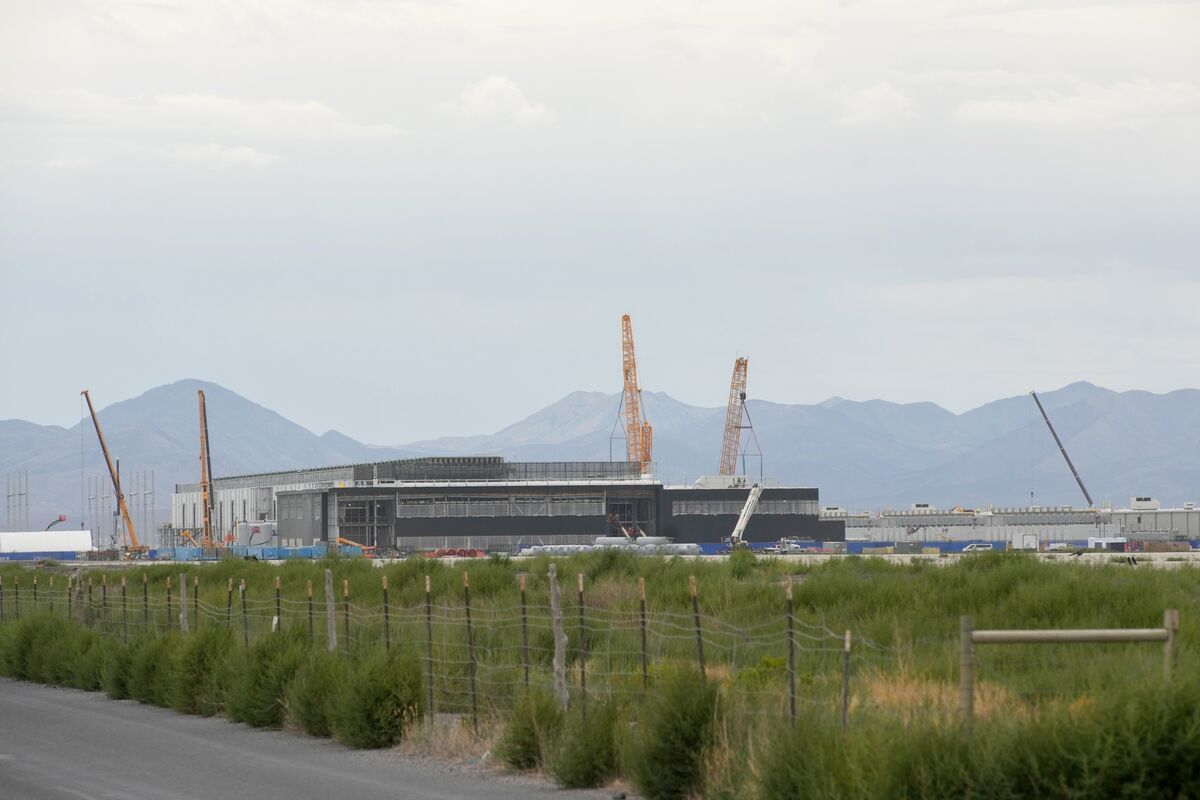
The piece is largely introductory/subscription boilerplate and provides no concrete financial figures, policy actions, or company-specific developments. It references a possible “permission bottleneck” tied to the AI buildout lifting broader assets, but without actionable details the market impact is limited.
Analysis
The market’s first instinct is to treat AI capex as a straight-line growth story, but the more important marginal change is that scarcity is moving from chips to power, land, and approvals. That changes who captures the rent: owners of already-permitted, grid-connected assets can widen spreads without adding much incremental capital, while “story” names that need fresh buildouts may see their revenue timelines pushed out even if demand is intact. In other words, the bottleneck shifts value from expansion optionality to installed capacity.
The near-term winner set is the industrial and utility enablers with the shortest path to monetization: grid gear, electrical services, and data-center landlords with secured power. The losers are the highest-duration AI equity claims—software names and small-cap infrastructure promoters priced for uninterrupted hypergrowth—because a 6-12 month delay in deployment can compress multiples long before it hits reported revenue. Second-order, this likely increases bargaining power for incumbent utilities and regions with surplus baseload; hyperscalers may redeploy capex toward private generation or geographies with faster interconnects.
Contrarian view: the consensus may be overestimating cancellation risk and underestimating deferral. Bottlenecks usually extend order backlogs for suppliers even as they cap end-market stock performance, so the trade is not “AI down,” it is “AI beta broadens less than expected.” The thesis is falsified if permitting timelines are relaxed, interconnect queues shorten materially, or private power solutions scale fast enough to bypass the constraint within 1-2 quarters.
AllMind Terminal
AI-powered research, real-time alerts, and portfolio analytics for institutional investors.
Request TrialMarket Sentiment
Overall Sentiment
neutral
Sentiment Score
0.05
Key Decisions for Investors
- Long GEV / PWR on a 3-6 month horizon: best risk/reward to the bottleneck thesis because they monetize grid and buildout intensity without needing flawless AI app adoption; use any AI-led pullback to add.
- Pair trade: long EQIX or DLR vs short C3.ai (AI) for 1-3 months. The long leg benefits from scarce, already-powered capacity; the short leg is most exposed to multiple compression if deployment timelines slip.
- Add XLU on weakness as a 6-18 month relative-value hedge. Regulated utilities can re-rate if load growth persists and permitting remains tight; invalidate if power interconnect lead times normalize quickly.
- Avoid chasing high-multiple AI pure plays after strong runs; if the market starts discounting a 6-12 month revenue lag, downside comes from multiple compression rather than earnings misses.
More News
- US Fed, BoE step up scrutiny of bank exposure to trading firms after Jane Street loss, FT reports
- Bessent proposes U.S.-China AI safety system in talks with China
- Here are the 3 big things we're watching in the stock market this week
- Tech leads shares higher in Asia, oil eases
- Trump & Xi to Meet Amidst Friction on Wars, Tech, Trade
- Trump-Xi summit outlook: watch these Chinese stocks and sectors
From AllMind Research
- Anthropic IPO Preview: Valuation, Timing, and What to Watch
- Shein After the IPO: Venue, Valuation, and What Must Be Proved
- What AI Research Tools Should a Small Hedge Fund Buy First?
- Weekly Update: Live Event Center, In-App Documents, and Faster Transcripts
- How to Automate Equity Research Workflows: A Control-First Guide