
UGREEN ENTERS THE AIoT SPACE WITH NEW SMART HOME ECOSYSTEM AND NAMES CHRISTIAN GONZALEZ GLOBAL BRAND AMBASSADOR
Source: PR Newswire
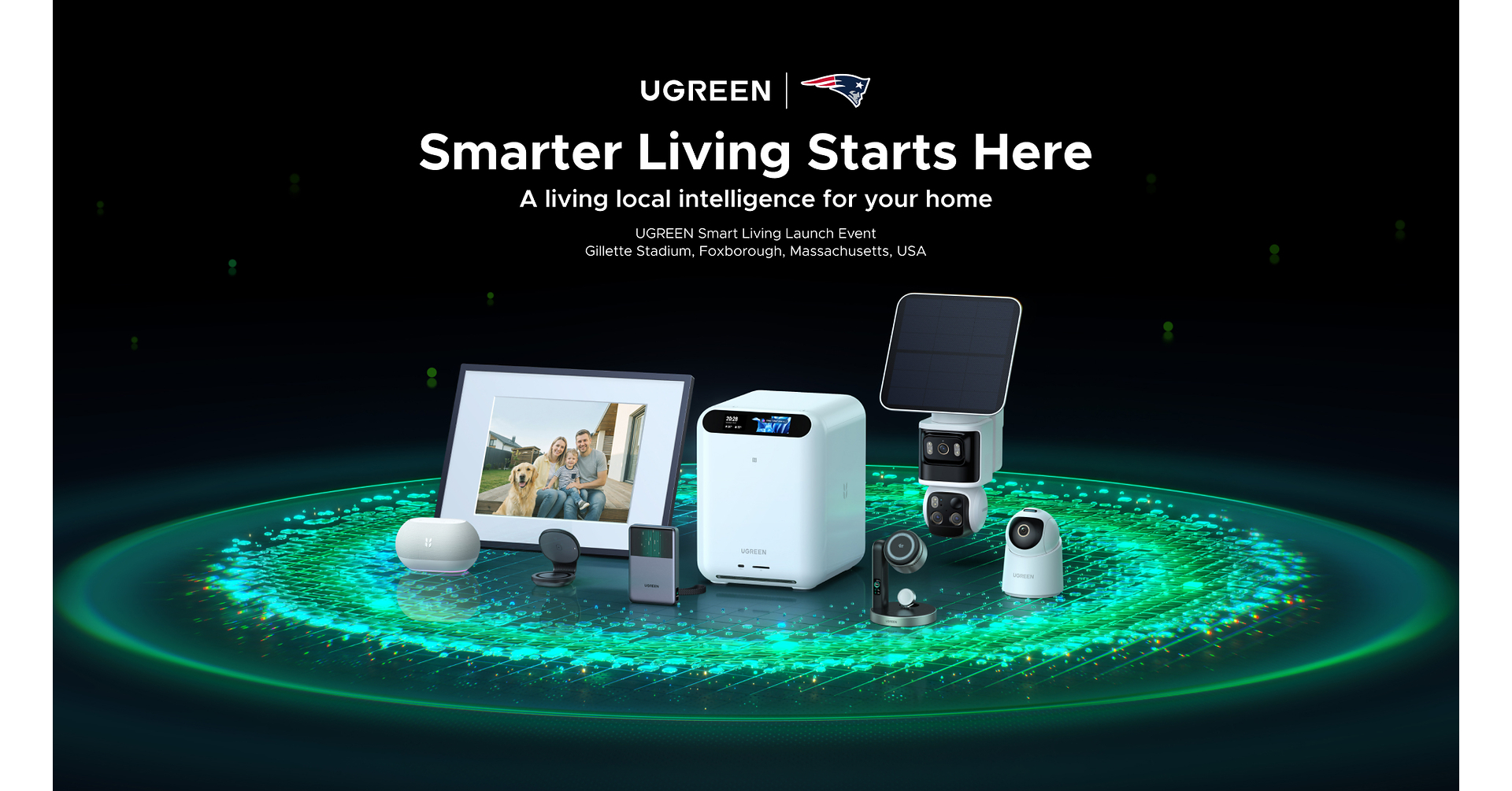
UGREEN launched its AIoT debut with HomeAgent local-first smart home hubs (HA100/HA100 Pro) and a MasterAgent hub powered by NVIDIA Jetson Thor T5000 delivering up to 2,070 FP4 TFLOPS for on-device agentic AI. The company also introduced the MagFlow lineup, including the world’s first liquid-cooled Qi2 25W magnetic power bank (10000mAh) priced at $149.99, plus 3-in-1 and 2-in-1 charging products at $159.99 and $59.99. Pre-orders for HomeAgent/MasterAgent open Sept. 3, with a Kickstarter campaign planned to begin Oct. 27; deposits start at $50 for a stated 50% off Super Early Bird price.
Analysis
This is not a broad AI thesis; it is a niche edge-compute validation point. The only economically meaningful read-through is to silicon and software stacks that can make local inference cheap, reliable, and easy to deploy; that favors NVDA at the margin, but only as an optionality story, not a near-term earnings driver. For consumer ecosystem players, the bigger implication is that any smart-home vendor still monetizing through cloud storage or subscriptions faces a slow-burn pricing challenge if local-first bundles become the perceived premium tier.
The second-order risk is that the product category stays enthusiast-led. If setup friction, power/thermal issues, or interoperability gaps show up in reviews, the market will quickly reclassify this as accessory noise rather than a real smart-home inflection, which would cap any multiple impact in 1-3 months. AAPL gets a modest ecosystem halo from Qi2 attach and accessory demand, but this does not move handset demand; AMZN is only tangentially exposed through smart-home competition, and AWS is too large for this to matter financially.
Contrarian view: the consensus tends to overpay for “AI” branding in consumer hardware when the monetization path is still one-time hardware sales plus uncertain app retention. The key falsifier for a bullish edge-AI read is whether the company can show repeatable conversion from preorder to retail sell-through and whether the local hub actually reduces, rather than merely hides, cloud dependence. Over 6-18 months, the durable winners are likely component suppliers and platform owners with low integration friction, not the branded accessory vendor itself.
AllMind Terminal
AI-powered research, real-time alerts, and portfolio analytics for institutional investors.
Request TrialMarket Sentiment
Overall Sentiment
mildly positive
Sentiment Score
0.12
Ticker Sentiment
Key Decisions for Investors
- No immediate trade in AAPL, AMZN, or NVDA; treat this as a watch item until we see preorder conversion, Amazon rank/review velocity, and evidence of retail distribution over the next 30-60 days.
- If follow-on SKUs or developer adoption around Jetson Thor show up in multiple products, consider a small tactical long NVDA vs. short AMZN pair on a 3-month horizon; the thesis is edge-AI silicon optionality versus cloud-subscription commoditization, with roughly 1:2 downside/upside asymmetry.
- Do not short AMZN on this headline alone; AWS and Alexa/Ring exposure are too diluted for a meaningful fundamental read-through unless consumer smart-home subscription churn becomes measurable in coming quarters.
- For AAPL, only buy the dip if third-party Qi2 25W accessory adoption broadens and channels show real attach-rate lift; otherwise, no action because this is ecosystem reinforcement, not iPhone demand expansion.
More News
- Zoom and big financial firms add ‘Proof of Human’ badges from Sam Altman’s World to stop fraud and deep fakes
- The next AI race will be won at the credit desk
- Linux KVM guest-host escape rated critical, may represent a new way to attack penguin-powered networking
- Jim Cramer: Why I am taking the other side of the trade that crushed the market Friday
- TechCrunch Mobility: Rivian’s next act
- While consumers are angry about high-tech ways to set prices, a study of dynamic pricing found half the U.S. changes it recorded were decreases