
It’s a rough housing market, and Goldman Sachs expects it to get worse
Source: MarketWatch
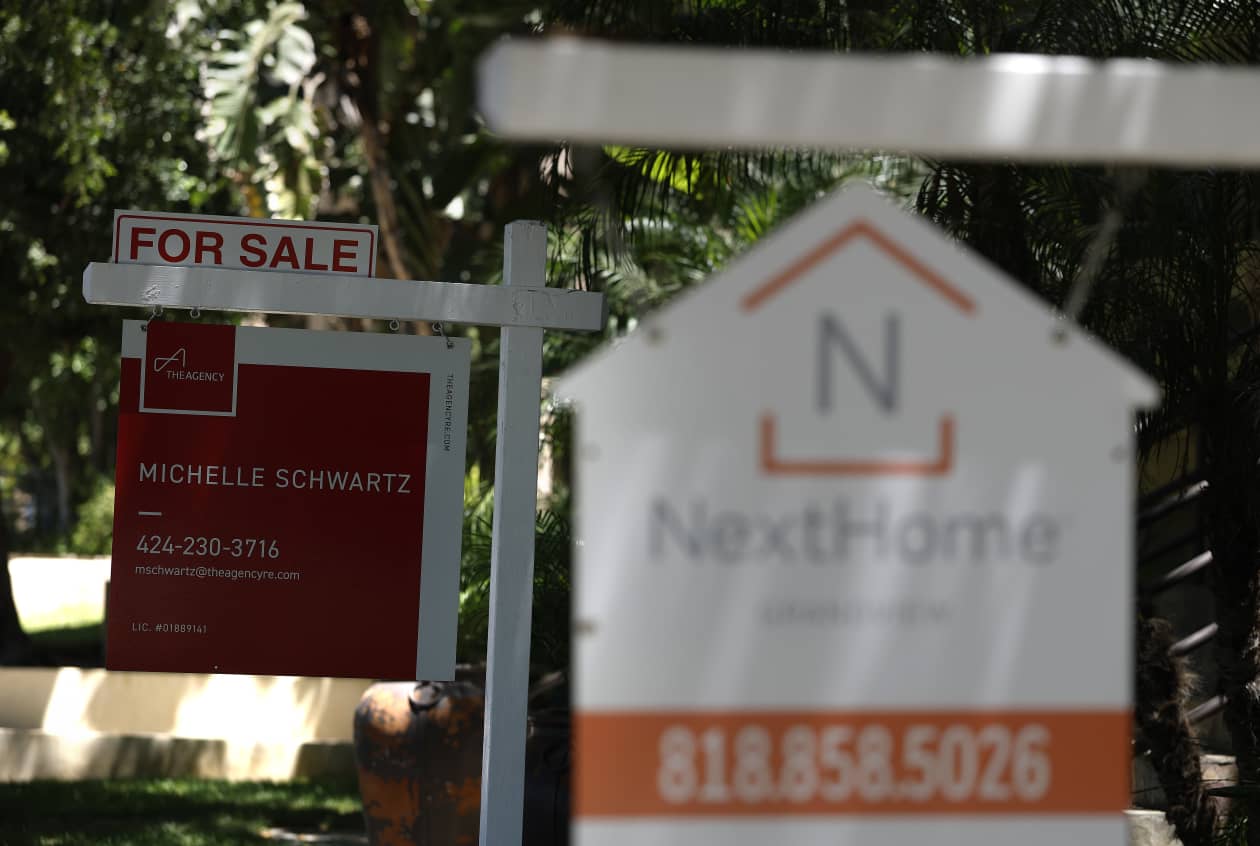
Housing starts and transactions have been roughly flat for three years, with mortgage rates above 7%. Goldman Sachs economist Ronnie Walker expects affordability pressures to increasingly weigh on housing activity in 2027, potentially worsening the market slowdown.
Analysis
The key transmission is not simply higher borrowing costs: if incomes fail to catch up with home prices, affordability can weaken demand even without another rate shock. That would pressure transaction-linked businesses first—brokers and mortgage originators—while builders may defend volumes with incentives, shifting some pain into realized pricing or margins. Building-products and appliance suppliers would feel the effect with a lag if starts and order books roll over. Rental housing could see incremental demand, but that is not an automatic offset where new apartment supply is abundant.
The forecast is a 2027 risk, not a near-term earnings fact. Its market impact depends on the path of mortgage rates, incomes, inventory, and builder incentives; the article provides no company-level earnings estimates or valuation context. Contrarian case: a deterioration may already be discounted, and a meaningful decline in mortgage rates or stronger income growth could revive demand before the forecast horizon. A further rate decline that fails to improve affordability would be a more concerning signal than rates alone.
AllMind Terminal
AI-powered research, real-time alerts, and portfolio analytics for institutional investors.
Request TrialMarket Sentiment
Overall Sentiment
mildly negative
Sentiment Score
-0.35
Key Decisions for Investors
- No immediate broad short on this forecast alone. Treat it as a medium-term headwind and avoid adding unhedged homebuilder exposure until affordability and order trends stabilize.
- Watch the next 1–3 months of housing starts, permits, new-home sales, cancellations, and builder commentary on incentives. If these weaken while mortgage rates are not falling materially, consider a defined-risk bearish position in the SPDR S&P Homebuilders ETF (XHB); reassess if sales and order metrics stabilize or financing costs ease enough to improve affordability.
- Within housing, favor businesses with less dependence on transaction volume over brokers and mortgage originators; treat building-products suppliers as a lagged read-through rather than an immediate short. Verify company exposure and backlog before expressing the view.
- Falsifiers: sustained improvement in affordability from lower mortgage rates or faster income growth, plus stabilization in permits and sales. A worsening activity backdrop despite lower rates would strengthen the downside thesis.
More News
- This Janus Henderson fund manager owns CoreWeave debt — here's why he's sticking with it
- Housing is flashing warning signs just as the Fed weighs more interest rate hikes
- Why is Contemporary Amperex Technology stock sliding today?
- Capital One's strong quarter and progressing Discover integration are rewarded on Wall Street
- SpaceX Earnings Blow Past Wall Street Estimates
- A top medical technology stock is trading at a big discount. Here's why I'm buying
From AllMind Research
- Anthropic IPO Preview: Valuation, Timing, and What to Watch
- Shein After the IPO: Venue, Valuation, and What Must Be Proved
- What AI Research Tools Should a Small Hedge Fund Buy First?
- Automating Financial Model Updates: A Source-Controlled Workflow
- Weekly Update: Live Event Center, In-App Documents, and Faster Transcripts