
In HelloNation, Financial Planning Professional Julie Waitman Explains Tax Planning for Retirement Savings
Source: PR Newswire
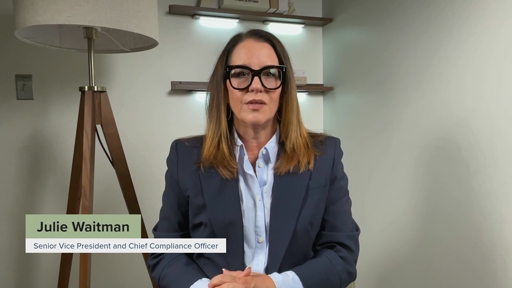
The article explains that retirement tax planning typically becomes more important after leaving work, as Social Security benefits can be partially taxable depending on total income, and state taxes may apply in some states. Withdrawals from traditional 401(k)/IRA accounts are generally taxed as ordinary income (potentially pushing retirees into higher brackets), while Roth withdrawals are usually tax-free and Roth conversions require paying taxes immediately—often timed during lower-income years to reduce future tax burdens. It also notes that required minimum distributions can raise taxable income and potentially increase the taxable portion of Social Security benefits, with Medicare-related premium effects depending on income.
Analysis
This is not a CRMT event. The article is about household tax sequencing, which has no direct read-through to used-car unit volume, floorplan economics, or credit losses. For CRMT, the only plausible connection is indirect: retirees optimizing withdrawals may protect disposable income at the margin, but that effect is diffuse and too slow to move quarterly results.
If there is a public-market beneficiary set, it sits in tax-prep and advice software rather than retail. Complexity tends to support recurring advisory relationships and retention, but that is a slow-burn revenue tailwind, not a catalyst; the market already prices these franchises as steady compounders. A less obvious second-order effect is that Roth conversions can temporarily reduce investable assets, which is mildly negative for AUM-driven names in the near term.
Contrarian view: the consensus overstates how much financial-planning content changes actual consumer behavior. Most households read this kind of guidance as reassurance, not a prompt to materially alter product usage, so any equity reaction should fade quickly. For CRMT, the real falsifier remains credit stress: if delinquencies, repossessions, or affordability metrics worsen over the next 1-2 quarters, that matters; this article does not.
AllMind Terminal
AI-powered research, real-time alerts, and portfolio analytics for institutional investors.
Request TrialMarket Sentiment
Overall Sentiment
neutral
Sentiment Score
0.00
Key Decisions for Investors
- CRMT: no trade. Treat this headline as noise and stay flat until the next earnings cycle confirms either a credit inflection or stabilization; there is no evidence of a 1-3 month catalyst.
- INTU/HRB: if you want any expression at all, prefer a modest long INTU vs short HRB pair on any pullback; 6-12 month horizon, limited upside from the article itself but cleaner exposure to recurring tax-planning complexity.
- AMP/NTRS: keep on watch only, not a buy. The incremental planning behavior is supportive over years, but near-term AUM sensitivity is likely too small to justify new risk without flow data.
- CRMT risk alert: tighten monitoring on delinquencies, charge-offs, and used-vehicle affordability into the next report; a 100-150 bps move in 30+ day delinquency would be a valid thesis breaker.
More News
- Trump struck a diesel deal with Putin just weeks after signing Russia sanctions. Zelenskyy calls it ‘a weak decision’
- Trump's diesel agreement with Putin accused of contradicting Russia sanctions law
- Trump announces Russian diesel deal amid soaring US fuel prices
- Trump created a committee to dig into the Fed's Lisa Cook. What is it and what comes next?
- Israel’s economy prospers despite years of war, but prices worry voters
- Global PC shipments crater 20% as rising prices hammer demand