
Zerova llevará su dispensador MCS a Europa en la feria IAA Transportation 2026
Source: PR Newswire
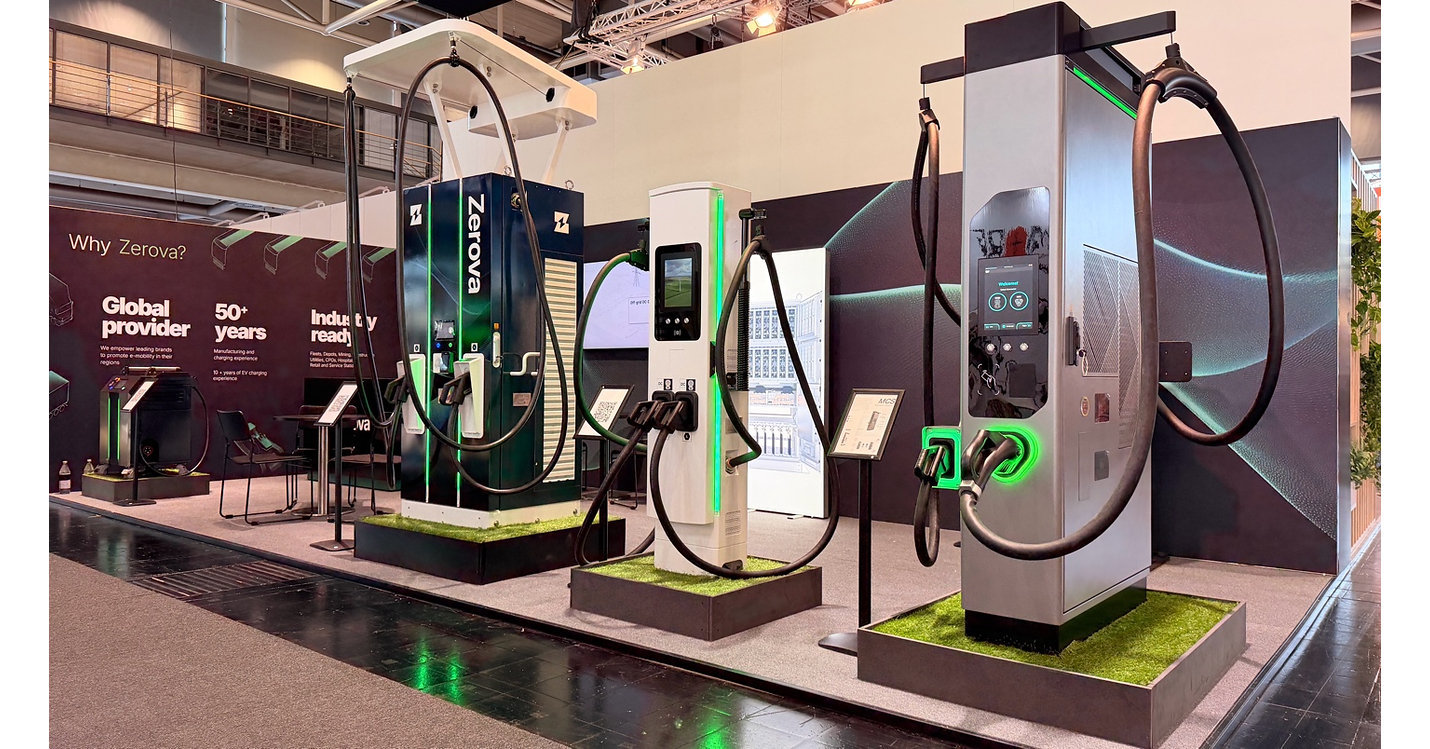
Zerova launched its MCS satellite DC charger for Europe at IAA Transportation 2026, targeting heavy-duty electric truck and bus fleets with up to 1,440 kW of power and 1,500 A liquid-cooled output. The system supports both MCS and CCS2 connectors, is compatible with OCPP 1.6J and 2.0.1, and meets CE requirements for EU and EEA deployment. The launch positions Zerova to benefit from growing European demand for megawatt-scale charging in fleet depots and freight corridors, although no contracts, deployment volumes, or financial impact were disclosed.
Analysis
This is not yet a public-markets catalyst; it is a supplier product announcement without disclosed orders, pricing, installed-base economics, or funding commitments. The investable implication is that megawatt charging is shifting the bottleneck from dispenser hardware toward grid interconnection, depot power management, and utilization: a 1+ MW truck charger can require costly medium-voltage upgrades and materially lower early-stage asset returns if fleets charge opportunistically rather than on contracted schedules.
Over the next 1-3 months, monitor procurement announcements from Daimler Truck (DTG), Traton (TRATON), Volvo AB (VOLV-B), and European corridor operators. Hardware vendors with installed service networks and power-electronics scale—ABB (ABBN), Siemens Energy (ENR), Schneider Electric (SU), and Eaton (ETN)—are better positioned than standalone charger manufacturers if deployments require switchgear, transformers, software, and long-term maintenance. The second-order beneficiary is copper and electrical-equipment demand, though this launch alone is immaterial to Freeport-McMoRan (FCX) or Prysmian (PRYMY).
The consensus risk is treating MCS availability as equivalent to near-term charger revenue. Fleet adoption depends on vehicle availability, standardized connector interoperability, utility lead times, and freight operators’ willingness to absorb demand charges; these can delay broad corridor economics by 12-24 months. A more constructive structural read emerges only if OEM truck order books begin pairing vehicles with named depot/corridor charging contracts, converting technical demonstrations into financed utilization.
Falsify the infrastructure-bottleneck thesis if European fleet operators announce multi-site deployments with sub-12-month grid connections, high utilization guarantees, or utility tariffs that sharply reduce peak-demand exposure. Conversely, repeated project delays tied to interconnection or transformer supply would favor diversified electrification suppliers over pure-play charging operators.
AllMind Terminal
AI-powered research, real-time alerts, and portfolio analytics for institutional investors.
Request TrialMarket Sentiment
Overall Sentiment
moderately positive
Sentiment Score
0.42
Key Decisions for Investors
- No direct trade on Zerova: absent a listed ticker, order backlog, ownership structure, and unit economics, treat the announcement as an industry watch item rather than a catalyst.
- Build a 6-12 month watchlist long ABBN / SU / ETN against a short position in a broad EV-charging basket where liquidity permits; the pair expresses higher value capture in grid and electrical balance-of-plant versus commoditizing dispensers. Enter only after verified European fleet-award or utility-capex data; reassess if charging-equipment pricing remains resilient and standalone vendors show improving gross margins.
- Monitor DTG, TRATON, and VOLV-B quarterly disclosures for battery-electric heavy-truck orders tied to charging commitments. A disclosed fleet order plus funded charging infrastructure is a more actionable long catalyst than charger launches; lack of associated infrastructure bookings over the next two reporting cycles would argue that vehicle electrification targets are outrunning deployable power capacity.
- Set alerts for European transformer lead times, interconnection queues, and demand-charge reform. Rising lead times or delayed depot energization would support ABBN/SU/ETN relative performance over 6-18 months; materially faster utility connections would increase the upside case for charging-network operators.
More News
- Japan’s corporate leaders sound alarm over weak yen — even dollar-earners are voicing concerns
- US official says upcoming spectrum auctions could generate more than $100 billion
- 'Science fiction': Transport companies — the backbone of economy — are sounding alarm on fuel prices
- Investors react to Fed hike and market sell-off: Brace for 'higher for longer' rates
- Oil Extends Slump as Saudi Arabia Moves to Restore Key Pipeline
- AI Buildout Hits Inflation as Fed Hikes Rates