
Crafting Artificial Stone Countertops Sicken Some Workers, Spark Lawsuits
Source: Bloomberg
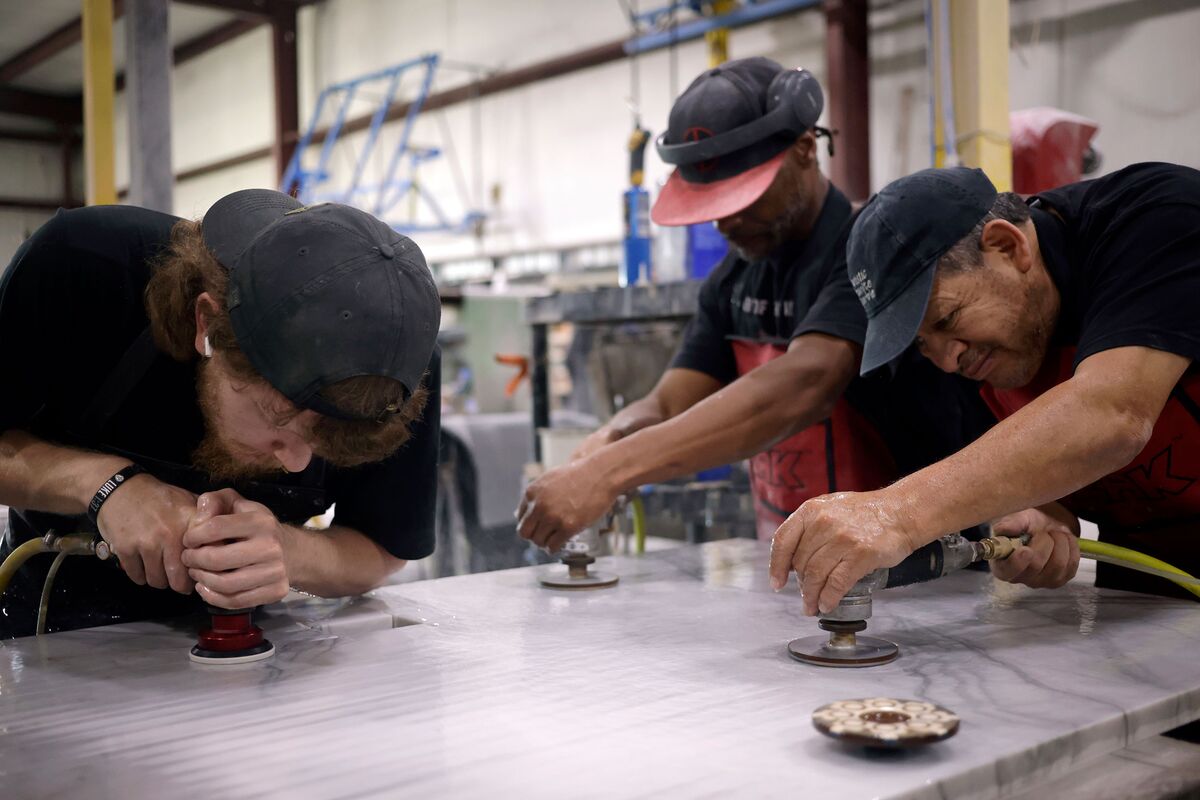
Workers fabricating artificial-stone countertops are developing a deadly chronic illness, prompting lawsuits over whether liability rests with fabrication shops or manufacturers. A doctor characterized the diagnoses as “death sentences,” while one sued company warned that a potential “nuclear verdict” could put it out of business. The dispute raises material legal, regulatory and financial risks for artificial-stone manufacturers and countertop fabricators.
Analysis
The investable exposure is concentrated less in fragmented fabrication shops than in engineered-stone brands, distributors and installation-channel participants. Caesarstone (CSTE) is the clearest listed proxy: any US state-level restrictions, mandatory wet-cutting/containment standards, or warning-label regime could reduce addressable demand while raising warranty, legal-defense and channel-compliance costs. Its small scale and historically uneven profitability make litigation reserves or insurance exclusions disproportionately important; this is a potential solvency/multiple-compression issue rather than a modest operating-cost headwind.
Near term, the market impact depends on whether litigation establishes manufacturer duty to warn or remains confined to employer safety practices. A plaintiff-friendly precedent could trigger copycat claims, distributor indemnification disputes and higher product-liability premiums within 1-3 months; over 6-18 months, builders and kitchen-remodel channels may substitute toward porcelain, natural stone, solid-surface and lower-silica engineered products. The non-obvious beneficiary is not necessarily a competing countertop manufacturer: fabricators able to document automated wet processing, ventilation and worker monitoring may consolidate local share as undercapitalized shops face insurance and capex barriers.
Consensus may underappreciate regulatory contagion from occupational-health rules rather than consumer preference shifts. A broad ban is not required to impair volumes: permitting delays, insurer underwriting changes and large-homebuilder specification changes can reduce fabrication throughput before legislation is enacted. Conversely, the bearish case is falsified if liability remains employer-specific, CSTE discloses immaterial reserve/insurance exposure, and US dealer orders show no migration away from silica-heavy slabs through the next two reporting cycles.
AllMind Terminal
AI-powered research, real-time alerts, and portfolio analytics for institutional investors.
Request TrialMarket Sentiment
Overall Sentiment
strongly negative
Sentiment Score
-0.72
Key Decisions for Investors
- Place CSTE on a short/watch list rather than initiate immediately; act on a short only after a material litigation reserve, adverse manufacturer-liability ruling, insurer non-renewal, or dealer-order weakness is disclosed. The asymmetry is attractive given balance-sheet sensitivity, but limited liquidity and takeover/speculation risk require small sizing.
- Monitor CSTE’s next two earnings releases for US revenue, gross-margin commentary, legal accruals and product-liability insurance costs. A guidance cut tied to channel restrictions is the cleaner 1-3 month catalyst; absence of these signals argues against forcing a trade.
- For long-only renovation exposure, favor diversified home-improvement retailers HD and LOW over pure engineered-stone exposure: product substitution should preserve renovation spend while shifting liability and compliance risk downstream from manufacturers. Reassess if remodeling demand weakens materially, since macro housing sensitivity can dominate the safety-driven mix benefit.
- Set regulatory alerts for OSHA enforcement actions, state silica-exposure rules and any precedent allocating liability to slab manufacturers rather than fabricators. A manufacturer-duty finding would justify increasing CSTE downside exposure; rules limited to workplace controls would favor no trade or covering shorts.
More News
- What would a US diesel export ban mean for global fuel prices?
- Appeals court rules that states can regulate Kalshi’s sports prediction markets, dealing another legal blow to platforms
- The Tiny Magnet Maker That Attracted $1.6 Billion From Lutnick
- Paramount/WBD merger conditions give the public "virtually nothing," judge is told
- China's Economy Unbalanced, AI Deal Hard to Envision, Stephen Roach Says
- Harrell: US-China Lack of Deliverables Was as Expected
From AllMind Research
- Anthropic IPO Preview: Valuation, Timing, and What to Watch
- Shein After the IPO: Venue, Valuation, and What Must Be Proved
- What AI Research Tools Should a Small Hedge Fund Buy First?
- Introducing AllMind: A New Data & AI Workspace for Institutional Investors
- AI Tools for Private Equity Due Diligence: A Buyer Workflow