
FTSE Reiterates Indonesia’s Emerging Status Amid Ongoing Reforms
Source: Bloomberg
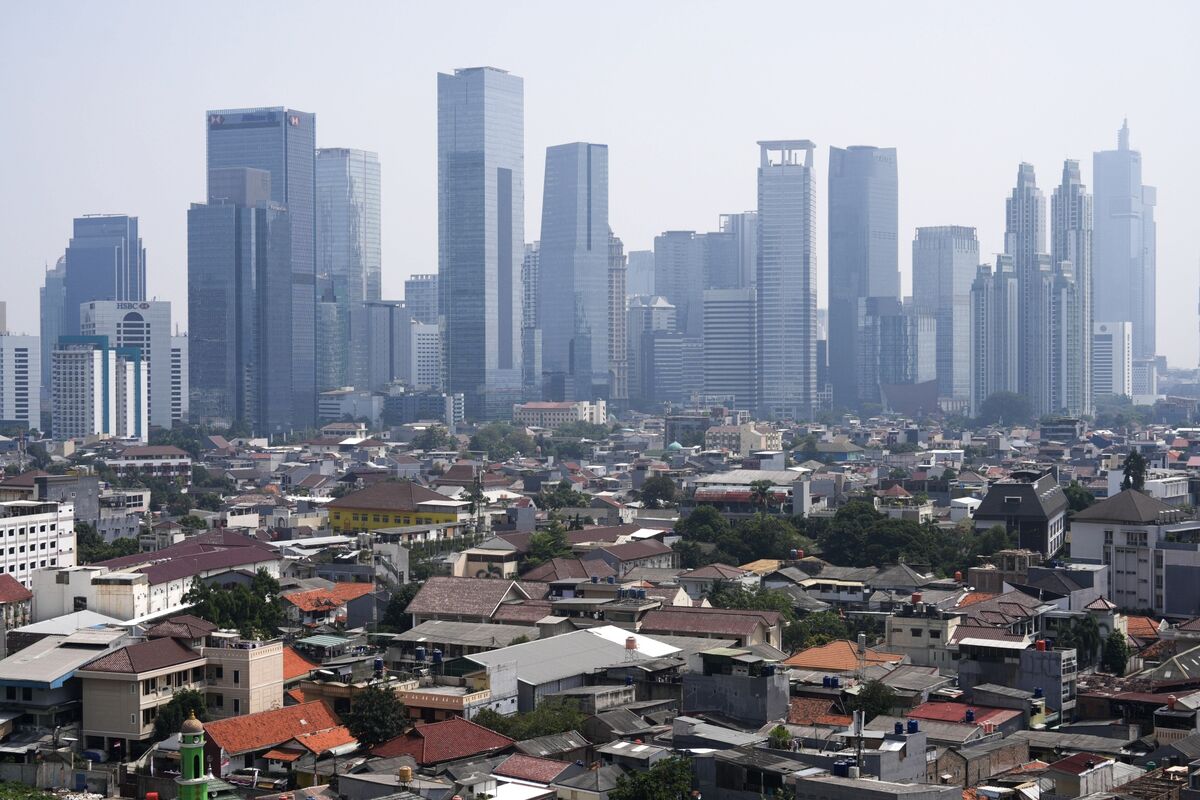
FTSE Russell reaffirmed Indonesian equities’ emerging-market status while saying it will closely monitor capital-market integrity reforms. Local authorities have taken measures to improve transparency; the article reports no change in classification or specific market reaction.
Analysis
The key market implication is the avoidance of a near-term index-status shock—not a fresh demand catalyst. A downgrade could have prompted benchmark-driven selling and increased the risk premium on Indonesian assets; reaffirmation removes that immediate tail risk, but continued monitoring limits any durable re-rating until reforms are demonstrably implemented. Do not treat FTSE’s decision as assurance about other index providers’ assessments or as evidence of imminent passive inflows.
Over the next 1–3 months, watch for concrete improvements in market access, disclosure quality, and settlement or trading integrity, rather than reform announcements alone. If implementation stalls, foreign investors may demand a higher liquidity and governance discount even without a formal classification change. Over 6–18 months, credible execution could broaden the investable universe and support a lower cost of equity; the benefit would be conditional and likely uneven across Indonesian issuers.
Contrarian read: the status quo may be mildly supportive because it removes a downgrade overhang, but the low-signal decision is easy to overread as validation. With no evidence here of a changed index weight or new allocation, a broad Indonesia-equity chase has weak confirmation. Falsifiers include a deterioration in market-access indicators, adverse follow-up from FTSE or another index provider, or reforms that fail to produce measurable improvements in transparency and trading integrity.
AllMind Terminal
AI-powered research, real-time alerts, and portfolio analytics for institutional investors.
Request TrialMarket Sentiment
Overall Sentiment
neutral
Sentiment Score
0.10
Key Decisions for Investors
- No headline-driven directional trade: keep Indonesia exposure benchmark-aware and avoid adding risk solely on the reaffirmation.
- For existing Indonesian-equity exposure, retain positions but use any rally unsupported by improved market-access or transparency data to trim rather than assume a sustained rerating.
- Set a 1–3 month alert for specific reform implementation milestones and subsequent index-provider commentary; reassess exposure promptly if monitoring turns adverse or access restrictions worsen.
- A relative-value position against broader emerging markets is only a watch item, not a recommendation: require evidence of improving foreign participation or investability before taking Indonesia-specific risk.
More News
- India’s central bank hikes rates for the first time since 2023 as inflation creeps up
- Australia top court rules against coal mine expansion, citing climate harm
- Paramount's hard-fought takeover of Warner Bros. Discovery closes Tuesday. Here's how we got here
- RBI raises rates 25 bps for first time in 3 years as inflation outlook worsens
- JPMorgan and Deutsche Bank just upgraded Brazilian stocks. How to trade them
- Paramount and Warner Bros. Discovery complete $110 billion media megamerger
From AllMind Research
- Anthropic IPO Preview: Valuation, Timing, and What to Watch
- Shein After the IPO: Venue, Valuation, and What Must Be Proved
- What AI Research Tools Should a Small Hedge Fund Buy First?
- AI Tools for Family Offices: A Stack by Decision Type
- Reading Conviction in the Tape: What Level 3 Order Book Data Really Tells Discretionary PMs