
Picis Introduces Prima, Bringing Anesthesia Documentation to the Point of Care
Source: PR Newswire
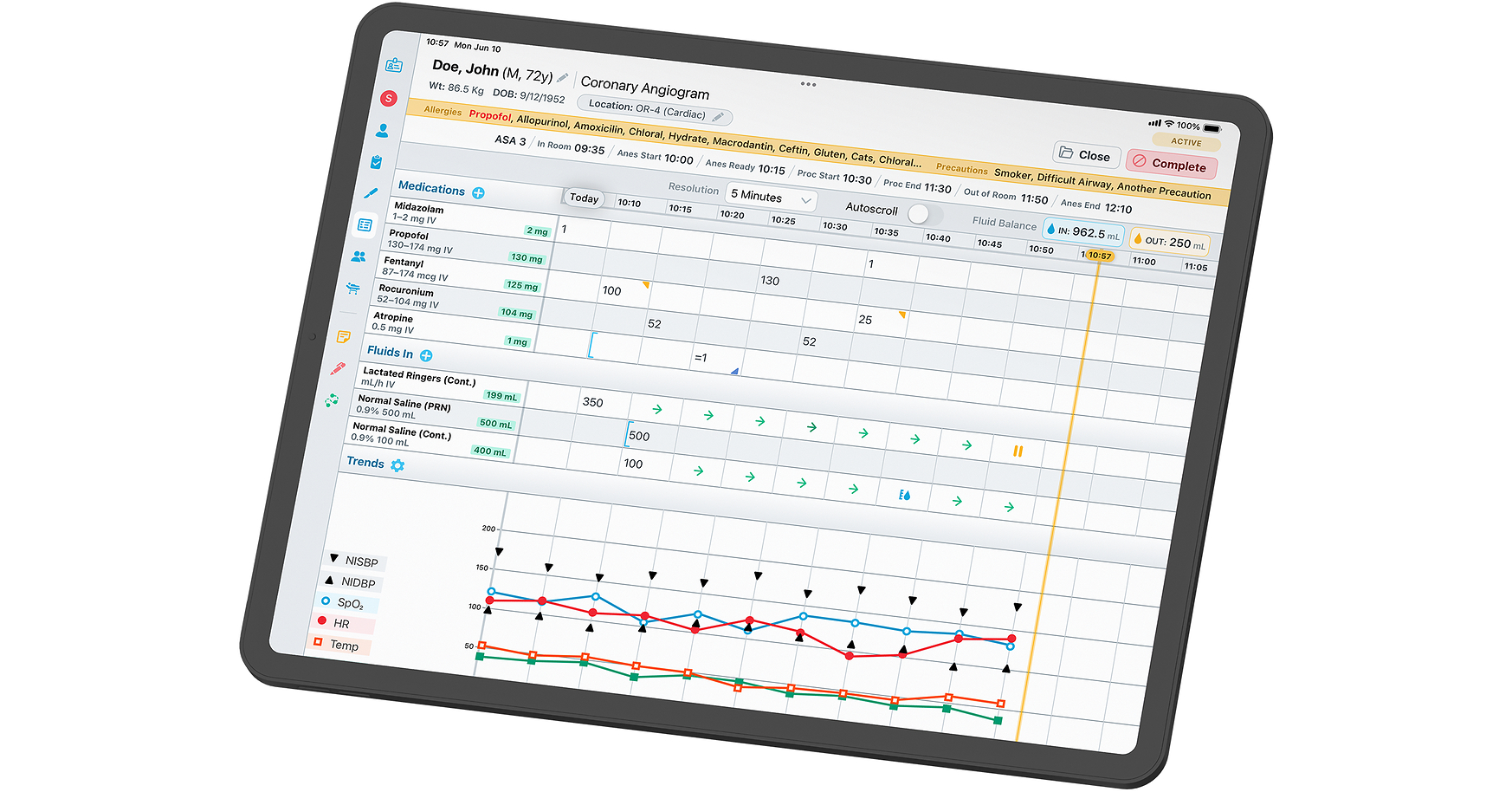
Picis Clinical Solutions launched Prima, a tablet-based anesthesia documentation platform designed to support preoperative and intraoperative workflows at the point of care. The system integrates physiological data from connected monitors, ventilators and anesthesia devices, while supporting HL7-based interoperability with electronic medical records. The release expands Picis' perioperative technology offering, but no revenue, customer adoption, pricing, or financial outlook was disclosed.
Analysis
This is not independently investable news: Picis sits within privately held Harris Computer, and a single workflow-module launch does not alter earnings estimates for public healthcare IT vendors. The relevant read-through is that anesthesia information-management systems are shifting from stationary documentation toward device-connected, mobile workflows, raising the importance of interoperability and installed-base integration rather than standalone hardware. That marginally favors entrenched enterprise platforms with broad perioperative footprints—Oracle (ORCL) through Cerner and Philips (PHG)—while making it harder for smaller point-solution vendors to win accounts without proven EMR connectivity, cybersecurity credentials, and implementation capacity.
Near term, there is no reason to expect a valuation impact in ORCL, PHG, GE HealthCare (GEHC), or Medtronic (MDT). Over 6-18 months, adoption could pressure operating-room workflow vendors to add mobile interfaces and device-agnostic data capture, but hospital procurement cycles are long and ROI depends on measured reductions in charting time, billing leakage, and clinician overtime—not product claims. The contrarian view is that mobile documentation is feature parity, not a durable moat: Epic's private-market dominance and hospital reluctance to introduce another clinical interface may limit independent AIMS share gains.
The useful catalyst is evidence of contract displacement or measurable perioperative software bookings, especially at large IDNs. A thesis that mobility is becoming a material growth vector would be falsified if hospital capital budgets remain directed toward core EHR upgrades, or if cybersecurity/integration requirements elongate deployment timelines and suppress module attach rates.
AllMind Terminal
AI-powered research, real-time alerts, and portfolio analytics for institutional investors.
Request TrialMarket Sentiment
Overall Sentiment
mildly positive
Sentiment Score
0.30
Key Decisions for Investors
- No standalone position on this announcement; impact is too small and the issuer is private.
- Maintain ORCL and PHG as watch-list beneficiaries of perioperative workflow consolidation, but require quarterly evidence of healthcare applications bookings, Cerner retention, or disclosed perioperative module wins before adding exposure.
- For a 6-18 month relative-value screen, monitor ORCL versus PHG/GEHC for hospital IT budget allocation: favor the vendor demonstrating incremental software revenue and margin expansion from installed-base module attach, not merely mobile-product announcements.
- Set an alert for major IDN contract wins, Epic integration certification changes, or reported anesthesia workflow displacement; those events—not feature launches—would create a tradable read-through for public healthcare IT proxies.
More News
- Nvidia Faces Questions Over China AI Chip Smuggling Cases
- $8.2B acquisition validates AI-picked chip stock: +20% since June
- Broadcom to lend Anthropic up to $42 billion to lease its chips, filing says
- Markets slip on dollar pressure, but this IT stock is up 10% today
- One of our most recent defensive buys cleared a hurdle and its stock jumped
- AI’s biggest players promise to police themselves at the White House
From AllMind Research
- Anthropic IPO Preview: Valuation, Timing, and What to Watch
- Shein After the IPO: Venue, Valuation, and What Must Be Proved
- What AI Research Tools Should a Small Hedge Fund Buy First?
- Can ChatGPT or Claude Replace a Research Platform?
- How the 2026 Milan-Cortina Winter Olympics Will Reshape Company Revenues and Stock Performance