
Trial Demonstrates Feasibility of At-Home Subcutaneous Diuretic Therapy for Heart Failure-Associated Edema
Source: PR Newswire
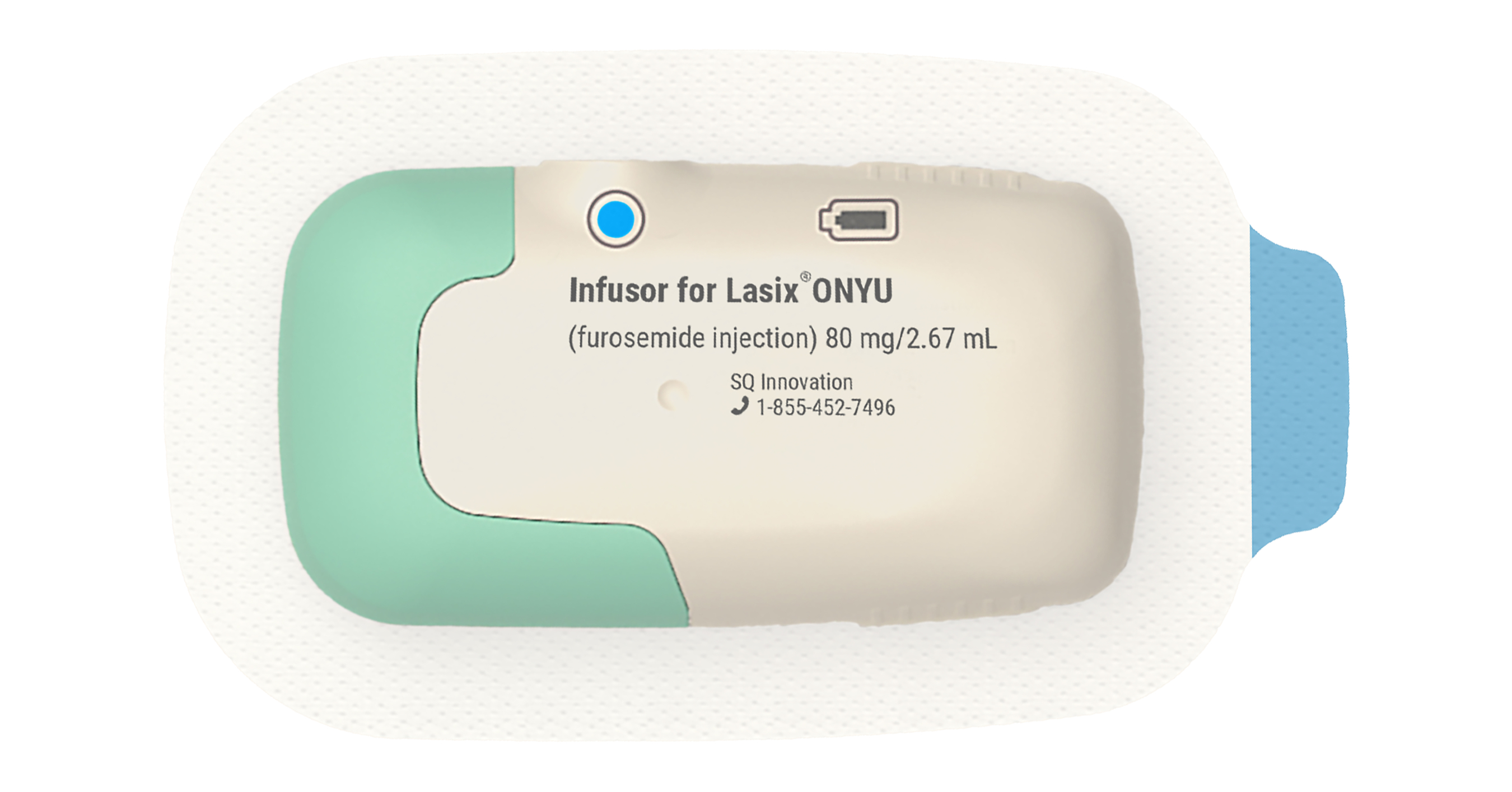
The 172-patient SUBCUT HF II trial found that at-home subcutaneous furosemide enabled early discharge, yielding 4.0 more days alive and out of hospital by 30 days and shortening the index hospitalization by an average of 5.5 days versus usual inpatient care. Serious adverse-event rates were similar (25% vs. 23%); 60-day all-cause rehospitalizations were 23.9% with at-home treatment versus 17.5% with usual care, a nonsignificant difference (p=0.33). The results support the feasibility of home treatment with FDA-approved Lasix ONYU, though the report provides no commercial or market-impact data.
Analysis
The investable read-through is category validation, not proof of a large commercial market. The randomized study supports an early-discharge pathway; it does not establish that home dosing prevents admissions or lowers total episode cost. Readmissions were numerically higher in the home-treatment arm, although the difference was not statistically significant, so the gain in days out of hospital appears chiefly tied to shortening the index stay. That distinction matters for reimbursement: hospitals may capture bed-capacity benefits while payers bear drug, device, monitoring, and possible readmission costs.
For MannKind (MNKD), whose Furoscix is the relevant listed competitive reference, the result cuts both ways. Clinician and payer familiarity with subcutaneous furosemide could expand the category; a second product with a different delivery system could also intensify competition. There is no evidence here on relative pricing, adherence, access, or share, so the publication alone does not support a directional earnings revision. Walmart’s dispensing role is too small and unquantified to infer material earnings sensitivity for WMT.
Over 1–3 months, watch U.S. uptake, payer coverage/coding, repeat use, and evidence that outpatient workflows safely identify and monitor patients. Over 6–18 months, the key test is whether reduced inpatient utilization converts into favorable total-cost evidence and durable reimbursement. The main reversal risk is that real-world adherence, electrolyte/volume monitoring, or readmissions erase bed-day savings. The open-label phase II result is encouraging, but not a substitute for U.S. commercial evidence.
AllMind Terminal
AI-powered research, real-time alerts, and portfolio analytics for institutional investors.
Request TrialMarket Sentiment
Overall Sentiment
moderately positive
Sentiment Score
0.40
Key Decisions for Investors
- No event-driven trade in MNKD on this publication alone: category validation is potentially supportive, while competitive pressure is unquantified. Reassess only with comparative pricing, access, utilization, and repeat-prescription data.
- Treat the roughly four-day hospital-stay reduction as a care-pathway signal, not an admission-prevention claim. Track readmissions and total episode cost; deterioration in either would undermine payer adoption.
- Set a 1–3 month alert for U.S. reimbursement and provider-workflow updates, and a 6–18 month alert for real-world adherence, safety monitoring, and repeat use. These are the missing data needed to judge market scale.
- Do not attribute material upside to WMT from the stated specialty-pharmacy availability without evidence of prescription volume or economics.
More News
- ‘The way work gets done is changing across every industry’: Kroger cites AI efficiency push as it cuts 3,000 corporate jobs
- The Diesel Squeeze Is Deepening
- Anthropic's third-quarter revenue is said to hit $16.8 billion ahead of IPO
- Why is Samsung Electronics stock plunging today?
- SK Hynix plunges 8% amid Asia tech rout as Fed rate hike fears, AI funding worries mount
- Elon Musk says Trump is 'ultimately' responsible for any curbs on Ukraine's Starshield systems
From AllMind Research
- Anthropic IPO Preview: Valuation, Timing, and What to Watch
- Shein After the IPO: Venue, Valuation, and What Must Be Proved
- What AI Research Tools Should a Small Hedge Fund Buy First?
- Best AI Stock Research Tools for Professional Investors
- Weekly Update: Adding Live MBO Level 3 Data - Liquidity Heatmap, OFI Charts, and More