
2026 Sponsorship Excellence Awards Winners Announced
Source: Newswire
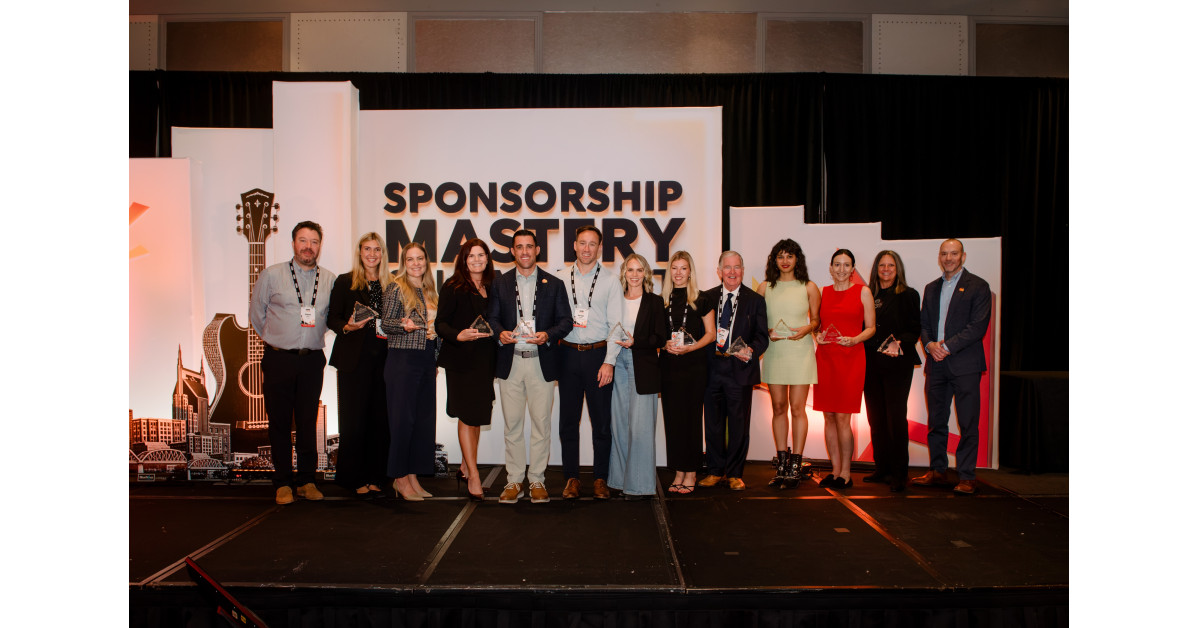
The Sponsorship Marketing Association named winners of its 2026 Sponsorship Excellence Awards, recognizing agencies, brands, sports properties and technology providers. Notable commercial metrics included CMA Fest's $86 million in direct visitor spending and 123 billion media impressions, DIGIDECK's adoption by more than 600 organizations, and Harley-Davidson and Summerfest's 350 press stories valued above $20 million. The announcement is industry recognition rather than a material financial development for the named companies.
Analysis
This is largely an industry-validation event rather than a fundamental catalyst; no immediate earnings estimate change is warranted for HOG, MA, or MFI. The useful read-through is that experiential marketing budgets remain concentrated in marquee live events, where measurable activation and first-party audience data can command a larger share of brand spend than conventional media. That favors payment networks and scaled consumer brands with global sponsorship portfolios, but the economic impact is too diffuse to move near-term revenue.
For MA, sponsorship-linked venue and event payments can reinforce transaction-volume growth at the margin, while merchant-acquisition and data products create a more durable 6-18 month monetization angle than the activation itself. The relevant verification point is not publicity value but cross-border card-spend growth, particularly in travel and entertainment categories; a weakening consumer or lower international volumes would negate the read-through. MFI's Olympic association improves brand relevance, but it is unlikely to offset the more material drivers of packaged-protein volumes, promotional intensity, and input-cost spreads.
HOG has the weakest direct setup. Festival exposure may support brand engagement, but converting event impressions into incremental motorcycle unit sales remains difficult in a high-ticket discretionary category facing financing-sensitive demand. The more important second-order signal is that live-event partnerships may elevate merchandising and apparel attachment rates, but that is too small to repair core-bike margin pressure; treat any sponsorship-driven rally as an opportunity to reassess rather than a standalone long catalyst.
Contrarianly, the market may overvalue reported media-impression figures because they rarely translate cleanly into incremental sales or retained customers. The beneficiary of the broader trend could be sponsorship-measurement vendors and event-data platforms, but DIGIDECK is private and there is no clean listed pure-play. Until brands disclose conversion, customer-acquisition cost, or spend-retention metrics, this remains an observation, not a trade signal.
AllMind Terminal
AI-powered research, real-time alerts, and portfolio analytics for institutional investors.
Request TrialMarket Sentiment
Overall Sentiment
mildly positive
Sentiment Score
0.30
Ticker Sentiment
Key Decisions for Investors
- No new directional position based solely on this release; classify as low-impact brand-marketing news and wait for earnings disclosures on event-led conversion or sponsorship spending.
- Maintain MA as the preferred listed exposure to premium experiential spend, but enter only on broader payments-sector weakness; monitor quarterly cross-border volume and travel-and-entertainment spend. A sustained deceleration in either metric is the thesis falsifier.
- Avoid adding to HOG on sponsorship publicity. If HOG outperforms discretionary peers by more than 5-7% without improved retail sales, dealer inventory, or financing commentary over the next 1-3 months, consider a tactical short versus XLY as the attention-to-demand gap closes.
- For MFI, track 2027 guidance for Olympic-program spending, volume growth, and gross-margin progression. Treat evidence of higher marketing expense without measurable household penetration or pricing realization as a negative margin signal, not a brand-equity positive.
More News
- AI’s biggest players promise to police themselves at the White House
- Visa and Mastercard handle nearly half of Europe’s card payments. The digital euro aims to change that
- Temasek comfortable with current AI spending levels, executive says
- The unicorn CEO betting her industry’s AI crisis isn’t the one you think
- AI is consuming human knowledge. It should learn how to pay for it
- The tech industry is hot for shopping bots, but they're years away