
Oil Climbs as China Buys More Crude: Evening Briefing Americas
Source: Bloomberg
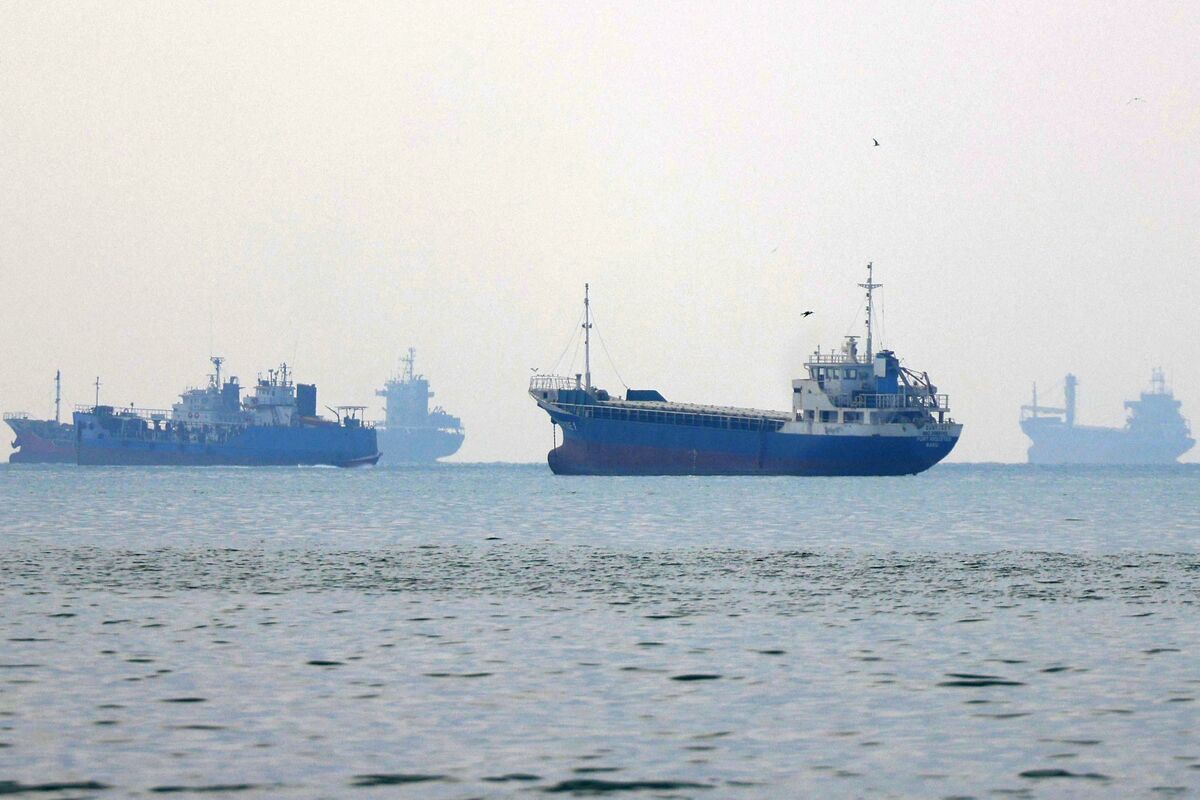
Brent crude topped $101 per barrel for the first time since July and settled more than 3% higher, while WTI traded near $96. Escalating Middle East attacks tied to the US-Israel war with Iran raised supply-risk concerns, while renewed Chinese crude buying removed a key restraint on prices. Stronger physical-market gauges suggest tightening near-term oil-market conditions.
Analysis
The important signal is the simultaneous tightening of prompt physical balances and geopolitical risk premium: this can move crude from a headline-driven spike into a sustained backwardation/stock-draw regime. US E&Ps with unhedged production and low reinvestment needs—FANG, OXY, DVN and OVV—should see disproportionate near-term FCF upgrades, while refiners face a more mixed outcome as crude-cost inflation can outrun product-crack expansion. Tanker owners such as FRO and STNG gain if rerouting, precautionary inventory building, or longer voyage distances tighten vessel availability.
The second-order loser is oil-intensive transport and chemicals rather than broad industrials. DAL, UAL, AAL, FDX, UPS and petrochemical-exposed LYB have limited ability to immediately pass through a sustained fuel-cost increase; consensus estimates typically lag a sharp oil move by one to two quarters. For consumers, higher gasoline prices would also challenge discretionary demand and could complicate the disinflation path, raising the risk that rate-sensitive cyclicals underperform even if energy equities rally.
Consensus may be too focused on outright price levels and insufficiently focused on whether prompt spreads confirm actual supply disruption. If Brent strength is not accompanied by wider Brent time spreads, declining OECD inventories, and elevated physical differentials, the move is vulnerable to reversal once risk headlines fade. Conversely, a durable draw cycle would force upward revisions to 2026 E&P cash-flow estimates and could sustain an energy-sector multiple rerating over the next 3-6 months; falsification is a rapid normalization in prompt spreads and renewed Chinese buying restraint.
AllMind Terminal
AI-powered research, real-time alerts, and portfolio analytics for institutional investors.
Request TrialMarket Sentiment
Overall Sentiment
moderately positive
Sentiment Score
0.42
Key Decisions for Investors
- Initiate a 1-3 month long FANG / short XLE pair: FANG offers higher crude beta and lower downstream dilution than the integrated-heavy ETF. Target 10-15% relative upside if Brent remains above $95; exit if Brent falls below $88 or FANG's next guidance implies materially higher capex.
- Buy OXY 3-6 month calls or a call spread rather than common stock after the first volatility pullback. The equity has meaningful incremental FCF sensitivity to higher realized prices and a credible balance-sheet-deleveraging catalyst; cap premium at 1-1.5% of NAV because a de-escalation can collapse implied volatility and oil simultaneously.
- Long FRO or STNG for 3-6 months, sized modestly, as a non-obvious expression of disrupted trade flows and inventory repositioning. Require confirmation in spot tanker rates and avoid if vessel rates fail to rise despite sustained crude strength, which would indicate the disruption is financial rather than logistical.
- Hedge the energy basket with a 2-3 month long XLE / short JETS or long XLE / short LYB overlay. This isolates the fuel-input-cost transfer; take profits if gasoline demand indicators weaken materially or if Brent prompt backwardation narrows for two consecutive weeks.
More News
- CENTCOM reportedly has plans for Iran strikes: Will Trump approve them?
- Saudi Arabia intercepts missiles and drones as fighting with Houthis rages
- Israelis hold final rally against Netanyahu ahead of what may be the most consequential election in the country’s history
- Brookfield to open Qatar office as it expands Middle East operations
- First Russian diesel tanker heads to New York after Trump's deal with Putin to lower fuel prices
- Saudi Arabia intercepts drones and missiles as fighting with Yemen’s Houthis continues