
Blood Cancer Treatment Advances Have Saved Nearly 26 Million Years of Life Over Past 75 Years
Source: PR Newswire
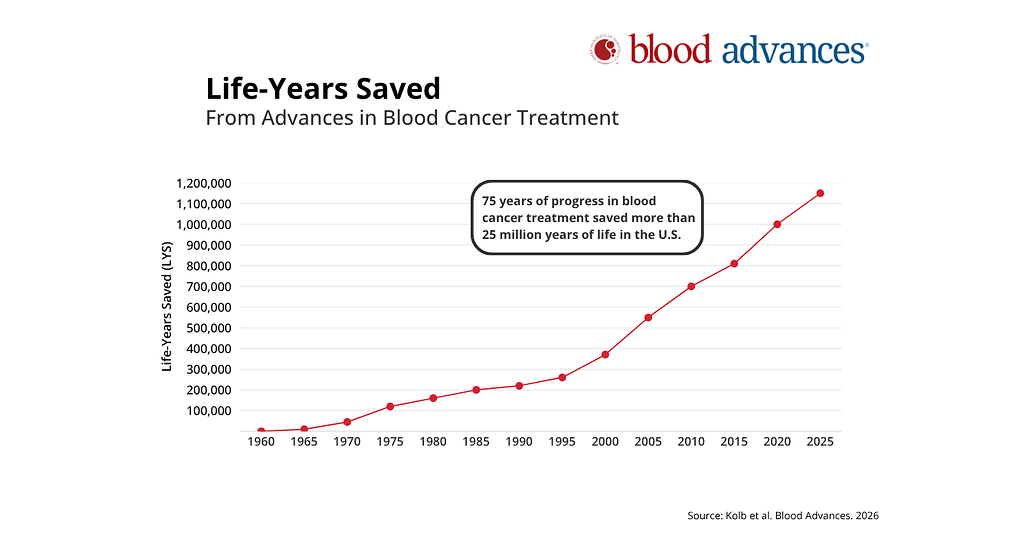
A new Blood Advances analysis estimates blood cancer therapies have saved 25.8 million life-years in the U.S. from 1949–2024, translating treatment innovation into “time gained” rather than survival rates alone. On the current trajectory, therapies are projected to add 18.9 million life-years from 2026–2040, with potential acceleration of ~1.0 million additional life-years by 2040 (range 0.8–1.5 million) if research investment and access to care expand. The study also flags persistent racial gaps and limited progress for acute myeloid leukemia (AML), implying policy and coverage barriers could significantly slow gains.
Analysis
This is not a near-term earnings catalyst; it is an agenda-setting event. The only investable read-through is that hematology remains one of the few oncology areas where durable innovation still converts into real-world utilization, so large-cap franchises with exposure to chronic/maintenance blood-cancer regimens should keep a structural reimbursement advantage over pre-revenue names. The flip side is that the most expensive modalities are also the most vulnerable to any future policy push to prove value, prior-authorize harder, or compress site-of-care economics.
Second-order, the emphasis on access and disparities is mildly supportive for companies with simpler administration and broad community-oncology penetration, while being less helpful for therapies that rely on tertiary-center capacity. That favors established commercial platforms over niche development-stage stories, but only if they can defend pricing with clear survival benefit. AML remains the key sandbox for stock selection: it is the highest unmet-need area, but also the most likely place where a few first-in-class assets will take share while the rest of the basket sees little benefit.
Contrarian take: the market may overestimate the breadth of the policy tailwind. A better reading is that this highlights how hard it is to turn scientific progress into incremental life-years in the next 12-24 months, especially if access friction rises. For investors, this argues for being selective on hematology beta rather than assuming an across-the-board oncology multiple re-rate.
AllMind Terminal
AI-powered research, real-time alerts, and portfolio analytics for institutional investors.
Request TrialMarket Sentiment
Overall Sentiment
mildly positive
Sentiment Score
0.25
Key Decisions for Investors
- Do not trade the headline alone; keep this as a watch item until there is concrete federal or payer language on access/reimbursement. No immediate position is warranted from this release.
- If using the theme tactically, prefer a quality basket in hematology-heavy large caps (ABBV, BMY, GILD, JNJ) versus XBI on any pullback; the former have actual commercial monetization if access broadens, while XBI remains valuation-sensitive to policy noise.
- Pair idea for the next 1-3 months: long large-cap hematology exposure (ABBV/BMY) vs short a higher-duration biotech proxy such as XBI, on the thesis that this is supportive of proven franchises more than speculative platforms. Falsify if AML/hematology trial data or reimbursement policy unexpectedly improves funding conditions for early-stage names.
- Set an alert for CMS/Medicare coverage or Part D/access proposals over the next 6-12 months; any move toward tighter utilization management would hurt high-cost blood-cancer modalities first and compress multiples for cell therapy and bispecific-exposed names.
More News
- Indonesia stocks suffer biggest daily slump since 1998 as MSCI weighs downgrade
- The IPO drought is driving private equity-owned companies to the debt market to pay investors
- CoreWeave credit default swaps hit distress levels as investors sour on AI debt
- FDA approves Enspryng for thyroid eye disease treatment
- Giant Taiwanese chipmaker TSMC confirms it’s in talks with Elon Musk to join ‘Terafab’ complex in Texas: ‘The AI market continues to be very strong’
- Hybe shares jump 10% as K-pop sensation BTS' tour lifts earnings hopes