
New doubts emerge about whether Fed will raise interest rates this month
Source: marketwatch.com
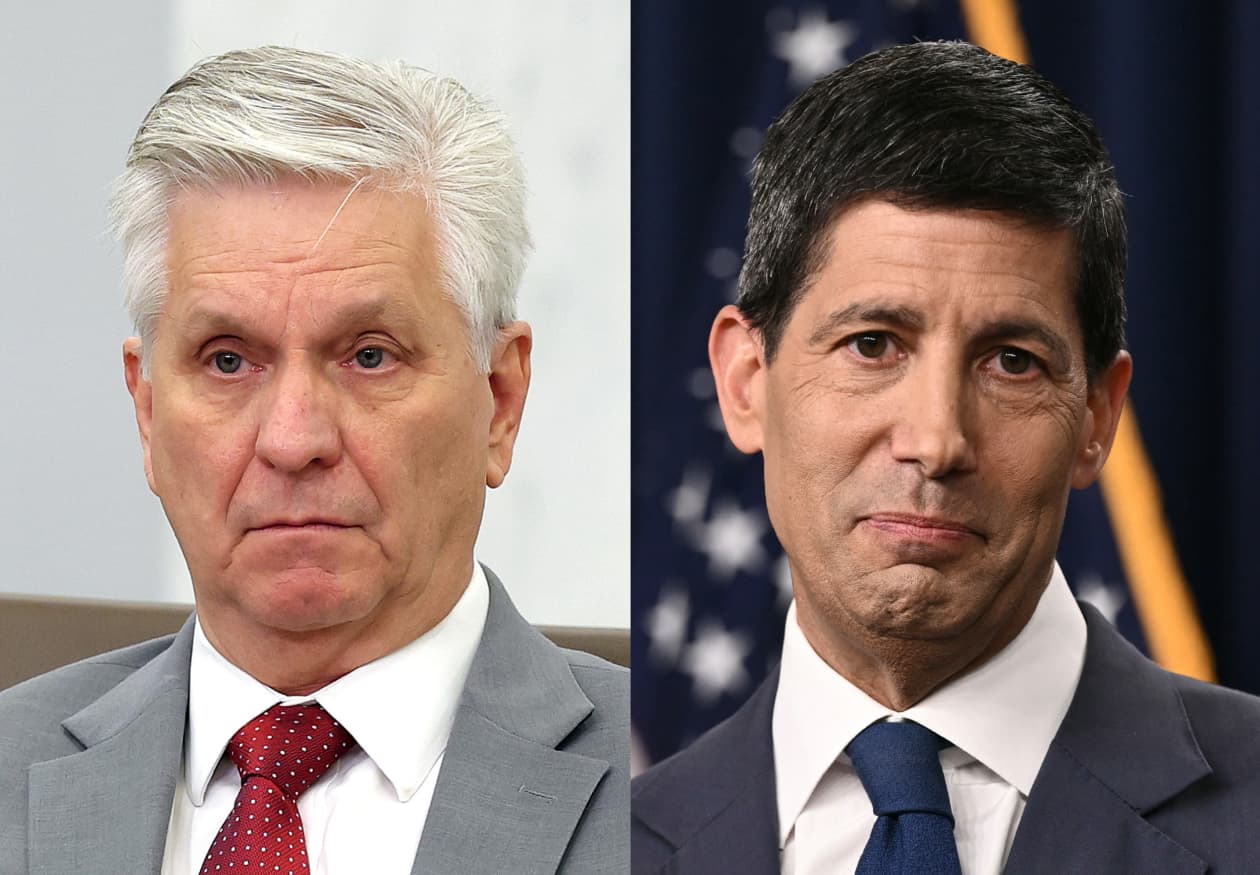
Fed governor Christopher Waller argued in a Thursday speech that the Fed should hold interest rates steady, adding doubt to the prior market view that the Fed would raise rates in September. With conflicting Fed messaging, markets will focus on incoming data over the next ~10 days to gauge the likelihood and timing of any rate move. The news is likely to raise rate-path uncertainty and move interest-rate-sensitive assets.
Analysis
The market is likely overfocusing on the policy headline and underpricing the distinction between a benign pause and a pause caused by deteriorating growth. A hold would mechanically help front-end rate-sensitive exposures, but for regional lenders the bigger variable is not the fed funds level itself; it is whether deposit costs stop rising faster than asset yields and whether loan growth survives long enough to matter. That makes the first 1-5 trading days a rate-beta event, while the next 1-3 months are a credit-quality and loan-demand test.
For banks like OZK and CBSU, the second-order risk is that any relief in funding costs could be offset by slower CRE, consumer, and corporate demand if the incoming data are weak enough to keep the Fed sidelined. In that scenario, lower policy-rate expectations can actually compress near-term earnings visibility because investors start discounting higher reserving needs and weaker originations, which usually matters more to valuations than a 25 bp move in the policy rate. The cleaner beneficiaries are long-duration assets and rate-sensitive sectors with less credit exposure.
The contrarian view is that consensus may be treating "no hike" as inherently bullish for financials, when the more important signal could be macro fragility. If the next 10 days confirm softer labor/inflation prints, the steepening move would likely favor Treasuries and real estate first, while bank multiples remain capped by credit concerns. Conversely, a surprise hike would be bearish for duration, but could actually be less damaging to banks than a hold prompted by a growth scare, because it would imply the economy is still firm enough to absorb higher rates.
AllMind Terminal
AI-powered research, real-time alerts, and portfolio analytics for institutional investors.
Request TrialMarket Sentiment
Overall Sentiment
neutral
Sentiment Score
-0.05
Key Decisions for Investors
- Do not chase OZK/CBSU into the data window; treat any pop on a perceived Fed pause as tradable, not investable, unless deposit-cost commentary in upcoming earnings confirms a true NIM inflection.
- Pair trade: long TLT or IEF vs short KRE into the next 10 days. Best case is a weak-data/hold outcome that bull-steepens the curve; risk is a hawkish data surprise that lifts 2Y yields and forces a stop.
- Prefer duration-sensitive sectors over banks if the Fed pauses: long XLRE or XLU vs neutral banks. These benefit from lower discount rates without the credit-reserve overhang facing regional lenders.
- For a bank-specific relative value view, favor balance-sheet-light money-center exposure over CRE-heavy regionals; avoid adding to OZK until loan-growth and reserve trends confirm that the pause is not a prelude to slower credit formation.
More News
- ‘France, truly, is on the brink’ and just days away from a make-or-break moment in its debt crisis, analyst warns, as protests turn into riots
- AI stocks plunge. Inflation heats up. Where we're still finding opportunities
- U.S. debt interest payments hit $3 billion a day and jumped 8% in fiscal 2026 — faster than total federal spending, revenue and GDP growth
- AI rapidly improving, could vastly boost U.S. GDP, Anthropic's Clark tells policymakers
- ‘How many canaries have we killed in the coal mine?’ — Wall Street debates if the latest AI bubble warnings are another head fake or the real thing
- The Iran war has cost the average U.S. household the equivalent of almost $2,000, and the energy portion goes up $50 a week, top economist says