
AM General Building a Strong Foundation with Mission-Ready Technology at the AUSA Annual Meeting 2026
Source: PR Newswire
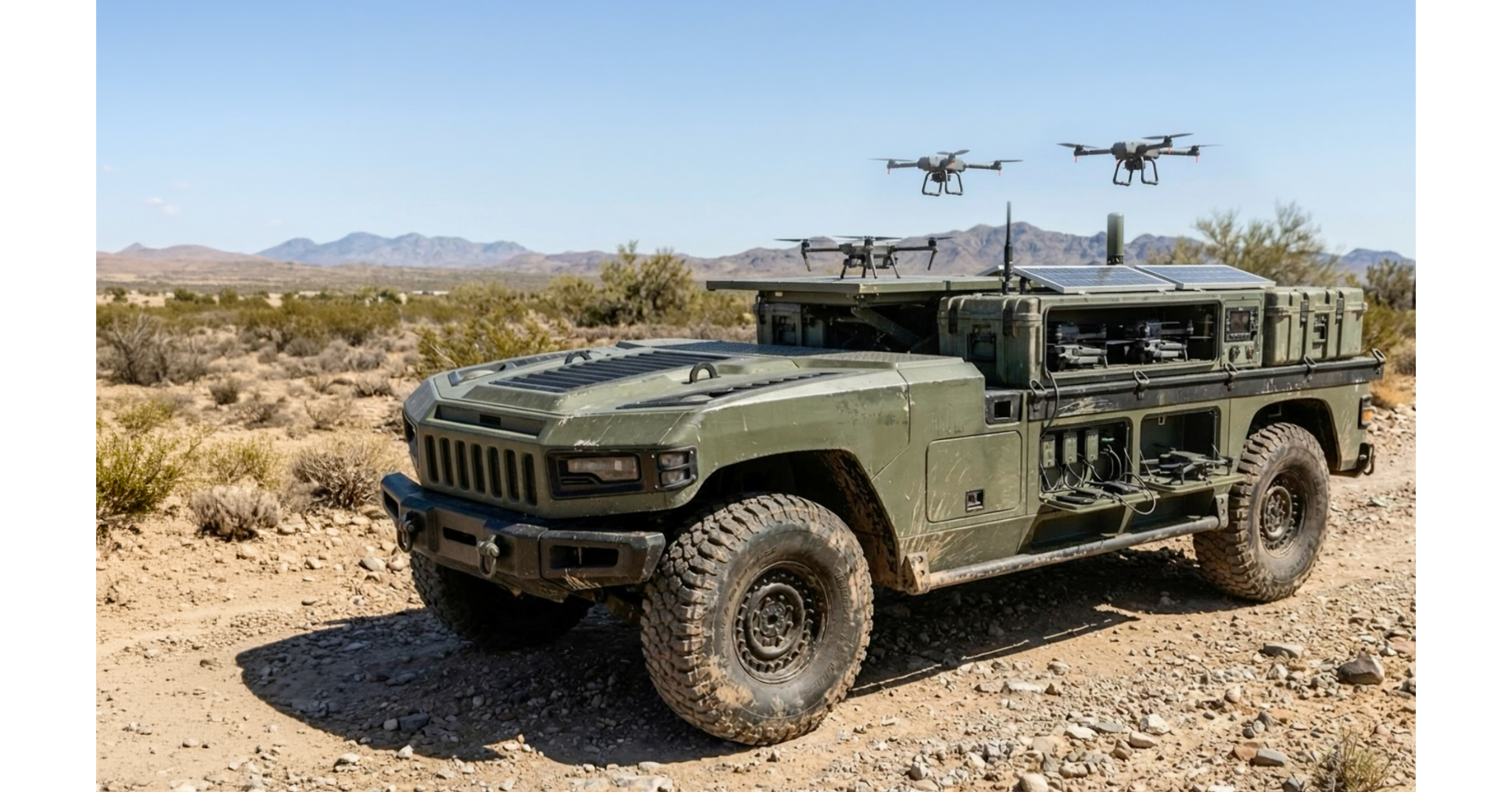
AM General is showcasing an unmanned ground vehicle integrated with XTEND’s aerial-robotics launch pod and a JLTV A2 equipped with RSGS’s 30mm remote weapon station and Iron Wasp counter-drone system at AUSA. Its next-generation HUMVEE features a 250-hp engine producing more than 500 lb-ft of torque, with Phase One production planned for late 2027. The announcements highlight product development and defense capabilities but provide no sales, contract-value, or financial-performance figures.
Analysis
The economic signal is integration readiness, not demonstrated demand: an exhibition configuration does not establish an Army order, qualification, or funded production volume. Near term, the market impact should therefore be limited unless the show produces independently verifiable test milestones or procurement disclosures. The key conversion question is whether the Army funds these as repeatable vehicle configurations rather than one-off integrations.
The second-order opportunity is in the capability stack around tactical vehicles: launch systems, counter-UAS, remote weapon stations, sensors, autonomy software, and their integration/support. If the Army adopts more modular mission kits, suppliers could benefit beyond vehicle deliveries through upgrades and sustainment. Conversely, added payloads and electronics create weight, power, cooling, cybersecurity, and maintenance constraints; integration success in a demonstration may not translate into field reliability or affordable lifecycle cost. Shared powertrain architecture could improve fleet commonality, but also increases exposure to a common component or supplier failure across programs.
Timing is asymmetric: HUMVEE modernization production is described as planned for late 2027, so it is not a near-term earnings catalyst absent earlier funded milestones. Over 1–3 months, watch for Army qualification, contract awards, and budget language; over 6–18 months, assess whether modular autonomy and counter-drone kits become procurement requirements. The contrarian point is that optimistic capability demos may overstate monetization: operational effectiveness, replenishment costs, and integration at scale matter more than the number of systems shown. No direct public-equity exposure or order value is established by the supplied information.
AllMind Terminal
AI-powered research, real-time alerts, and portfolio analytics for institutional investors.
Request TrialMarket Sentiment
Overall Sentiment
mildly positive
Sentiment Score
0.15
Key Decisions for Investors
- No trade on the announcement alone. Treat it as a product-validation signal, not evidence of incremental revenue; do not infer a public-company beneficiary from the article or assume the named participants have listed equity exposure.
- Put Army vehicle and counter-UAS procurement milestones on a 1–3 month watchlist: funded contract awards, qualification results, or explicit program-of-record language would be stronger catalysts than further demonstrations.
- For any future exposure to the supplier ecosystem, verify contract scope, production quantities, ownership/listing status, and whether integration revenue is recurring or one-time before sizing a position.
- Falsify the adoption thesis if Army testing reveals payload/power or reliability limitations, if procurement funding is delayed or reduced, or if the late-2027 modernization schedule slips without funded interim milestones.
More News
- Verizon stock heads for worst day since 2002 as SpaceX U.S. network plans whack telcos
- Authorities said Houthi-claimed attacks on Riyadh airport killed three Saudi citizens, as airlines suspend at least 124 flights
- Elon Musk intensifies attack on Ambani over Starlink India launch delay
- What's behind the recovery rally in tech stocks — plus, Elon Musk's very good week
- Wall Street Week | Michigan Manufacturing, AI Debt Investments, Baby Bonds, Canadian Coal Fight
- SpaceX’s Wireless Threat Rises With Spectrum Deal