
India is the Second-Worst-Performing Emerging Market This Year for Equities
Source: Bloomberg
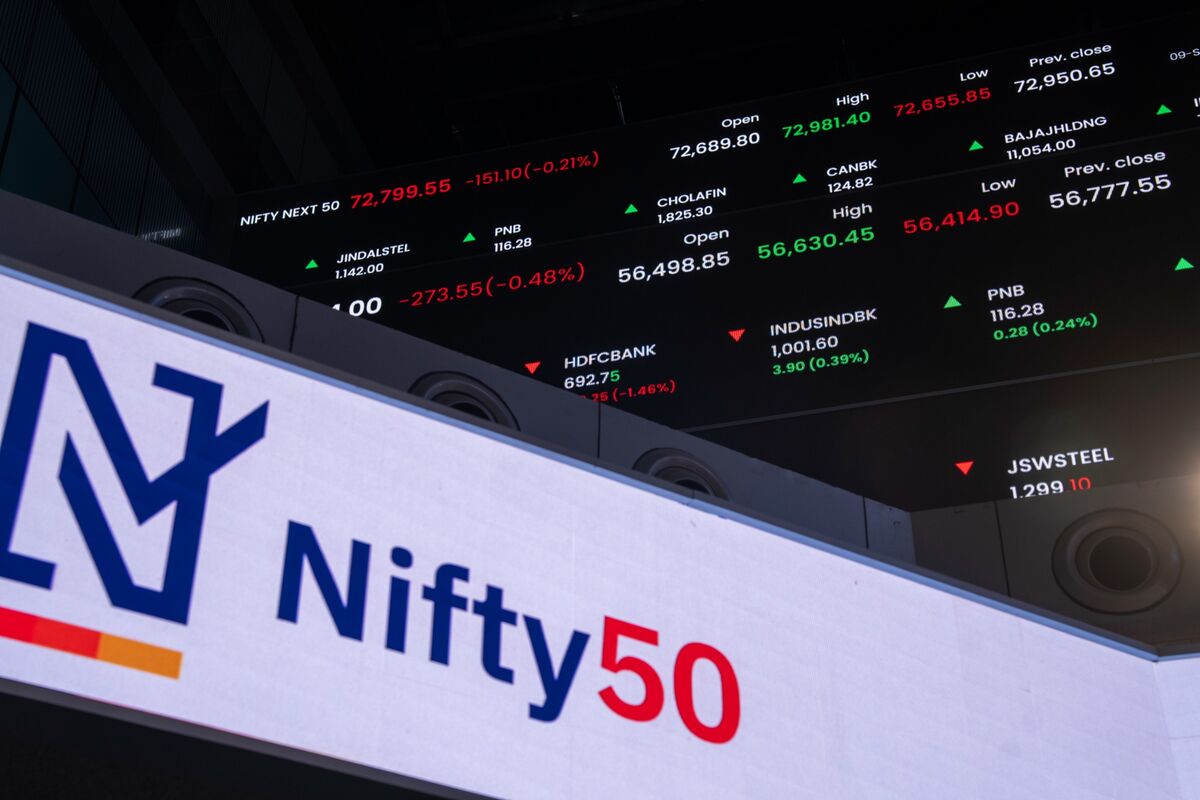
India is the second-worst-performing emerging market this year, with equity-market weakness attributed largely to elevated crude oil prices and rising global bond yields. Higher energy costs and tighter global financial conditions are weighing on investor sentiment toward Indian assets.
Analysis
India’s equity sensitivity is less about headline growth and more about the external-financing channel: higher crude widens the import bill, pressures INR and raises the probability that domestic policy stays restrictive even as global growth slows. That combination compresses the valuation premium typically afforded to INDA/INDY, particularly in rate-sensitive financials and long-duration consumer/discretionary franchises. The near-term risk is reflexive: INR weakness can prompt foreign outflows, which then forces additional local equity de-risking despite otherwise resilient domestic flows.
The cleaner second-order beneficiary is not necessarily a broad EM short, but energy exporters and Gulf markets that receive the corresponding petrodollar impulse. India’s refining and marketing complex can be mixed: refiners with export flexibility may protect margins, while fuel-marketing exposure becomes politically constrained if retail price relief is required. Within Indian equities, IT services are a partial INR hedge but remain exposed to the same elevated global yield environment through weaker discretionary technology budgets.
Consensus may be too quick to extrapolate a crude-and-yield shock into a structural India break. A reversal in Brent or a stabilization in US real yields could produce a sharp 1-3 month catch-up because India remains a high-quality destination for EM-dedicated capital; the key is whether the move is driven by foreign selling rather than domestic earnings revisions. This is therefore a tactical macro hedge rather than a high-conviction structural short until quarterly guidance shows broad margin compression, credit-cost deterioration, or a material slowdown in domestic demand.
AllMind Terminal
AI-powered research, real-time alerts, and portfolio analytics for institutional investors.
Request TrialMarket Sentiment
Overall Sentiment
moderately negative
Sentiment Score
-0.45
Key Decisions for Investors
- Use a 1-3 month pair: long XLE versus short INDA, sized beta-neutral. The trade captures the oil-importer versus oil-producer spread without requiring a broad risk-off call; reassess if Brent falls below its 50-day moving average or INDA begins to outperform EEM for two consecutive weeks.
- Do not initiate an outright INDA short solely on performance weakness. Upgrade to a tactical short only if INR depreciation accelerates alongside renewed foreign outflows and Indian earnings estimates begin falling; absent those confirmations, downside is vulnerable to domestic institutional buying and a fast oil reversal.
- For portfolios needing EM exposure, favor relatively oil-export-sensitive EEM components or a modest XLE overlay rather than adding India beta over the next 30-60 days. The hedge should be reduced if US real yields decline meaningfully, since multiple expansion could dominate India’s near-term oil sensitivity.
- Watch Indian fuel-price policy and refinery marketing margins before expressing a view through individual Indian energy names. A mandated retail-price freeze would shift the crude shock from consumers to marketing-company balance sheets, making broad INDA exposure preferable to single-name energy longs.
More News
- UK Prime Minister Burnham says Iran 'played a part' in British air base incident
- Goldman Sachs pushes Fed rate hike forecast to December
- Ten Reasons Investors Are Driving Government Bond Yields Higher
- Asian stocks dip, bonds in focus after torrid September
- September Ends on a Grim Market Note: Evening Briefing Americas
- Asia stocks rise on chipmaker gains, soft U.S. inflation; Nikkei outperforms