
Reconova Makes Its Debut at PTE Asia 2026, Accelerating the Global Expansion of Smart Aviation through Embodied Intelligence
Source: PR Newswire
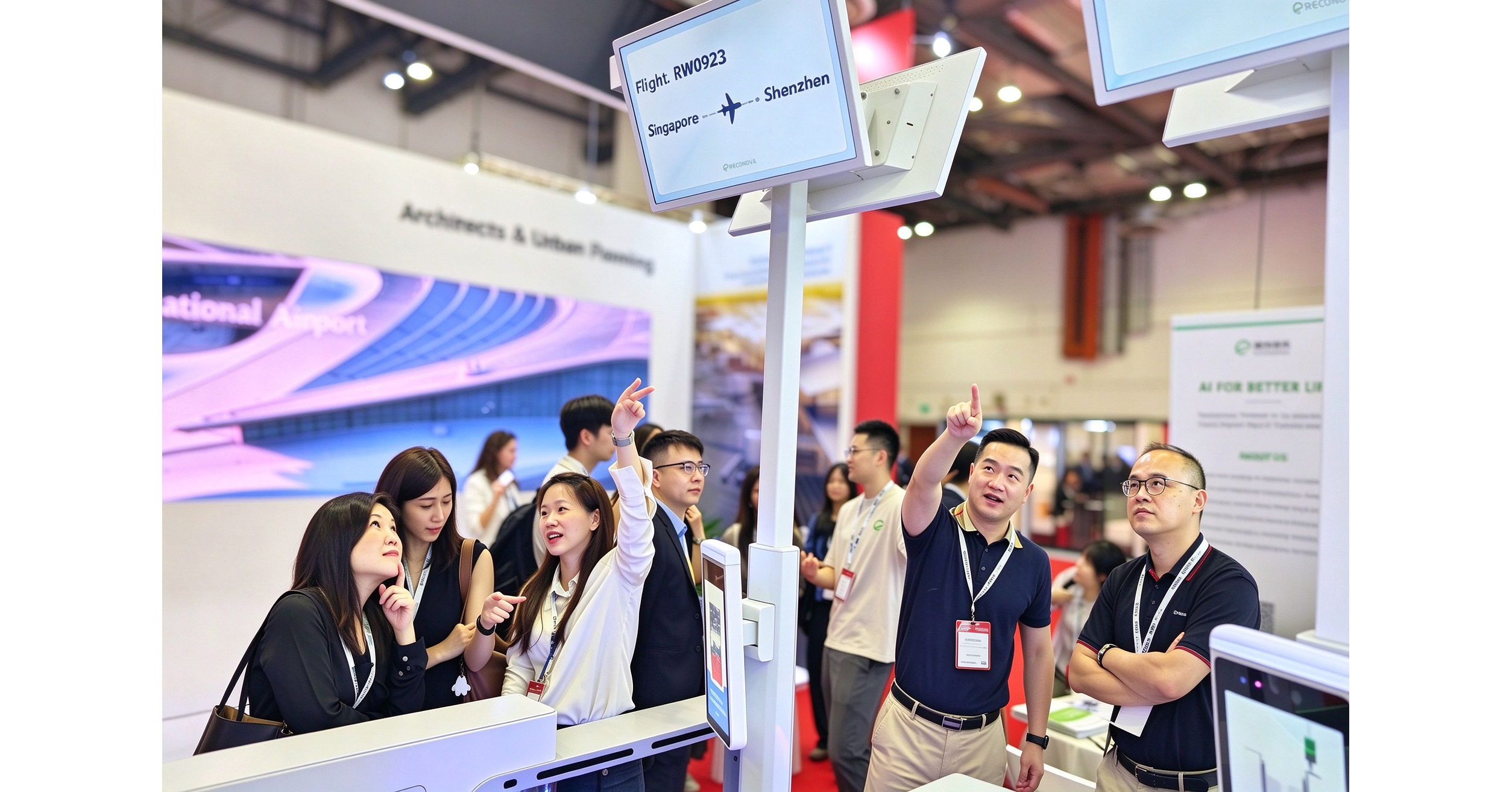
Reconova showcased embodied-AI airport products, including its AntOne baggage-transfer robot and intelligent passenger-processing systems, at PTE Asia 2026 in Singapore. The company is targeting airport digitalization investment across Asia and the Middle East, where roughly $240 billion of airport infrastructure spending is expected over the next decade. Reconova says its solutions are deployed at more than one-third of China's civil airports, with a passenger-processing proof of concept underway at Tashkent International Airport and AntOne being introduced in Europe and Japan.
Analysis
This is not yet an earnings-relevant event for listed airport, aerospace, or automation peers; the principal signal is that airport capex is broadening from terminal construction toward labor-substituting operational technology. The monetization bottleneck is long procurement cycles, safety certification, integration with baggage-handling systems, and the need for local service capability. A pilot-to-fleet conversion typically requires 12-24 months, so exhibition interest and PoCs should not be capitalized into near-term revenue estimates.
The more investable second-order beneficiaries are incumbent airport automation and baggage-system providers with installed bases: Vanderlande owner Toyota Industries (6201.JP), Siemens (SIE.GR), Honeywell (HON), Daifuku (6383.JP), and SITA-adjacent private vendors. Smaller robotics entrants can pressure pricing at the edge of baggage handling, but incumbents retain the highest-margin integration, maintenance, and systems-validation work; a successful low-cost mobile robot could nevertheless shift value away from fixed-conveyor capex over a 6-18 month horizon.
Contrarian view: the addressable infrastructure budget should not be treated as automation spend. Airport operators face constrained airline fees and prioritize capacity, security, and resilience, meaning robotics adoption will be gated by demonstrable labor savings and throughput gains rather than AI branding. The key falsifier for a bullish airport-automation thesis is evidence that pilots fail to convert into multi-airport framework contracts, or that project margins decline as operators demand outcome-based pricing and performance guarantees.
AllMind Terminal
AI-powered research, real-time alerts, and portfolio analytics for institutional investors.
Request TrialMarket Sentiment
Overall Sentiment
moderately positive
Sentiment Score
0.42
Key Decisions for Investors
- No directional position in Reconova absent accessible liquidity, valuation, backlog, and disclosed international revenue; set an alert for a named Middle East or Southeast Asian multi-site contract with contract value, deployment count, and service terms.
- Build a 6-12 month watchlist long on Daifuku (6383.JP) and Toyota Industries (6201.JP) for airport-automation order commentary; initiate only after order intake/backlog confirms acceleration, as these names offer installed-base capture but are not pure plays.
- Consider a selective long HON versus short a broad industrial ETF (XLI) only if airport and warehouse automation bookings accelerate while HON sustains margin guidance; use a 8-10% relative stop because aviation aftermarket and building controls may dominate the signal.
- Monitor airport-operator capex disclosures at AENA (AENA.SM), ADP (ADP.FP), and Fraport (FRA.GR) over the next two quarters. A rise in automation-specific budgets or labor-cost commentary is a leading indicator; absent that, treat the theme as narrative rather than a trade.
More News
- Saudi, Turkish, Pakistani chiefs plan urgent talks amid Yemen fighting
- Oil falls amid optimism over potential diplomatic solution to the Iran conflict
- Trump Versus Xi: How Their High-Stakes Summits Compare
- SEBI Allows Portfolio Managers to Invest Overseas, Short Equity Options
- Trump, Xi Address AI, Taiwan During State Visit
- Oracle Japan shares surge 7% after record fiscal first quarter, bucking selloff of U.S. parent
From AllMind Research
- Anthropic IPO Preview: Valuation, Timing, and What to Watch
- Shein After the IPO: Venue, Valuation, and What Must Be Proved
- What AI Research Tools Should a Small Hedge Fund Buy First?
- Capital IQ Alternatives for Research and Deal Work
- Research Workflows, Report Format Selection, and Interactive Synthesis