
Median PFS Approaches 14 Months! 3SBio's PD-1/VEGF Bispecific Antibody Posts Impressive Data at ESMO 2026
Source: PR Newswire
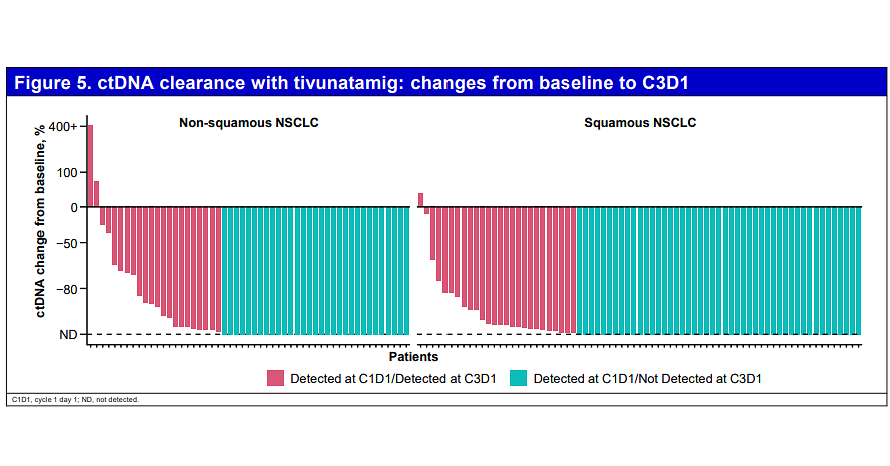
3SBio reported Phase II data for tivunatamig (SSGJ-707) plus chemotherapy in first-line advanced NSCLC: median PFS was 13.6 months in squamous disease versus 8.3 months for control, and 13.8 months in non-squamous disease versus 9.7 months. Confirmed response rates were 80.7% and 77.5%, respectively; the company also reported ctDNA clearance in 61.9% of evaluable patients, with median PFS of 16.4 months in those clearing ctDNA versus 9.6 months in those who did not. Grade 3 or higher treatment-related adverse events were broadly comparable to the tislelizumab control, and no new Grade 5 events were reported in the tivunatamig arm since the prior disclosure; these are Phase II findings pending Phase III validation. 3SBio out-licensed global development and commercialization rights to Pfizer in 2025 for potential deal value exceeding $6 billion, including $1.4 billion upfront and a $100 million equity investment.
Analysis
The investable signal is validation of Pfizer’s licensed asset, not near-term earnings: even a successful global launch would need to be material against Pfizer’s scale, and the article provides no asset-specific revenue split, royalty economics, or launch timeline. Treat the efficacy as a probability update for the program, not a basis to capitalize the deal’s headline potential value.
The main caveat is evidentiary. These are small Phase II cohorts; the reported control comparisons do not establish a randomized head-to-head advantage, and cross-histology comparisons are especially uninformative. The ctDNA result may be prognostic rather than predictive, so it does not yet establish a treatment-selection biomarker. The sponsor’s framing of “longest reported” should not be treated as proof of class superiority. If confirmed, a PD-1/VEGF backbone could pressure conventional PD-1-plus-chemotherapy regimens and raise the bar for competing immunotherapy combinations, but that is a multi-year, Phase III-dependent effect.
Days: release-driven sentiment may lift Pfizer, but likely has limited fundamental read-through absent an estimate of Pfizer’s economic participation. Over 1–3 months, track Pfizer’s trial disclosures for enrollment, control arms, endpoints, and safety detail. Over 6–18 months, pivotal efficacy—especially overall survival, durability, and tolerability—will determine whether the program merits meaningful commercial optionality. Thesis weakens if Phase III fails to reproduce PFS benefit or shows a safety disadvantage; it strengthens with consistent randomized results and clear economics.
AllMind Terminal
AI-powered research, real-time alerts, and portfolio analytics for institutional investors.
Request TrialMarket Sentiment
Overall Sentiment
moderately positive
Sentiment Score
0.55
Ticker Sentiment
Key Decisions for Investors
- No trade in Pfizer on this release alone; the study is encouraging but small and non-confirmatory, while asset-level economics and valuation impact are undisclosed.
- Set an alert for Pfizer’s pivotal-trial design and updates. Reassess only when randomized data, comparator choice, overall-survival follow-up, and adverse-event detail allow a credible benefit-risk comparison.
- Do not assign value to the ctDNA finding as a companion diagnostic yet. Revisit if prospective Phase III analyses validate ctDNA clearance as predictive of treatment benefit rather than merely associated with better outcomes.
More News
- What investors need to know about Alphabet's stock-busting earnings report
- Our next steps for Alphabet stock after earnings disappoint at nearly every turn
- Wendy's shares jump 15% as Nelson Peltz's Trian offers $1.4 billion to buy burger chain
- GE Vernova shares slip despite a beat-and-raise. What the sellers are getting wrong
- Microsoft's Big Bets on AI Start to Pay Off
- China’s tech darlings are losing their shine. Here’s what’s behind the sell-off