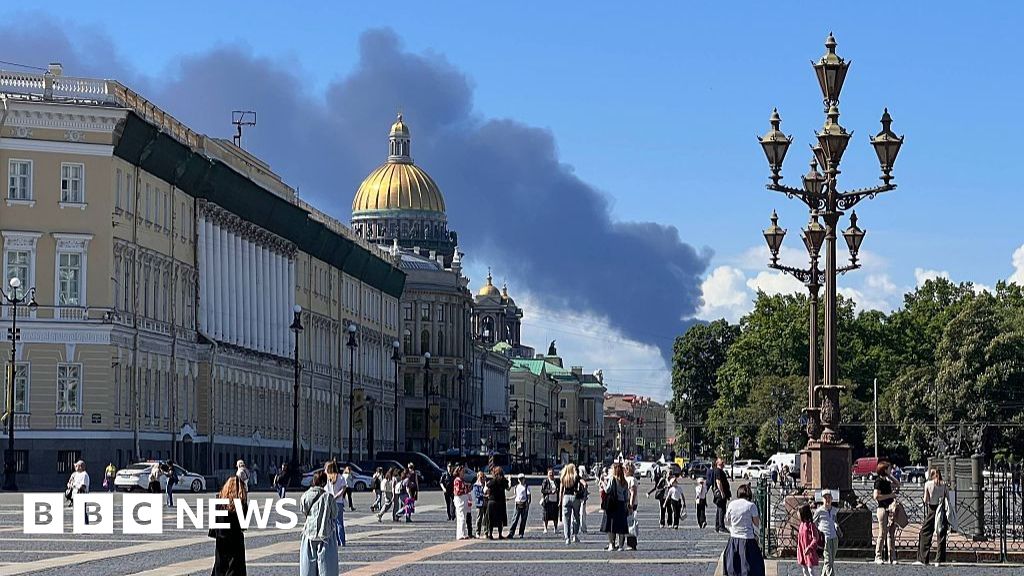
Ukraine drones struck the St Petersburg area on the opening and closing days of the SPIEF forum, underscoring escalating war risk even as Putin insisted Russia's economy is "stable." The article highlights stalled growth, rising pressure from war and sanctions, and high interest rates, with Russian officials acknowledging the need for lower rates to support investment. The forum’s defiant optics may support domestic messaging, but the piece argues they are a weak signal for attracting long-term foreign capital.
The market implication is not an imminent macro break, but a slow deterioration in Russia’s fiscal and risk-premium profile. Repeated drone penetration into the northwest raises the expected cost of domestic defense, forces more air-defense redeployment away from the front, and nudges the government toward even more war-directed spending just as non-defense growth is cooling. That combination is bearish for real incomes, credit quality, and local capital formation over the next 3-12 months, even if headline GDP does not crack immediately.
The more important second-order effect is on investor behavior: the forum’s optics matter less than the signal that foreign capital remains mostly absent and selectively embarrassed when it does show up. That reinforces a “stay local, shorten duration, demand higher yields” stance among domestic savers and lenders. In practice, that means pressure on long-end funding conditions, higher refinancing risk for weaker corporates, and a wider gap between state-linked winners and private-sector laggards.
The contrarian read is that sanctions pressure is already well understood, but the underestimated variable is resilience via import substitution and rerouted trade. That argues against betting on a near-term systemic blowup. The better setup is to fade exuberance in Russia-adjacent risk premia while avoiding outright bankruptcy-style shorts unless you have a catalyst for a funding shock or major escalation over the next 1-2 quarters.
The cleanest trade is to express a cautious view through external channels rather than Russian instruments directly. Any upside surprise would likely come from a diplomatic pause or a meaningful fall in domestic security spending intensity; absent that, the drift is toward more fiscal strain and less private investment.
AI-powered research, real-time alerts, and portfolio analytics for institutional investors.
Request TrialOverall Sentiment
moderately negative
Sentiment Score
-0.35
