
Jewelers Mutual® Study Finds Mutual Engagement Ring-Wearing on the Rise
Source: PR Newswire
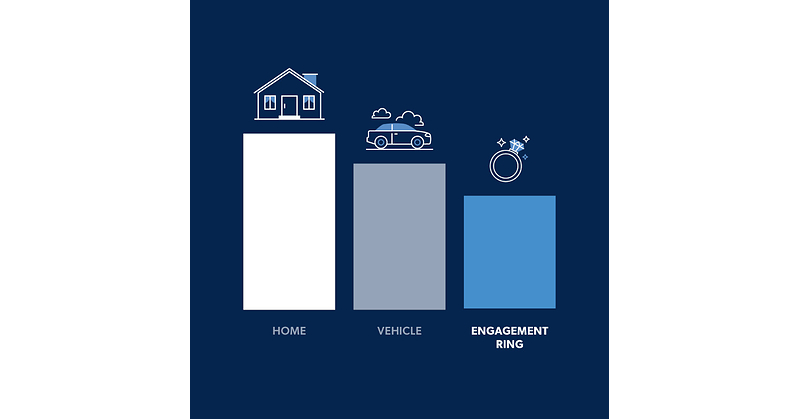
Jewelers Mutual’s 2026 study of 2,000 U.S. adults found that only 49% insured an engagement ring at purchase, while 45% stored it unsecured before the proposal. Ninety percent of wearers travel with their ring, and 60% wear it while cooking or sleeping; the findings highlight a protection gap but report no company financial results or market-moving development.
Analysis
This is a distribution and product-positioning signal, not evidence of a near-term earnings inflection. The survey is commissioned by a specialist insurer and drawn from recent ring purchasers; it does not establish market-wide insurance penetration, premium growth, claim frequency, or profitability. The plausible upside is at the point of sale: jewelers that make coverage and documentation easy could capture more attachment revenue and strengthen customer retention. But greater uptake is not automatically accretive for insurers: customers who insure after recognizing unusually high exposure may be adversely selected, while frequent wear and travel could lift claim severity. Over 1–3 months, the key evidence would be disclosed policy growth, renewal/retention, acquisition costs, and jewelry loss ratios—not consumer survey intent. Over 6–18 months, embedded coverage through jewelers could pressure standalone acquisition economics and standard homeowners policies, but the segment may remain too small to move diversified carriers. The contrarian read is that the apparent protection gap is a marketing opportunity, not demonstrated latent demand: purchase friction, appraisals, and perceived low claim likelihood may keep conversion modest. No public-company trade is supported by this release alone.
AllMind Terminal
AI-powered research, real-time alerts, and portfolio analytics for institutional investors.
Request TrialMarket Sentiment
Overall Sentiment
neutral
Sentiment Score
0.00
Key Decisions for Investors
- No trade on the release. Jewelers Mutual is not identified as a publicly traded company in the supplied data, and the survey provides no verifiable premium, policy-count, or underwriting metrics.
- Watch for evidence over the next 1–3 months that jeweler point-of-sale coverage attachment is increasing; require policy growth alongside stable acquisition costs and loss ratios before treating the opportunity as earnings-positive.
- Treat claims inflation or worsening jewelry loss ratios as the principal downside falsifier: higher enrollment would not create value if more-exposed customers enter the pool or replacement costs outpace pricing.
- Revisit the thesis over 6–18 months only if specialist coverage becomes a material, repeatable distribution channel. If reported conversion remains low or diversified insurers show no product or disclosure changes, regard the survey as promotional rather than sector-moving.
More News
- Why is Domino’s Pizza Enterprises stock sliding today?
- South Korean carmaker Hyundai plans 'strategic' investment of $15.5 billion in India by 2032
- Applied Materials’ $5 billion AI lab aims to cut chip development time in half—and restore Silicon Valley’s edge
- Wells Fargo CFO on Earnings, Deals, Consumer Strength
- Bank of America hit with more than $1.2 billion in penalties over money-laundering violations
- Namibia battles cattle disease outbreak as EU suspends several meat imports
From AllMind Research
- Anthropic IPO Preview: Valuation, Timing, and What to Watch
- Shein After the IPO: Venue, Valuation, and What Must Be Proved
- What AI Research Tools Should a Small Hedge Fund Buy First?
- Can ChatGPT or Claude Replace a Research Platform?
- How the 2026 Milan-Cortina Winter Olympics Will Reshape Company Revenues and Stock Performance