
Yemen Armed Forces Retake Control Over Red Sea Chokepoint
Source: Bloomberg
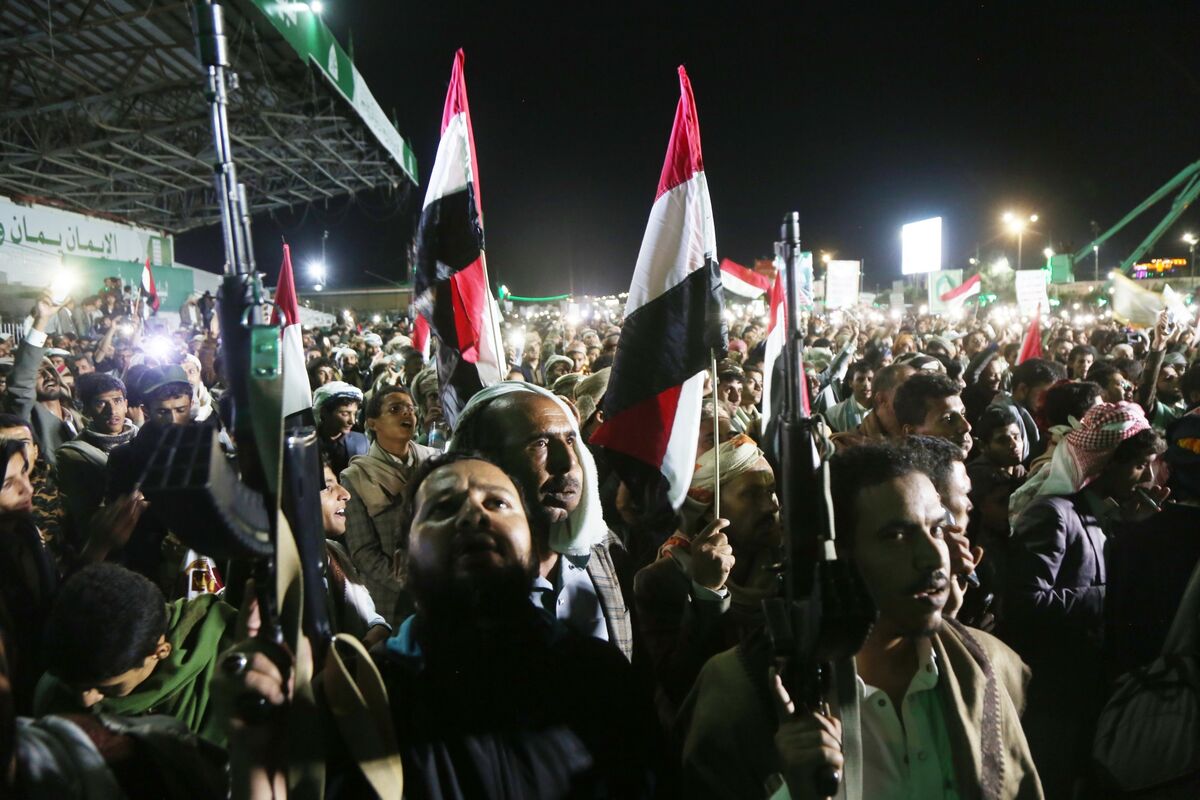
The Yemen Armed Forces reportedly retook control of a key city from the Houthis near a Red Sea chokepoint; the excerpt provides no further details. Investors shrugged off concerns about oil prices and bond yields as stocks moved near record highs. British Airways is set to introduce the world’s largest business-class cabin.
Analysis
The market-relevant question is not who holds a nearby city, but whether commercial vessels can transit the Bab el-Mandeb reliably and whether war-risk insurance and carrier routing normalize. A local control change alone does not establish either. If transit risk genuinely falls, the first beneficiaries are container shippers and importers exposed to longer diversions; freight rates and war-risk premiums could ease, while the geopolitical premium in crude may fade. The offset is that a rapid unwind could pressure tanker and shipping rates that have benefited from disruption. Verify actual transits, carrier guidance, and insurance quotes before treating the headline as a change in cash flows.
Near-record equities absorbing higher oil and bond yields suggest positioning and risk appetite may be cushioning macro risks, not eliminating them. Over days, that can sustain momentum; over 1–3 months, renewed disruption or further yield increases could expose crowded equity risk. Over 6–18 months, sustained route security—not a single territorial claim—would be needed to support durable logistics-cost relief. British Airways’ proposed premium cabin is a limited signal about product mix, not evidence of sector-wide earnings improvement; execution, aircraft availability, and customer demand remain unverified.
AllMind Terminal
AI-powered research, real-time alerts, and portfolio analytics for institutional investors.
Request TrialMarket Sentiment
Overall Sentiment
neutral
Sentiment Score
0.05
Key Decisions for Investors
- No immediate directional trade on the territorial headline. Watch Bab el-Mandeb vessel transits, carrier rerouting notices, and war-risk insurance pricing; consider freight-sensitive exposure only after those indicators confirm sustained normalization.
- For the next 1–3 months, use renewed attacks, fresh diversions, or rising insurance costs as a trigger to reassess shipping-cost beneficiaries and crude risk-premium exposure. Falsifier for the de-escalation thesis: transits remain impaired or carriers maintain diversions despite the reported control change.
- Treat the equity resilience as a risk-appetite signal, not a standalone buy catalyst. Track long-end Treasury yields and oil alongside breadth; a further yield rise with deteriorating breadth would weaken the case that record-adjacent markets can absorb macro shocks.
- Do not trade British Airways’ cabin announcement as an earnings catalyst without evidence on launch timing, aircraft capacity, premium-cabin demand, and unit economics; revisit only if the company quantifies the financial contribution.
More News
- Philip R. Lane: Interview with Ansa
- How quant funds beat the market by being 'early, contrarian and right'
- Why did Mattel stock surge 5% today?
- S&P 500 Closes In on Record High as Tech Rallies
- Stocks Get Tech Lift Despite Renewed Bond Losses
- The case for Nvidia’s stock to march even higher after clinching its first record high in months
From AllMind Research
- Anthropic IPO Preview: Valuation, Timing, and What to Watch
- Shein After the IPO: Venue, Valuation, and What Must Be Proved
- What AI Research Tools Should a Small Hedge Fund Buy First?
- Capital Intensity as Gravity: The AI Trade Enters Its Industrial Era (Looking at Q3 2025 Earnings in Tech)
- AI Portfolio Monitoring: Build an Alert Policy Analysts Can Audit