
Ternium: Mexico Recovery Has Upside, But Cash Flow Still Matters
Source: seekingalpha.com
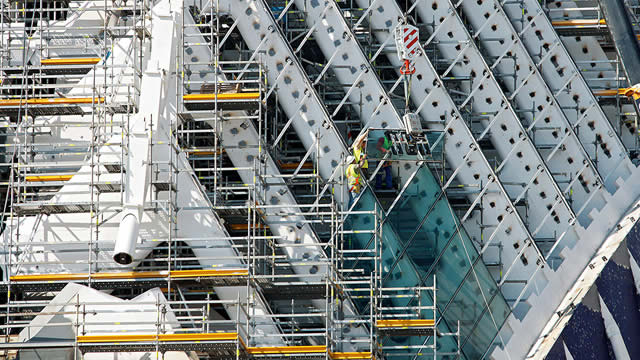
Ternium's adjusted Q2 EBITDA surged 50% quarter over quarter to $717 million, supported by a 5% increase in Mexican shipments and a 6% rise in revenue per ton. The Pasqueria expansion offers meaningful upside through supply to USMCA automotive customers, although its start has been delayed to early 2027. Elevated capex, associated cash-flow execution risk, and weak demand in Brazil and Argentina remain key headwinds.
Analysis
TX’s upside is less about a cyclical Mexican steel recovery than about whether it can convert protected regional supply into higher-value automotive mix before incremental domestic capacity erodes spreads. The key earnings torque comes from operating leverage: a sustained improvement in Mexican apparent demand and product mix can lift EBITDA materially faster than shipment growth, while automotive qualification creates stickier pricing than commodity long products. Potential second-order beneficiaries are USMCA auto assemblers and Tier-1 suppliers that gain localized, lower-tariff steel sourcing; however, competing flat-roll suppliers including NUE, STLD and CLF could face greater competition for Mexican-linked automotive volumes after the new capacity is qualified.
The principal near-term risk is that markets capitalize the expansion well before it contributes cash flow. Through the next 12-18 months, elevated capex can suppress FCF, increase net-debt sensitivity to steel-price weakness, and leave TX exposed to a Mexico auto-production slowdown or lower North American sheet spreads. The delayed ramp also raises the probability that customers remain dual-sourced longer than expected, reducing initial utilization and return-on-invested-capital; the thesis is falsified if Mexican EBITDA margins fail to hold through weaker benchmark HRC pricing or if management raises project cost/timing again.
Consensus may underappreciate the embedded option value of a successful automotive ramp, but also overstates the visibility of its payoff. Automotive-grade steel qualification is measured in model cycles, not construction completion, so the multiple re-rating catalyst likely begins only when firm customer nominations, utilization guidance, and post-startup margin disclosure emerge. Until then, TX should trade primarily on Mexico volumes, regional HRC spreads, and FCF conversion rather than a full credit for the expansion.
AllMind Terminal
AI-powered research, real-time alerts, and portfolio analytics for institutional investors.
Request TrialMarket Sentiment
Overall Sentiment
moderately positive
Sentiment Score
0.42
Ticker Sentiment
Key Decisions for Investors
- Accumulate TX only on weakness over the next 3-6 months, sized as a cyclical/value position rather than a 2027 growth winner. Underwrite to Mexican shipment and realized-price resilience; exit or reduce if management raises Pasqueria capex again or guides to a further start-date slip.
- Use a relative-value expression: long TX / short a broad Latin American steel proxy such as SID over 6-12 months. TX has greater exposure to USMCA manufacturing and less direct dependence on Brazilian domestic demand; close the spread if North American HRC prices weaken sharply while Brazil demand stabilizes.
- Do not add aggressively ahead of the next results without evidence of FCF discipline. Set a watch trigger for net debt/EBITDA trajectory, quarterly Mexican automotive volumes, and disclosed contracted capacity; a deterioration in any two signals would indicate the capex burden is overtaking the operating thesis.
- For investors requiring defined downside, consider 12-18 month TX call spreads rather than outright calls, timed after confirmation that project milestones remain intact. The trade requires a re-rating from customer awards or sustained Mexican margin strength; premium loss is acceptable if the expansion’s economics remain unverified.
More News
- Binance seeks to shore up confidence after record $6.3 billion heist
- Ryanair CEO warns fares could rise by up to 20% in 2027 as fuel bill jumps by $2.2 billion
- Why is Alstom stock down 27% today?
- Alstom shares sink 28% after outlook cut on Coradia Max execution issues
- Amgen (AMGN) Bets on MariTide to Crack $120 Billion Obesity Market
- Binance sees outflows stabilising as exchange returns online after $6.3 billion heist