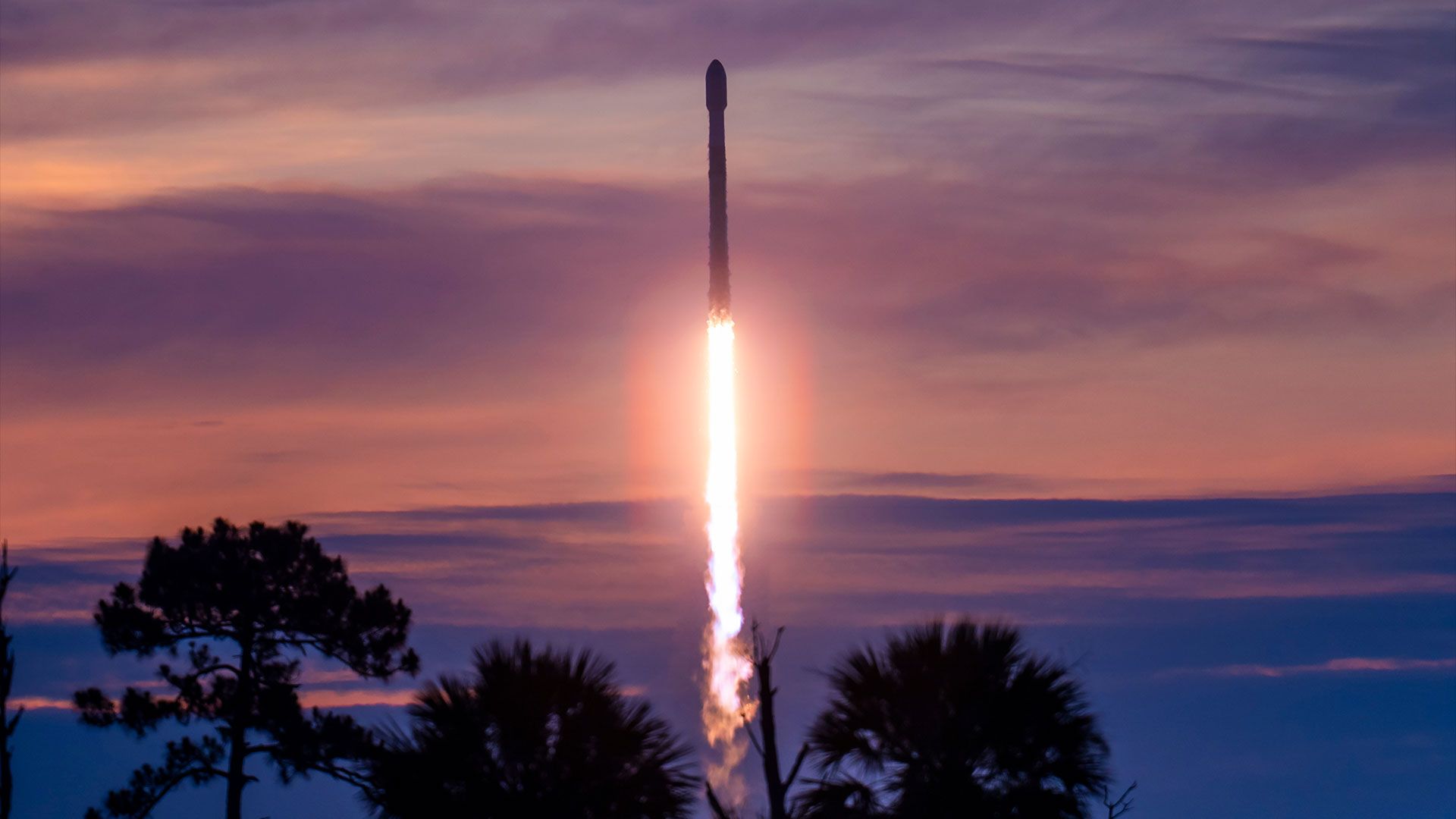
SpaceX set a new reuse record as Falcon 9 booster 1067 completed its 35th launch and landing, carrying 29 Starlink satellites to low Earth orbit and successfully deploying the payload. The mission lifted SpaceX's Starlink network to more than 10,580 active satellites and marked the company's 66th Falcon 9 flight this year and 660th completed mission overall. The article is largely factual, but it highlights continued operational execution and reuse progress.
The key signal is not the headline reuse count itself, but that SpaceX is proving a manufacturing-and-operations flywheel: higher flight cadence lowers marginal launch cost, which should keep starving smaller launch providers of price power and compressing margins across the commercial launch stack. The real competitive moat is schedule certainty—once a booster class becomes effectively routine, the market starts underwriting SpaceX as an infrastructure utility rather than an aerospace contractor, which raises the bar for any rival trying to win on reliability alone.
Second-order effects extend into satellite operators and downstream connectivity. Faster, cheaper launches support more aggressive Starlink constellation densification, which can accelerate direct-to-device commercialization and broaden the addressable market for maritime, aviation, and defense communications. That creates a subtle squeeze on legacy telecom and satellite broadband incumbents: even if near-term churn is modest, the threat is that SpaceX’s lower deployment cost lets it subsidize customer acquisition longer than peers can tolerate.
The contrarian risk is that operational excellence does not eliminate regulatory and capacity constraints. As the constellation scales, spectrum coordination, orbital debris scrutiny, and national-security concerns become the binding constraints, not launch economics; those risks tend to surface over months to years, not days. In the near term, the market may underappreciate the leverage effect on SpaceX’s cash generation and the potential for a faster-than-expected step-down in launch pricing, which would force a repricing of every non-differentiated launch or satellite connectivity business.
AI-powered research, real-time alerts, and portfolio analytics for institutional investors.
Overall Sentiment
mildly positive
Sentiment Score
0.25
