
iCollecta Introduces the APG Passport™, a Permanent Record That Follows a Trading Card
Source: PR Newswire
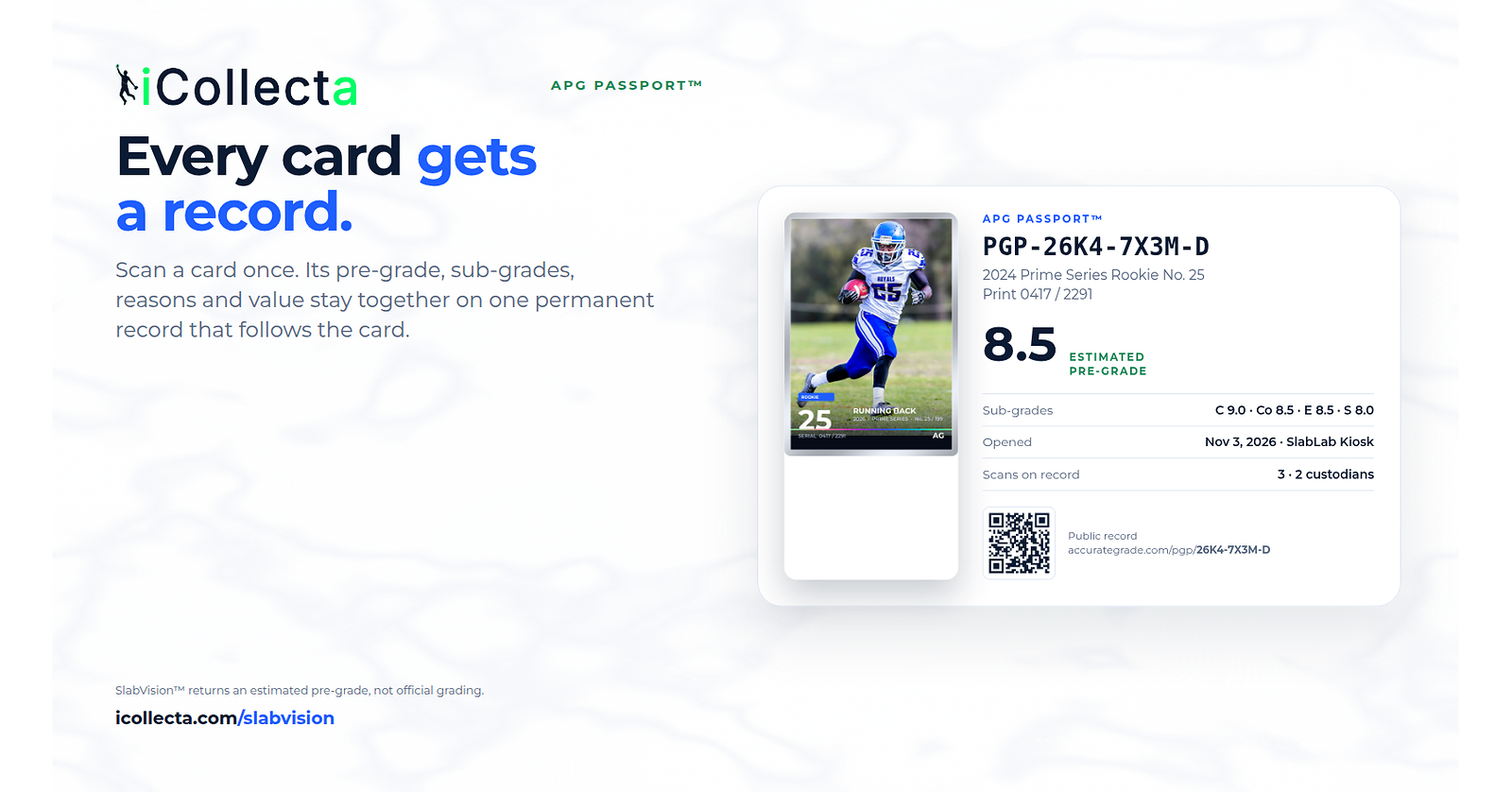
iCollecta introduced the APG Passport, pairing a roughly six-second computer-vision estimated pre-grade with a time-stamped record of scans, estimates, ownership transfers and verification events. The estimate is not an official grade, and steps 6–9—including third-party verification and tamper-evident sealing—remain in development; steps 1–5 are live. The launch comes amid increased grading volumes and backlogs, including 7.2 million cards still waiting at the largest grader as of Oct. 29, according to the article.
Analysis
The investable signal is not the scan speed; it is whether collectors and resale venues accept a portable condition history as useful collateral. If adopted, pre-screening could divert marginal cards from paid grading, pressuring graders’ submission volumes at the low end while easing backlogs and letting them concentrate capacity—and possibly pricing—on cards with higher expected value. That is a mix shift, not an automatic threat to grading economics. Marketplaces could benefit from lower buyer uncertainty and fewer condition disputes, but only if the record is trusted and follows the physical card reliably.
The key weakness is the gap between a timestamped record and verified provenance. A scan can document an estimate, but it does not by itself establish authenticity, prevent card substitution, or validate that condition is unchanged. The planned sealing and transfer steps are therefore central to the network effect, not peripheral features. Without broad adoption by sellers, buyers, shops and grading/verification partners, the Passport risks being a proprietary log with little resale premium. The company’s claims about grading utility also need independent validation across card types and conditions.
Near term, this is a product launch with no demonstrated financial impact or mapped public-company exposure; no trade is warranted. Over 1–3 months, watch paid usage, repeat scans, shop/marketplace integrations and evidence that estimates predict third-party grades. Over 6–18 months, successful physical verification could create a data asset and reduce transaction friction; failure to deliver steps 6–9, or inconsistent estimates, would undermine trust. The contrarian point: grading backlog relief may be more valuable to incumbent graders than harmful, if pre-screening improves submission quality and utilization.
AllMind Terminal
AI-powered research, real-time alerts, and portfolio analytics for institutional investors.
Request TrialMarket Sentiment
Overall Sentiment
mildly positive
Sentiment Score
0.20
Key Decisions for Investors
- No direct position: the issuer is a private LLC with no public ticker identified, and the release provides no adoption, revenue or unit-economics evidence.
- Treat grading companies as a watch item, not an immediate short. Reassess if credible usage data shows pre-grading materially reduces paid submissions; conversely, backlog normalization alongside stable submission revenue would weaken the disruption thesis.
- Monitor resale marketplaces and card shops for integrations or seller adoption. A measurable reduction in disputes or faster sell-through would support a broader collectibles-commerce benefit; absent that, do not assign value to the Passport network-effect claim.
- Set a diligence trigger around third-party grade correlation and completion of verification, tamper-evident sealing and transfer. Poor correlation, substitution incidents, or slippage in those steps would falsify the trust-and-provenance thesis.
More News
- Magnificent 7 loses $1 trillion. The most eye-popping stats from Thursday's tech stock plunge
- Tech stocks are suffering their biggest selloff since Covid, as investors see premature end to AI datacenter boom
- Wall Street’s best post-midterm rally in 44 years lasted just one day—then $3 trillion vanished as chip stocks plunged over AI fears
- AI stocks plunge after election, driving down US markets
- Elon Musk's Tesla and SpaceX lose over $420 billion in combined market cap after midterms
- Shield AI To Hit $28.8 Billion Value With $5.3 Billion Radar Acquisition