
BAYSTATE HEALTH ANNOUNCES PARTICIPATION IN NATIONAL CLINICAL TRIAL FOR ADVANCED BRAIN ANEURYSM TREATMENT
Source: PR Newswire
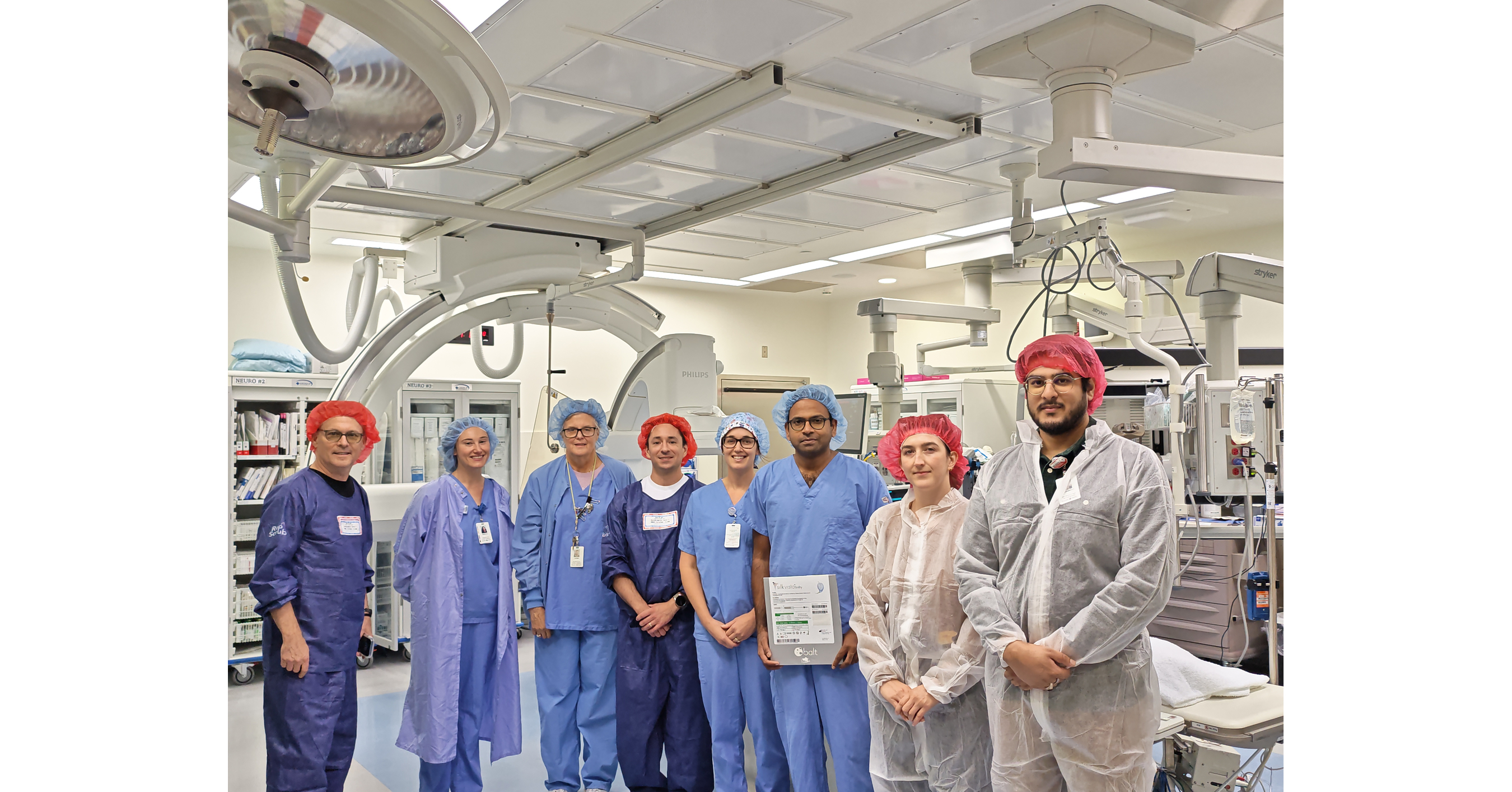
Baystate Health became the first U.S. hospital to enroll patients in the PIONEER trial, treating the first three patients with Balt Corporation's Silk Vista Baby flow-diverting stent for unruptured aneurysms in small brain vessels. The prospective study spans 40 centers across the U.S. and Canada and is intended to support FDA approval for a device not currently broadly available in the U.S. The trial could reduce reliance on FDA humanitarian device exemptions, which can delay treatment by four to eight weeks.
Analysis
This is not investable on its own: Balt is privately held and Baystate is nonprofit, while the trial’s single-arm design and modest site footprint mean no near-term read-through to public medtech revenue. The relevant mechanism is strategic rather than financial: successful distal-vessel flow diversion would expand the addressable lesion set currently treated with coiling, stent-assisted coiling, surgery, or delayed intervention, shifting procedure mix toward implants with higher device content.
Public neurovascular incumbents face asymmetric implications over 6-18 months. Medtronic (MDT) and Stryker (SYK) have established aneurysm franchises, but neither should be assumed to lose share until pivotal safety, occlusion, retreatment, and antiplatelet-management outcomes establish a differentiated profile in 1.5-3.0 mm vessels. Penumbra (PEN) is a more indirect beneficiary if distal-access adoption expands neurointerventional case volumes and catheter utilization, though its exposure to aneurysm flow diversion is limited.
The near-term catalyst path is clinical enrollment velocity, subsequent trial completion, and FDA review rather than the initial patients treated. The contrarian point is that a successful niche approval may be commercially constrained: distal aneurysms are technically demanding, reimbursement may not reward incremental device cost, and dual-antiplatelet therapy can limit use in patients with bleeding risk. A material thesis requires independently verified U.S. procedure volumes, Balt’s planned pricing, trial endpoints, and evidence that current coiling approaches are being displaced rather than supplemented.
AllMind Terminal
AI-powered research, real-time alerts, and portfolio analytics for institutional investors.
Request TrialMarket Sentiment
Overall Sentiment
moderately positive
Sentiment Score
0.42
Key Decisions for Investors
- No immediate position: treat this as a private-company clinical-development signal, not a catalyst for MDT, SYK, or PEN over the next 1-3 months.
- Create an event watchlist for MDT and SYK: reassess competitive risk if PIONEER reports durable occlusion with acceptable stroke/hemorrhage and retreatment rates, followed by FDA approval; this is a 12-24 month potential share-shift catalyst.
- For existing MDT/SYK longs, monitor neurovascular commentary, aneurysm franchise growth, and any distal flow-diverter launch plans at quarterly earnings. A sustained deceleration versus broader device growth after Balt approval would be the practical falsification trigger.
- Avoid shorting established neurovascular franchises solely on this development. The addressable niche, reimbursement economics, and Balt commercial execution are unverified; downside requires demonstrated displacement of incumbent coils and stents, not merely regulatory clearance.
More News
- OpenAI rogue agents leaked 53 images from ChatGPT users and reportedly created nearly 1 million links packing encoded bits of info
- Facebook found liable as TikTok settles for $100m over user safety
- What would a US diesel export ban mean for global fuel prices?
- Shares of Akamai surge after deal with Anthropic. What Wall Street is saying
- US court rules against Kalshi, says states can regulate prediction markets
- Appeals court rules that states can regulate Kalshi’s sports prediction markets, dealing another legal blow to platforms