
US LNG Producers Eye Bonanza If Trump and Xi Can Ease Tariffs
Source: Bloomberg
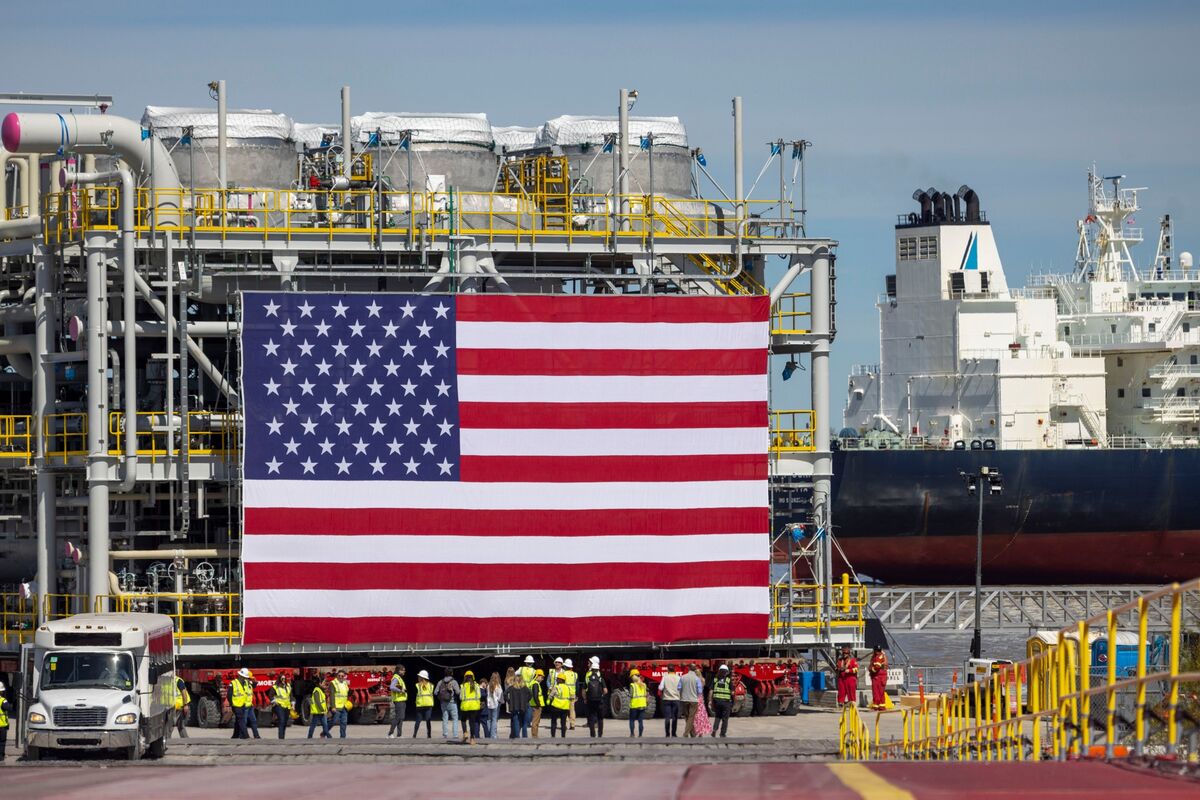
A Trump-Xi meeting could lead Beijing to remove tariffs on US liquefied natural gas, potentially unlocking billions of dollars in long-term LNG supply agreements with Chinese buyers. The prospect is rekindling Chinese interest in US LNG contracts and would provide a significant demand and export opportunity for American gas producers, though the outcome remains contingent on trade negotiations.
Analysis
The highest-beta beneficiaries are LNG developers whose next trains require incremental long-term offtake to reach FID: NEXT, VG and WDS are more sensitive than mature exporter LNG. Chinese counterparties are unusually valuable because they can sign 15- to 20-year FOB contracts, supporting project-finance debt capacity and reducing equity dilution; the valuation effect is therefore larger than the near-term cargo volume effect. A reopening of this buyer pool would also tighten the market for uncontracted US liquefaction capacity, improving developers' contracting leverage versus Asian portfolio buyers.
The second-order trade is domestic gas: additional contracted export capacity raises the forward call on Haynesville and Appalachian supply, favoring EQT, RRC, AR and CTRA over gas-weighted utilities and industrial users. The effect on Henry Hub should be limited over days and weeks because liquefaction buildout is slow, but a cluster of new SPAs/FIDs over the next 1-3 months could re-rate 2028-30 gas-strip expectations and compress the discount in gas E&Ps. LNG's scale and diversification make it a lower-beta way to express the same thesis, although its existing contracted portfolio means incremental China exposure is less transformative.
Consensus may overstate the immediate earnings impact: tariff relief changes contracting economics, not physical export capacity, and Chinese buyers can source flexible volumes indirectly even under adverse trade policy. The key falsifier is not diplomatic language but disclosed SPA volumes, duration, pricing slope and destination flexibility; absent signed contracts, a rally in pre-FID developers is vulnerable to reversal. A broader US-China trade escalation, Chinese demand weakness, or lower Asian spot LNG prices would reduce buyers' incentive to lock in US supply and weaken the project-FID catalyst.
AllMind Terminal
AI-powered research, real-time alerts, and portfolio analytics for institutional investors.
Request TrialMarket Sentiment
Overall Sentiment
mildly positive
Sentiment Score
0.35
Key Decisions for Investors
- Accumulate NEXT in a 1-3 month catalyst window, sized as a high-volatility project-finance trade; add only following a disclosed binding SPA or FID-progress milestone. Upside comes from reduced financing/dilution risk, while the thesis is invalidated if new contracting fails to emerge or management revises capital requirements upward.
- Pair long LNG against VG for a more defensive expression: LNG offers contracted-cash-flow durability if negotiations disappoint, while VG has greater sensitivity to successful new contracting but also execution and balance-sheet risk. Use a 3-6 month horizon and close the spread if VG secures major long-duration Asian offtake that materially improves its forward contracted position.
- Build a 6-18 month basket long EQT/RRC/AR versus a short in gas-sensitive industrial exposure only after multiple US LNG projects receive FID; this captures the eventual tightening of the US gas balance rather than the diplomatic headline. Do not initiate solely on tariff commentary, since construction timing and associated-gas supply can dominate Henry Hub pricing.
- Set an event alert for any Chinese buyer signing a 15+ year US SPA with NEXT, VG, WDS or LNG. Treat contract volume, start date, Henry Hub slope and cancellation provisions as the decision data; without those terms, regard any sector move as sentiment rather than a fundamental earnings revision.
More News
- Iran delegation to present narrative of resilience, diplomacy at UNGA
- Trump-GCC Summit in New York: What does each side want?
- Tech Rally Loses Steam In Europe as Oil Rises
- India’s Oil Problem Deepens on Pipeline Outage, Renewed US Pressure
- Alibaba unveils new chip and ambitious AI model plans
- Oil Analyst Sankey Sees ‘Very Elevated’ Market Through End of 2027
From AllMind Research
- Anthropic IPO Preview: Valuation, Timing, and What to Watch
- Shein After the IPO: Venue, Valuation, and What Must Be Proved
- What AI Research Tools Should a Small Hedge Fund Buy First?
- AI Tools for Independent Research Firms: A Publishing System
- Weekly Update: Options, Earnings Call Transcripts, AI Chat, Bookmarks & More