
Trump Says He’s Not Worried About Xi Calling Off Summit
Source: Bloomberg
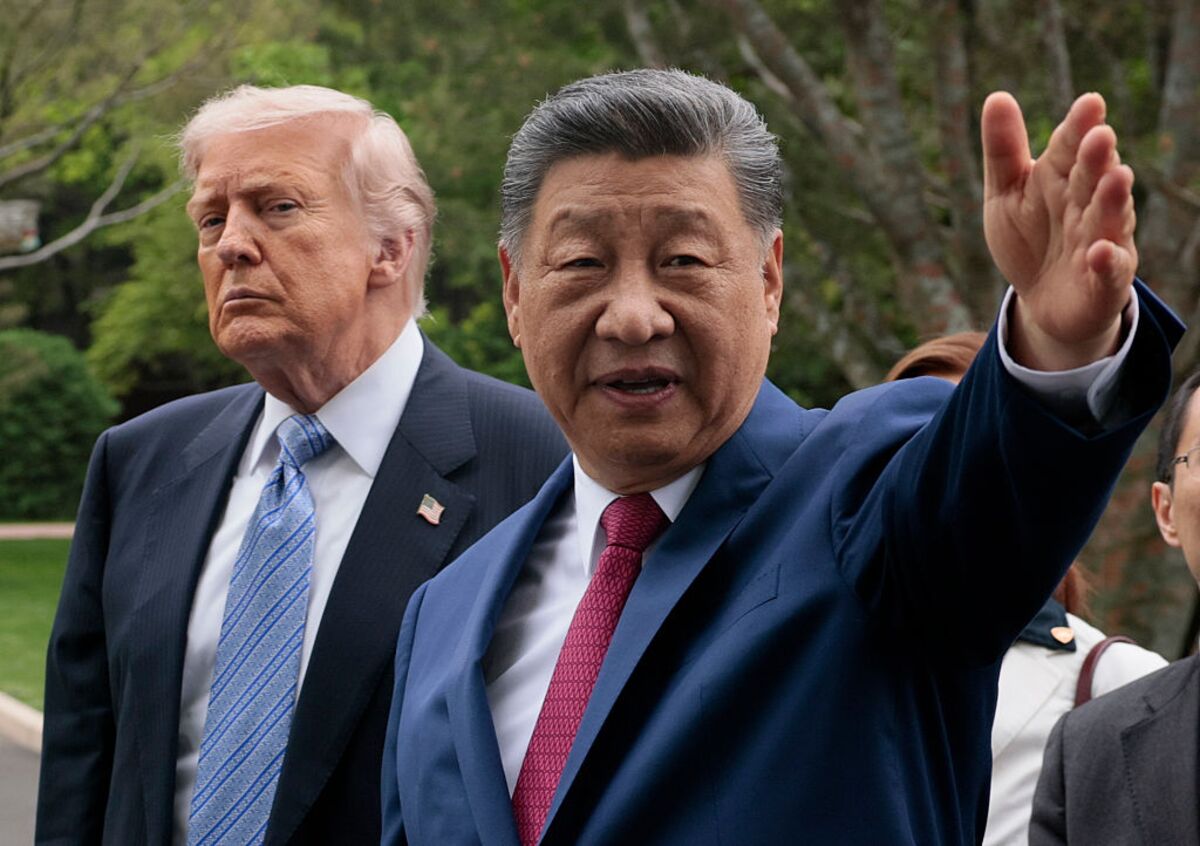
President Trump said he is not concerned that Chinese President Xi Jinping will cancel his anticipated visit later this month, citing a strong bilateral relationship and mutual willingness to cooperate. The comments modestly ease near-term uncertainty around US-China engagement, though no specific trade, policy, or economic commitments were announced.
Analysis
The market implication is less the diplomatic rhetoric than the reduction in near-term tail probability of a renewed tariff or export-control escalation. That modestly supports China-beta cyclicals and global risk assets, but the highest sensitivity sits in the semiconductor hardware chain: SMH/SOXX benefit only if the meeting produces a durable licensing or tariff framework, whereas an unstructured summit leaves AI-chip restrictions and China demand risk unresolved. For U.S. industrials with meaningful China exposure (CAT, DE, EMR), a de-escalation would improve order visibility rather than immediately change earnings; the payoff is primarily multiple stabilization over the next 1-3 months.
Consensus may overprice the signaling value of a meeting itself. A summit can lower the probability of an acute shock while still yielding no change to tariff schedules, entity-list restrictions, or procurement preferences—leaving Chinese equities vulnerable once event-driven positioning unwinds. The key missing inputs are a confirmed agenda, any pre-negotiated deliverables, and whether trade enforcement deadlines are deferred; absent those, this is not a high-conviction directional equity signal. Falsification for the risk-on view would be a renewed widening in USDCNH, new technology export restrictions, or explicit tariff threats before the meeting; those would likely hit KWEB/FXI first and transmit to semiconductors thereafter.
AllMind Terminal
AI-powered research, real-time alerts, and portfolio analytics for institutional investors.
Request TrialMarket Sentiment
Overall Sentiment
mixed
Sentiment Score
0.10
Key Decisions for Investors
- Do not add broad China risk solely on the diplomatic signal; treat FXI and KWEB strength into the meeting as an event-risk trade rather than a 6-18 month allocation until concrete tariff or market-access commitments are disclosed.
- For a defined-risk 1-2 month expression of de-escalation, consider a small long KWEB versus short EEM pair: KWEB has greater upside to reduced bilateral-policy risk, while the EEM short limits broad emerging-market beta. Exit if USDCNH weakens materially or if no substantive deliverable is announced.
- Maintain or initiate a modest SMH/SOXX hedge through put spreads spanning the summit date if semiconductor exposure is large. Semiconductor multiples remain exposed to an adverse export-control headline, and the hedge should be removed if policy language explicitly preserves or expands licensing access.
- Monitor CAT, DE, and EMR for post-meeting guidance commentary rather than buy ahead of the event. A credible long setup requires management confirmation that China orders, dealer inventories, or backlog conversion are improving; without that evidence, the likely benefit is sentiment-only and vulnerable to reversal.
More News
- Trump says Iran war will end 'when I want it to' as costs reportedly balloon to $47 billion
- Iran’s calculations as US escalation looms: Trust, midterms, Hormuz
- Global stock markets rise as investors continue to bet on AI
- US-Friendly Nations Slash Treasury Purchases by 60%, Led by Asia
- Oil prices rise after attack on Saudi Arabian refinery reignites supply concerns
- Oil rebounds as Houthi attacks on Saudi Arabia overshadow diplomatic efforts