
Power Outages by State: New Analysis Ranks All 50 States Ahead of a Forecast El Niño Winter
Source: PRWeb
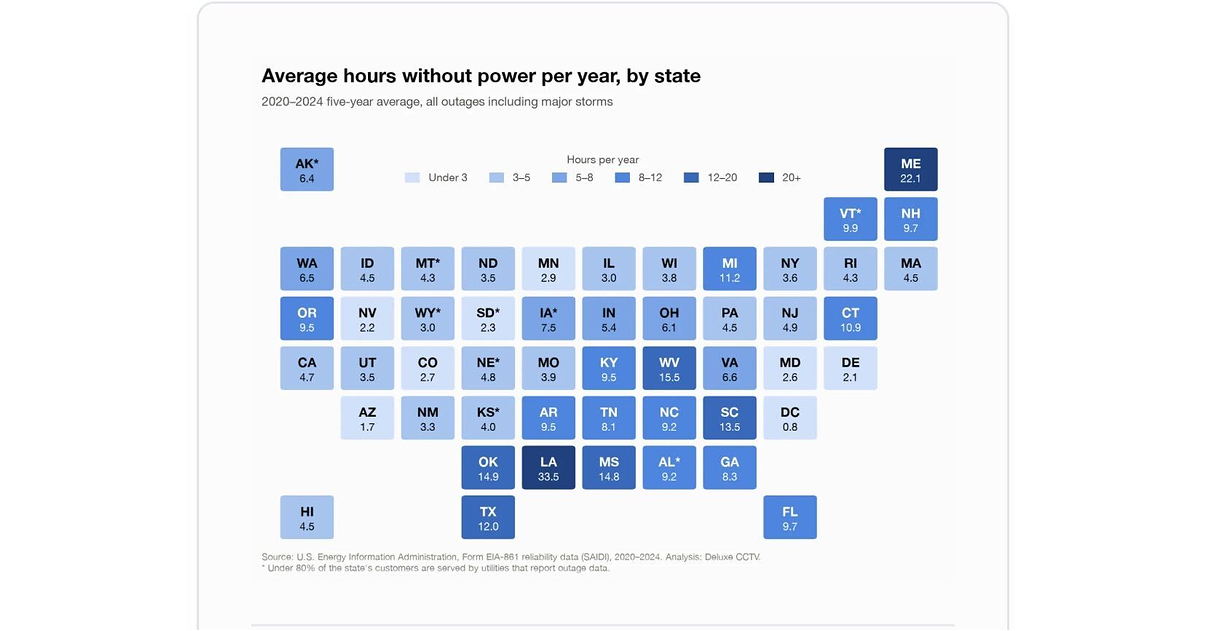
Federal utility data for 2020–2024 show customers in the typical state experienced 4.9 hours of power interruptions annually, with a twentyfold gap between Louisiana (33.5 hours) and Arizona (1.7); Washington, D.C. averaged 0.8 hours. Major events accounted for 63%–79% of annual outage hours across states, while U.S. customers averaged 11 interruption hours in 2024, the most in a decade. The report was published ahead of a forecast unusually stormy El Niño winter in 2026–27, but the article does not quantify a resulting financial or market impact.
Analysis
The investable signal is not the state ranking; it is the possibility that a severe winter increases the value of resilient power and communications at the customer edge. That could support demand for backup generators, batteries, and outage-tolerant security equipment, but the article supplies no sales, order, or customer-conversion evidence. Its commercial source has an incentive to frame outages as a security-equipment gap.
The outage history is highly tail-driven: a single storm can dominate a state’s annual result. That makes the 2020–24 ranking a poor proxy for next winter’s local outage risk or for durable utility quality. El Niño is not a reliable state-level outage forecast; track-specific weather, ice loading, vegetation, and distribution-system condition matter more. Utilities may face restoration costs and political pressure for resilience investment, but regulated capex can benefit equipment suppliers while raising near-term costs for utilities and ratepayers. The article does not establish which utilities will spend more or recover costs.
Near term (days), this is weak evidence for repricing. Over 1–3 months, regional winter forecasts and equipment orders are the useful catalysts; over 6–18 months, sustained resilience investment would matter more than one storm season. A conditional watch is backup-power manufacturers such as Generac versus the broad utility sector, not an immediate trade. Thesis weakens if regional forecasts normalize, storm-related outages remain limited, or orders/guidance fail to respond. Verify utility reliability by service territory, residential backup-power adoption, and company order trends before taking exposure.
AllMind Terminal
AI-powered research, real-time alerts, and portfolio analytics for institutional investors.
Request TrialMarket Sentiment
Overall Sentiment
neutral
Sentiment Score
0.00
Key Decisions for Investors
- No immediate trade: the report is backward-looking, storm-sensitive, and published by a retailer with a commercial interest in backup security products.
- Set an alert on regional winter outlook revisions and ice/storm forecasts; use service-territory exposure rather than state averages to identify potentially affected utilities.
- Watch Generac and other backup-power suppliers for order, backlog, and guidance confirmation. Consider a relative-value long only if demand evidence strengthens and regional risk is not already reflected in prices.
- For utility exposure, distinguish capex beneficiaries from utilities bearing restoration expense; reassess if regulators approve resilience spending with credible cost recovery or if outage-related costs materially alter guidance.
More News
- India’s central bank hikes rates for the first time since 2023 as inflation creeps up
- Why Dangote’s Nigeria Refinery IPO Is Such a Big Deal for Africa
- US forecasts hurricane later this week in Gulf of Mexico
- A 32% beat, a +6% jump: the IT solutions name our models picked in July
- RBI raises rates 25 bps for first time in 3 years as inflation outlook worsens
- Nvidia Is on the Verge of a $6 Trillion Market Value