
Nootropics Depot Publishes Retail Market Research Measuring 68 Products Across 8 Ingredients
Source: PR Newswire
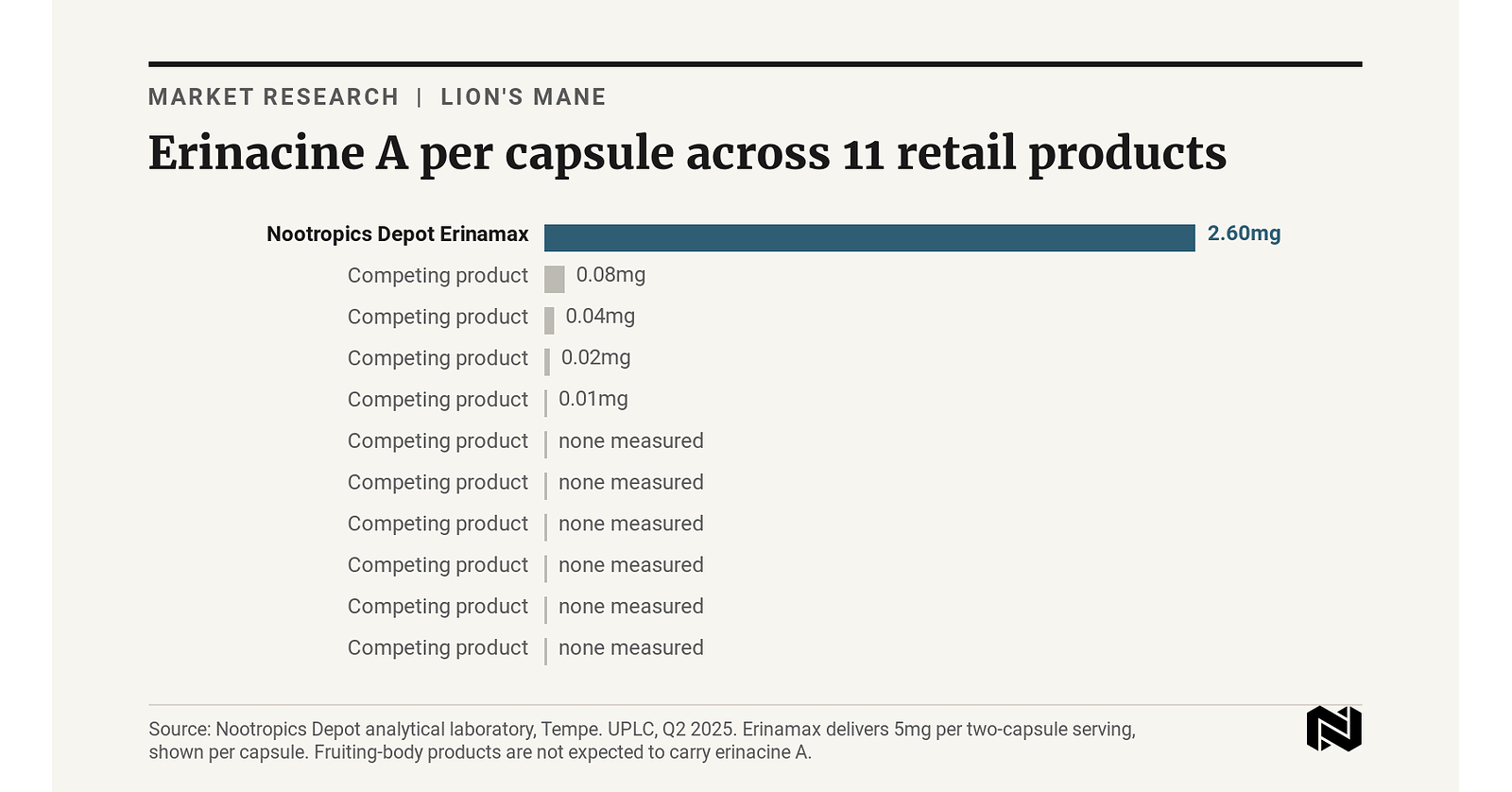
Nootropics Depot published lab comparisons of 68 retail products across 8 ingredients, including 15 of its own, using samples purchased from stores or marketplaces and testing them with the same methods. Its products led several ingredient comparisons—for example, Tongkat Ali delivered 12.00mg of eurycomanone per dose, 2.3 times the highest competitor, while Erinamax measured 2.6mg of erinacine A per capsule, 32 times the highest competing result. The company also disclosed a competing Cistanche product’s higher echinacoside result on one measure and said it has since launched Safralis saffron extract.
Analysis
This is a differentiation and trust signal for a private supplement brand, not evidence of a near-term change in industry economics. If buyers respond to batch-linked testing, the potential advantage is better conversion and repeat purchase in technically differentiated niches—not an automatic category-wide pricing umbrella. Competitors may face pressure to publish comparable assays, increasing quality-control expense and exposing weak formulations; smaller brands could instead compete on price or shift to ingredients and markers where comparisons are less decisive.
The evidence is commercially useful but narrow: company-funded testing of selected retail lots and selected chemical markers does not establish market-wide quality, clinical efficacy, bioavailability, or safety. Results from different ingredients also cannot be generalized across the portfolio. The most important missing confirmation is whether this transparency changes sell-through, customer acquisition cost, repeat rates, or gross economics; the release provides none of those measures.
Near term, the announcement is unlikely to create a material public-market catalyst. Over 1–3 months, watch for competitors’ testing disclosures and retailer or marketplace changes in ranking and customer reviews. Over 6–18 months, broader adoption of validated testing could favor brands with stronger lab infrastructure while raising compliance and testing costs across the category. The contrarian risk is that consumers prioritize price, brand familiarity, and claims over assay detail, limiting any commercial payoff. A reversal signal would be no measurable improvement in repeat purchasing or conversion, or credible independent testing that does not reproduce the company’s comparisons.
AllMind Terminal
AI-powered research, real-time alerts, and portfolio analytics for institutional investors.
Request TrialMarket Sentiment
Overall Sentiment
mildly positive
Sentiment Score
0.30
Key Decisions for Investors
- No direct trade: the subject is not mapped to a publicly traded issuer, and the release supplies no financial data establishing earnings impact.
- Treat this as a watch item for supplement-brand differentiation. Seek evidence of sustained sell-through, repeat purchase, pricing, and customer-acquisition trends before underwriting a market-share thesis.
- Monitor competing brands and major marketplaces for adoption of comparable third-party, lot-specific testing; that would validate the category shift, while price-led competition or weak consumer uptake would undermine it.
- Do not infer clinical superiority from higher measured marker content. Reassess only if independent replication and relevant outcome evidence support a durable consumer preference.
More News
- Tech stocks are suffering their biggest selloff since Covid, as investors see premature end to AI datacenter boom
- Elon Musk's Tesla and SpaceX lose over $420 billion in combined market cap after midterms
- We're raising our price target on Cardinal Health after another stellar quarter of profits
- Costco is taking aim at its May record high — how it got here and where's it going
- Neocloud IREN says $4 billion in annualized revenue being delayed due to customer request
- Tapestry CEO on Earnings Beat, Consumer Outlook