
Oracle stock falls 4%: why experts aren't bothered
Source: invezz.com
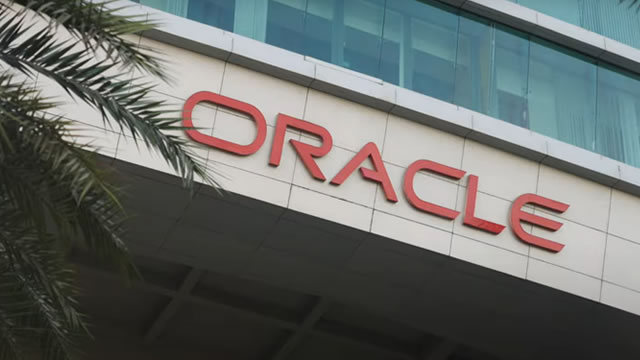
Oracle shares fell 4% on Thursday as a broader large-cap technology sell-off weighed on the stock. Analysts responded positively to Oracle’s latest AI infrastructure plans and long-term financial targets; the Nasdaq Composite declined 1.57% and the S&P 500 fell 0.54%.
Analysis
The key signal is relative, not absolute: ORCL’s larger decline than the Nasdaq suggests investors were not treating favorable AI commentary as a near-term offset to tech-risk reduction. That may reflect factor de-risking rather than a company-specific change, but it also highlights the burden of proof on converting infrastructure plans into contracted demand, usable capacity, and returns that justify the required investment. The plans and targets are analyst-positive, not yet evidence of realized revenue or cash returns.
Over days, broad tech positioning and index flows are likely to dominate; a single session does not establish a company-specific break. Over the next 1–3 months, watch for evidence that AI demand is translating into reported cloud growth and whether investment requirements or delivery constraints temper cash-flow expectations. Over 6–18 months, execution could strengthen Oracle’s competitive position, while capacity, funding, or customer-concentration risks could make the same build-out a drag. A sustained ORCL underperformance versus the Nasdaq after sector stabilization would argue the market is pricing company-specific execution risk; relative recovery alongside stable guidance would support the flow-driven explanation. There is not enough detail here to establish a valuation or earnings mispricing.
AllMind Terminal
AI-powered research, real-time alerts, and portfolio analytics for institutional investors.
Request TrialMarket Sentiment
Overall Sentiment
mixed
Sentiment Score
-0.10
Ticker Sentiment
Key Decisions for Investors
- Avoid chasing the one-day decline or buying solely on positive analyst reaction; the article provides no quantified demand, capex, or return data to support a fundamental entry.
- For an existing ORCL position, keep exposure conditional on subsequent cloud-growth and cash-flow disclosures; review if guidance weakens, investment needs rise materially, or ORCL continues to lag the Nasdaq after broad tech selling abates.
- Set a 1–3 month alert for evidence of AI infrastructure conversion: customer commitments, capacity delivery, and reported revenue contribution. Treat plans without measurable conversion as a catalyst shortfall, not proof of demand.
- If a relative-value trade is desired, monitor ORCL versus a broad Nasdaq proxy after the sell-off stabilizes; only consider a pair if company-specific underperformance persists and operating evidence corroborates it. No trade is warranted from this isolated move alone.
More News
- AI build-out hits snag as Google and Microsoft put off raising capex forecasts
- Anthropic is asking Wall Street to believe in AGI
- Microsoft’s AI Bet Pays Off
- Oracle wants to bill you for every AI task, not just every seat
- Rent the model. Own the harness. Own the network.
- The New Rules For Big Tech's AI Spending