
El Foro Mundial de la Industria de Bajo Carbono 2026 explora vías para cerrar la brecha eléctrica
Source: PR Newswire
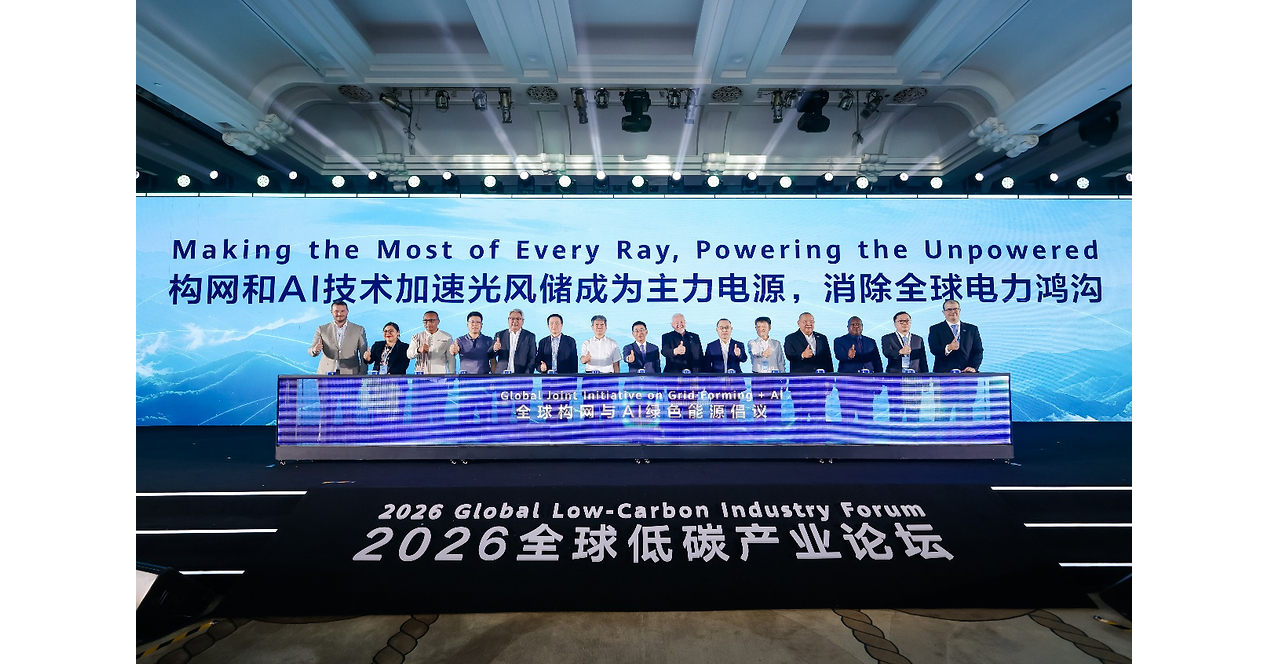
El Foro Mundial de la Industria de Bajo Carbono 2026 destacó la integración de tecnologías grid-forming e IA como vía para reforzar la fiabilidad, reducir costes y ampliar el acceso eléctrico basado en solar, eólica y almacenamiento. El proyecto MTerra Solar Grid-Forming PV+ESS en Filipinas ya puso en operación comercial su primera fase, con 2,5 GWp solares y 3,3 GWh de baterías; el desarrollo total contempla 3,5 GW y 4,5 GWh, suficiente para abastecer a unos 2,4 millones de hogares y evitar más de 4,3 millones de toneladas anuales de CO2. Organizaciones industriales y Huawei lanzaron una iniciativa global para acelerar la estandarización y despliegue de estas tecnologías, orientada en particular a los cerca de 700 millones de personas sin acceso a electricidad.
Analysis
This is more relevant for the value stack around storage controls than for commodity solar modules. Grid-forming requirements raise the revenue content per installed MWh—power-conversion systems, inverter software, controls, testing and long-duration service contracts gain share—favoring FLNC, 300274.SZ (Sungrow), SMA.DE and grid-equipment exposure within ABB and Schneider. Conversely, pure-play module manufacturers remain exposed to oversupply and weak pricing; higher renewable deployment does not necessarily translate into better module margins.
The near-term signal is weak because the source is promotional and lacks independently disclosed tender awards, pricing, or recurring-software economics. Over 1-3 months, the investable catalyst is European procurement language that separately compensates synthetic inertia, black-start, and fast-frequency response; such contracts could improve storage project IRRs and reduce merchant-revenue dependence. Over 6-18 months, large AI load growth makes flexible-load software and colocated storage strategically more valuable, but utilities may capture much of that value through interconnection rules rather than data-center operators.
Consensus may overstate the benefit to battery-cell suppliers. Grid-forming is primarily a controls and inverter differentiation story, while cells remain largely interchangeable unless system specifications mandate cycle life, warranty performance, or domestic-content rules. The more disruptive second-order effect is that qualifying grid-forming capability could become an interconnection gatekeeper, creating a moat for validated incumbents but delaying projects from lower-cost suppliers that lack local certification and utility acceptance.
AllMind Terminal
AI-powered research, real-time alerts, and portfolio analytics for institutional investors.
Request TrialMarket Sentiment
Overall Sentiment
moderately positive
Sentiment Score
0.48
Key Decisions for Investors
- Maintain a watch, not a directional position, on FLNC and SMA.DE until a European tender discloses standalone grid-services payments or backlog conversion; initiate only if contracted gross-margin guidance rises or order intake accelerates. Thesis fails if awards continue to bundle grid-forming capability without incremental remuneration.
- Pair trade over a 6-12 month horizon: long FLNC or SMA.DE versus short TAN, sized beta-neutral. The thesis is that controls/service content outperforms module-heavy solar exposure; exit if module pricing stabilizes materially or storage-system margins fail to improve despite grid-service awards.
- Monitor ABB and Schneider for data-center-to-grid flexibility contracts rather than buying AI power names on this event. A verified customer agreement with recurring software or power-management revenue would be the entry catalyst; absent that, the news does not justify multiple expansion.
- Avoid extrapolating a single large project into broad battery-cell demand. For CATL (300750.SZ) and TSLA, require evidence of incremental storage shipment guidance, realized pricing, or higher utilization before treating grid-forming adoption as a material earnings catalyst.
More News
- Bank of Japan raises interest rates to 31-year high, flags concerns over inflation
- Italy to deploy warships to protect shipping through Bab al-Mandeb
- Oil prices fall as Saudi supply hopes outweigh fresh Houthi strikes
- Oil prices fall for 3rd day as supply concerns ease, diplomacy in focus
- Oil Traders Stymied by Iran War Stalemate: Evening Briefing Americas
- Saudi Pivots Oil Routes After Pipeline Attack
From AllMind Research
- Anthropic IPO Preview: Valuation, Timing, and What to Watch
- Shein After the IPO: Venue, Valuation, and What Must Be Proved
- What AI Research Tools Should a Small Hedge Fund Buy First?
- Research Workflows, Report Format Selection, and Interactive Synthesis
- Can ChatGPT Analyze a 10-K? A Verification Workflow