
Le groupe hôtelier ouzbek TEG conclut son regroupement d'entreprises aux États-Unis
Source: PR Newswire
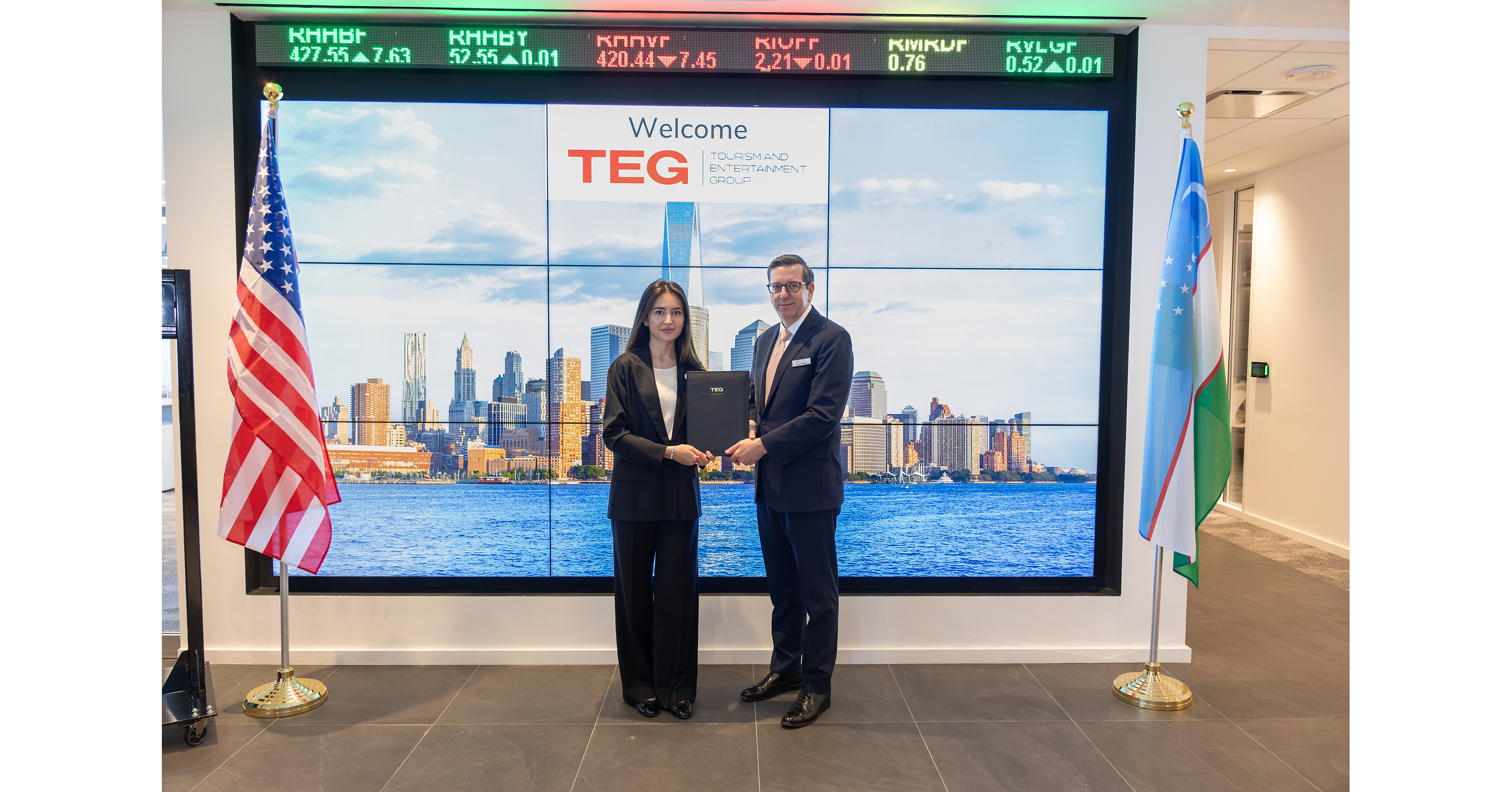
TEG completed its business combination with StageWise Strategies, becoming the operating business of TEG Overseas, Inc.; its common shares will trade on OTC markets, making it the first Uzbek company listed in the United States. TEG reported 2025 revenue of $42.9 million, up 22% from 2024, and net income of $14.4 million, up 215%. It plans to use access to U.S. capital markets to fund acquisitions and expand its hotel and MICE portfolio, citing Uzbekistan’s growing tourism market.
Analysis
TEG’s U.S. listing is more a financing and governance test than a read-through to global hotel earnings. OTC trading can constrain liquidity, price discovery and the company’s ability to raise usable equity; the announced growth pipeline is not yet equivalent to funded, accretive expansion. The key diligence gaps are post-combination cash proceeds, fully diluted share count and lockups, debt and related-party obligations, free-cash-flow conversion, and the terms of AKFA-affiliated construction or supply contracts. Reported earnings should be checked against audited filings and cash flow before being used to underwrite acquisitions.
For Hilton Worldwide Holdings (HLT) and Wyndham Hotels & Resorts (WH), the branded properties offer at most a small, indirect franchise/brand signal—not evidence of material incremental royalty revenue. Confirm each property’s brand agreement and fee economics before assigning any earnings impact. The more relevant second-order risk is supply: new hotels and event capacity could absorb demand growth and pressure occupancy or rates, while TEG’s owner-operator model concentrates local operating and country risk.
Horizon: Near term, OTC liquidity and deal-related supply may dominate fundamentals. Over 1–3 months, filings, trading liquidity and evidence of cash conversion are the catalysts. Over 6–18 months, returns depend on disciplined, funded acquisitions and whether tourism growth translates into room rates and event utilization—not arrivals alone. Reversal risks include weaker travel demand, currency or political shocks, financing constraints, or expansion that dilutes returns. Contrarian view: the regional tourism narrative may be real, but it does not establish attractive equity economics; equally, the deal is too small and opaque to justify a bearish read-through to HLT or WH.
AllMind Terminal
AI-powered research, real-time alerts, and portfolio analytics for institutional investors.
Request TrialMarket Sentiment
Overall Sentiment
moderately positive
Sentiment Score
0.45
Key Decisions for Investors
- Avoid using the announcement alone to trade HLT or WH; no material earnings read-through is established. Reassess only if filings show meaningful, recurring brand fees or a measurable change in brand exposure.
- Treat TEG as a diligence/watch item rather than a trade until OTC liquidity, fully diluted ownership, cash proceeds, debt, related-party arrangements and audited cash-flow conversion are verifiable.
- Track 1–3 month disclosures for acquisition funding and operating metrics—particularly occupancy, average daily rate, event utilization and free cash flow. A pipeline without financing or returns evidence is not a catalyst.
- Falsify the growth thesis if subsequent reporting shows tourism demand failing to convert into stronger property-level cash generation, or if expansion requires materially dilutive financing or related-party terms that impair shareholder returns.
More News
- Anthropic's third-quarter revenue is said to hit $16.8 billion ahead of IPO
- Why is Samsung Electronics stock plunging today?
- SK Hynix seeks U.S. chip equipment exports to China tied to new factory
- Dell stock plunges 11%, leading data center sell-off on concerns about 'enterprise AI timing'
- UBS considers leaving Switzerland over capital rule plans, WSJ reports
- US Stocks Tumble as Chip Rout Deepens