
EU Climate Chief Hoekstra Criticizes France, Germany Car Deal
Source: Bloomberg
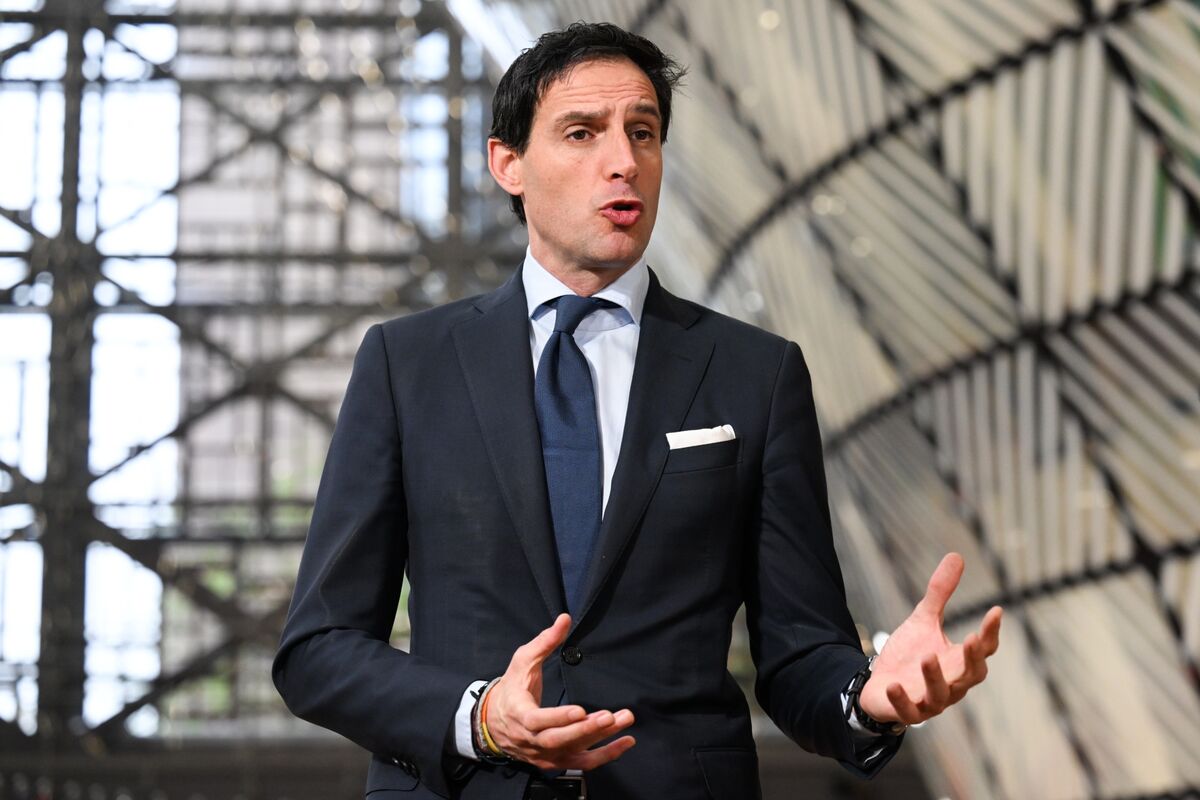
The EU climate chief criticized a Franco-German automotive deal, warning it risks doing more harm than good. German Chancellor Friedrich Merz had praised the agreement as consigning the effective EU combustion-engine ban to “history”; the excerpt provides no further details on the deal or its market impact.
Analysis
The investable issue is regulatory variance, not a near-term change in vehicle demand: political opposition to the combustion-engine phaseout can increase the option value of keeping hybrid and ICE programs alive, while making long-dated EV and battery investment less predictable. That may support legacy powertrain suppliers at the margin, but it also risks delaying OEM decisions and weakening returns across both ICE and EV supply chains. A policy retreat would not automatically restore ICE economics; emissions rules, product-cycle lead times, and consumer demand still constrain the payoff.
Near term, treat the criticism as a sentiment catalyst rather than evidence that the underlying rules have changed. Over 1–3 months, watch for formal EU proposals, coalition alignment, and OEM capital-allocation or product-plan revisions. Over 6–18 months, prolonged uncertainty could raise the cost of capital for battery projects and encourage manufacturers to preserve multiple powertrain options, potentially pressuring scale economies for EV suppliers. The contrarian risk is assuming political rhetoric equals repeal: if formal policy remains intact, any relief rally in ICE-exposed names may fade. Thesis-changing evidence would be an enacted regulatory revision, or conversely OEM guidance maintaining EV investment despite political noise.
AllMind Terminal
AI-powered research, real-time alerts, and portfolio analytics for institutional investors.
Request TrialMarket Sentiment
Overall Sentiment
mixed
Sentiment Score
-0.10
Key Decisions for Investors
- No broad directional auto trade on this signal alone. Keep exposure sized for policy volatility; the article provides no formal rule change or company-level earnings evidence.
- Watch for formal EU policy text and OEM guidance on EV, hybrid, and ICE capital expenditure before expressing a relative-value view. A confirmed relaxation could favor legacy powertrain suppliers relative to battery-focused suppliers; absent that confirmation, treat the spread as a watch item, not a recommendation.
- For the next 1–3 months, monitor EU institutional statements and auto-sector revisions to product plans. A formal reversal would strengthen the legacy-powertrain thesis; unchanged rules or reaffirmed EV spending would falsify the presumed beneficiaries and likely unwind any rhetoric-driven relief.
More News
- Fed mantiene tasas sin dar muchas pistas sobre diciembre
- China’s tech darlings are losing their shine. Here’s what’s behind the sell-off
- As Waymo expands overseas, it remains a niche cash-burning business
- Trump methane policy rollback may have minimal impact on crude prices, EPA says
- Kalshi, co-founders hit with criminal charges in US state of Utah
- Nvidia's $12.9 billion Hugging Face deal draws DOJ scrutiny