
Spoločnosť CATL predstavuje na veľtrhu IAA Transportation 2026 platformu TECTRANS II pre urýchlenie globálnej elektrifikácie úžitkových vozidiel
Source: PR Newswire
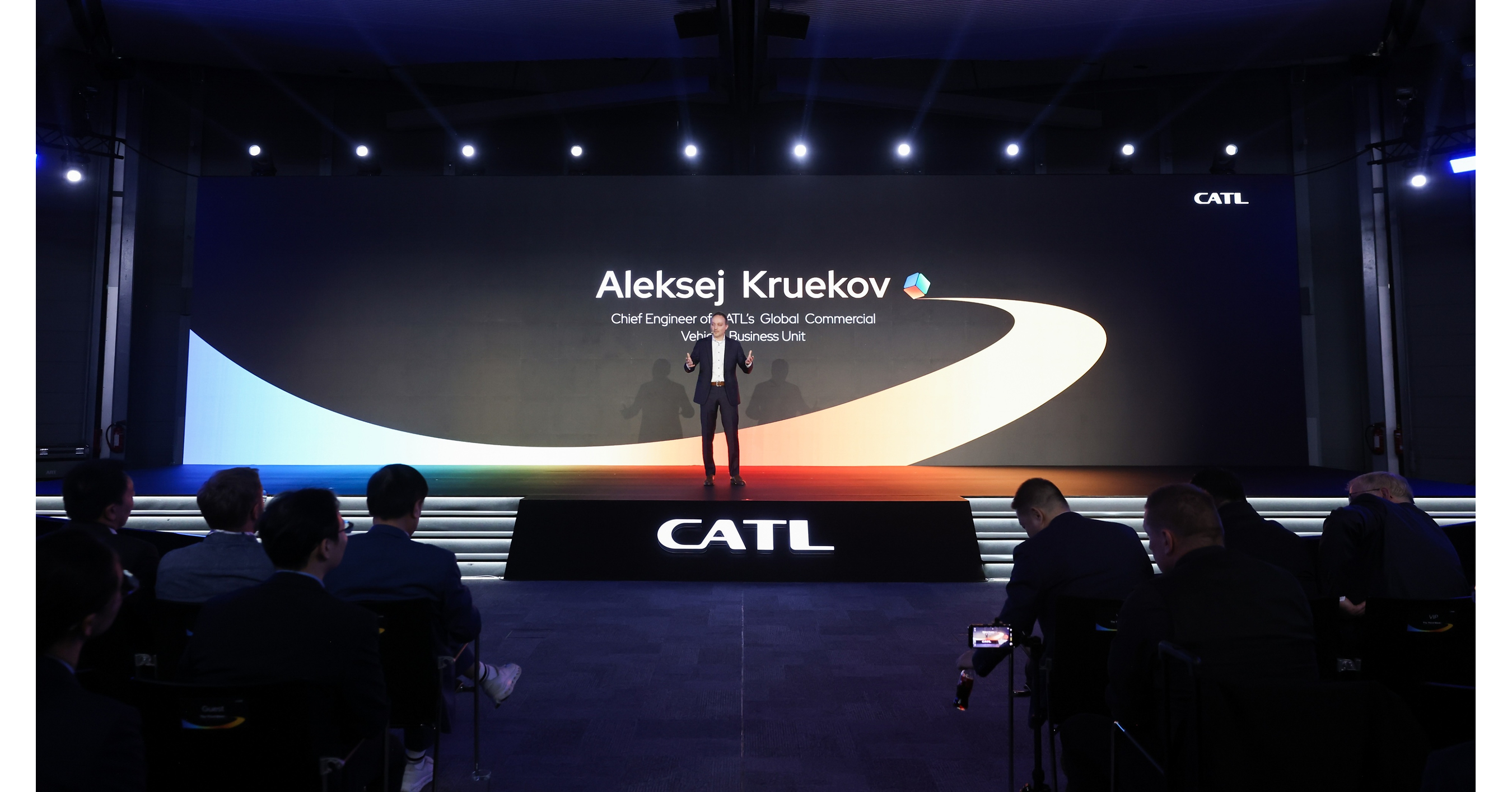
CATL unveiled its TECTRANS II modular commercial-vehicle battery platform, offering up to 1,000 km range, 80% megawatt charging in 25 minutes, 170 Wh/kg energy density, and 96% energy-transfer efficiency. CATL says the platform can cut OEM vehicle development cycles by 50% and R&D costs by 60-70%, while its heavy-truck battery targets a 12-year/1.5 million-km life with 70% capacity retention. The company also signed an MoU with DHL to develop European green freight corridors, jointly pursue purpose-built electric vehicles and launch pilot deployments.
Analysis
The economic significance is not the battery specification itself but whether standardized packs reduce the customer-specific engineering burden that has slowed European heavy-duty EV adoption. CATL gains leverage over smaller battery peers by potentially turning the pack interface into a de facto ecosystem standard; that would shift OEM bargaining power toward the cell supplier and pressure European entrants such as FREYR Battery (FREY) and ACC (private). The more exposed listed OEMs are Daimler Truck (DTG.DE), Volvo (VOLVB.SS) and Traton (8TRA.DE): faster electrification can support order growth, but commonized battery architecture may limit proprietary differentiation and gross-margin capture.
For DHL Group (DHL.DE; US ADR DHLGY), a pilot relationship has little near-term earnings relevance, but it creates a useful operating-data advantage in route utilization, charging uptime and residual values. Over the next 1-3 months, the investable catalyst is evidence of named vehicle platforms, fleet commitments, depot-capex plans or charging partners—not another technology announcement. Over 6-18 months, successful high-utilization corridor deployments would favor logistics operators with dense, predictable line-haul networks over fragmented carriers, while increasing electricity-demand and grid-connection constraints at logistics hubs.
Consensus may overread range and charge-time claims while underweighting infrastructure and utilization. Fleet TCO only improves if megawatt charging availability, grid interconnection lead times, vehicle payload economics and battery warranty performance align; a single component improvement cannot solve all four. The immediate listed-equity read-through is therefore modest: CATL's competitive position improves strategically, but DHL should not rerate until deployments show measurable cost-per-kilometer improvement versus diesel.
AllMind Terminal
AI-powered research, real-time alerts, and portfolio analytics for institutional investors.
Request TrialMarket Sentiment
Overall Sentiment
moderately positive
Sentiment Score
0.58
Ticker Sentiment
Key Decisions for Investors
- No directional DHL.DE/DHLGY trade on the announcement alone. Set an event-driven alert for a disclosed pilot fleet size, OEM model, depot locations and charging-capex allocation; initiate a position only if management identifies a credible path to lower line-haul cost per kilometer or higher asset utilization within 12-18 months.
- Maintain a 6-18 month relative-value bias long CATL (300750.SZ) versus a basket of higher-cost non-Chinese battery challengers, using a small position until independently verified commercial orders emerge. Thesis is falsified by European OEMs selecting alternative standardized pack suppliers or by material warranty/field-performance issues in pilots.
- For European truck OEM exposure, prefer Volvo (VOLVB.SS) over Daimler Truck (DTG.DE) only after customer orders demonstrate that electrified heavy-duty volumes are incremental rather than cannibalizing profitable diesel replacements. Monitor electric-truck order intake, battery pass-through pricing and divisional margin guidance at the next two reporting cycles.
- Watch E.ON (EOAN.DE), RWE (RWE.DE) and Schneider Electric (SU.PA) for announced megawatt-charging depot contracts; these are potentially cleaner infrastructure beneficiaries than fleet operators. Do not enter before contract values and grid-connection timelines are disclosed, as interconnection delays are the principal thesis risk.
More News
- China's AI leaders keep quiet despite U.S. 'publicity' on tech risks
- Exclusive-Malaysia talks to rival airlines as it monitors AirAsia’s financial health, sources say
- Karin Rådström is steering Daimler Truck in a new direction as the world’s biggest truckmaker faces a growing challenge from China
- MBS and Saudi Arabia Face Crisis With Key Oil Pipeline Shut for Weeks
- AWS says it can't restore service to Bahrain, UAE facilities 6 months after Iran strikes
- Oil’s next test: Saudi Arabia races to restore a key safety valve for prices
From AllMind Research
- Anthropic IPO Preview: Valuation, Timing, and What to Watch
- Shein After the IPO: Venue, Valuation, and What Must Be Proved
- What AI Research Tools Should a Small Hedge Fund Buy First?
- Research Workflows, Report Format Selection, and Interactive Synthesis
- Can ChatGPT Analyze a 10-K? A Verification Workflow