
HUAWEI WATCH D3 debiutuje podczas ISH-ECS 2026, wprowadzając zaawansowane monitorowanie ciśnienia tętniczego na co dzień
Source: PR Newswire
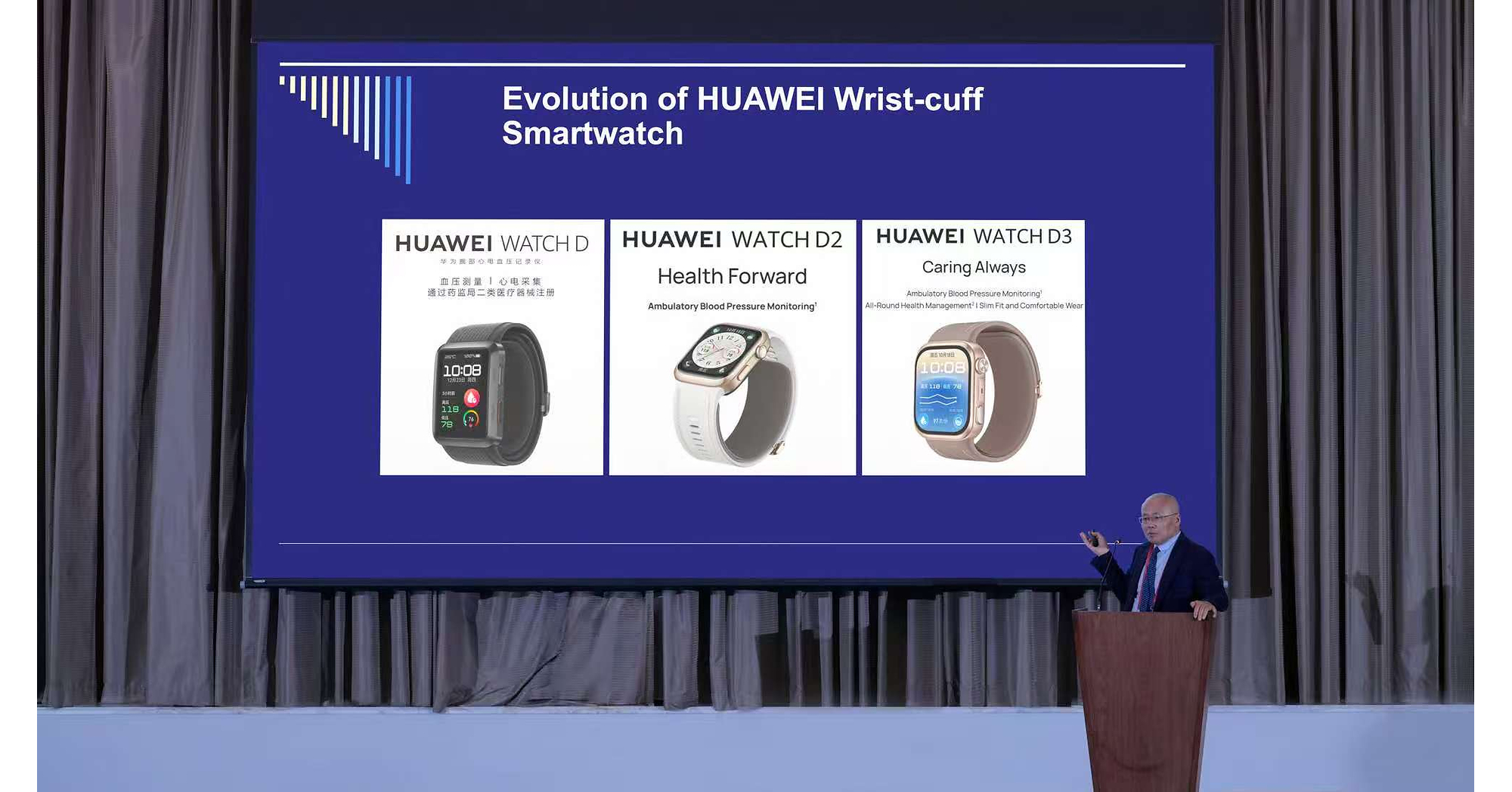
Huawei presented its HUAWEI WATCH D3 at ISH-ECS 2026, highlighting wrist-based blood-pressure monitoring with an inflatable cuff and a new pre- and post-exercise measurement mode. The company says the mode is the first of its kind to receive EU CE certification under the Medical Devices Regulation and is registered as a Class II medical device in China. Huawei and the International Society of Hypertension also established a research innovation fund; a study aims to reduce cuff-based ambulatory measurements from 27 to 7.
Analysis
The investable question is whether cuff-based wrist monitoring can move from a niche device to a clinically trusted data channel—not whether Huawei can sell one more watch. If independent studies show acceptable accuracy, adherence and actionable readings, a lower-friction monitoring loop could increase hypertension screening and follow-up, benefiting device makers and digital-care providers while pressuring some traditional ambulatory-monitoring workflows. But the article’s guideline references concern validated device categories, not necessarily product-specific endorsement; CE status for a feature is not proof of outcomes, reimbursement, or broad clinician adoption. The proposed PPG-plus-cuff approach remains a research pathway until peer-reviewed results establish performance across populations and real-world conditions.
Near term, this is weakly positive for the wearable-health narrative but not a fundamental catalyst for public equities: Huawei has no supplied ticker identity, and the release gives no pricing, shipment, or revenue evidence. Over 1–3 months, watch for independent validation, regulatory-label detail, clinical partnerships progressing to published protocols/results, and market access outside Huawei’s strongest channels. Over 6–18 months, adoption could expand the addressable market for hypertension management; alternatively, inaccurate readings or false reassurance could trigger clinical pushback and reputational/regulatory risk. Omron, Withings, Apple and Samsung are relevant competitive reference points, but the article does not establish that their products share this measurement method or are directly displaced. The contrarian point: guideline recognition is being presented as a category tailwind, while the commercial bottleneck is product-level trust, workflow integration and demonstrated willingness to pay. No direct trade is warranted on this release alone.
AllMind Terminal
AI-powered research, real-time alerts, and portfolio analytics for institutional investors.
Request TrialMarket Sentiment
Overall Sentiment
mildly positive
Sentiment Score
0.30
Key Decisions for Investors
- No immediate position: the announcement is promotional and lacks independently verified sales, pricing, or financial contribution data; Huawei also has no supplied ticker identity.
- Set a 1–3 month diligence alert for peer-reviewed, product-specific accuracy and adherence results, including performance across skin tone, wrist size, activity and relevant patient populations; do not treat category-level guideline language as product validation.
- Track Omron, Withings, Apple and Samsung as competitive benchmarks, while verifying whether any competing products use comparable cuff-based measurement before underwriting substitution or share loss.
- Revisit a broader healthcare-wearables thesis only if clinical validation is followed by distribution, clinician workflow integration and evidence of reimbursement or consumer willingness to pay; falsification would include poor real-world accuracy, safety concerns, or stalled clinical adoption.
More News
- Anthropic's IPO could be 'speculative fiction' or a 'generational moment' — investors are split
- Anthropic IPO Seeks Investors, With Risks of Catastrophe, Rogue AI
- Analysis-Hold or sell? High Treasury yields spur US banks to rethink bond portfolios
- VCs will make billions on Anthropic’s IPO, but Amazon is set to make much (much) more
- Indian investors rush to Nvidia, SpaceX, Apple as local trading apps roll out access to U.S. stocks
- SK Hynix Q3 profit jumps more than 7-fold, beats forecasts