
Xinhua Silk Road: 2026 North Bund Forum unveils 20 shipping-related achievements
Source: PR Newswire
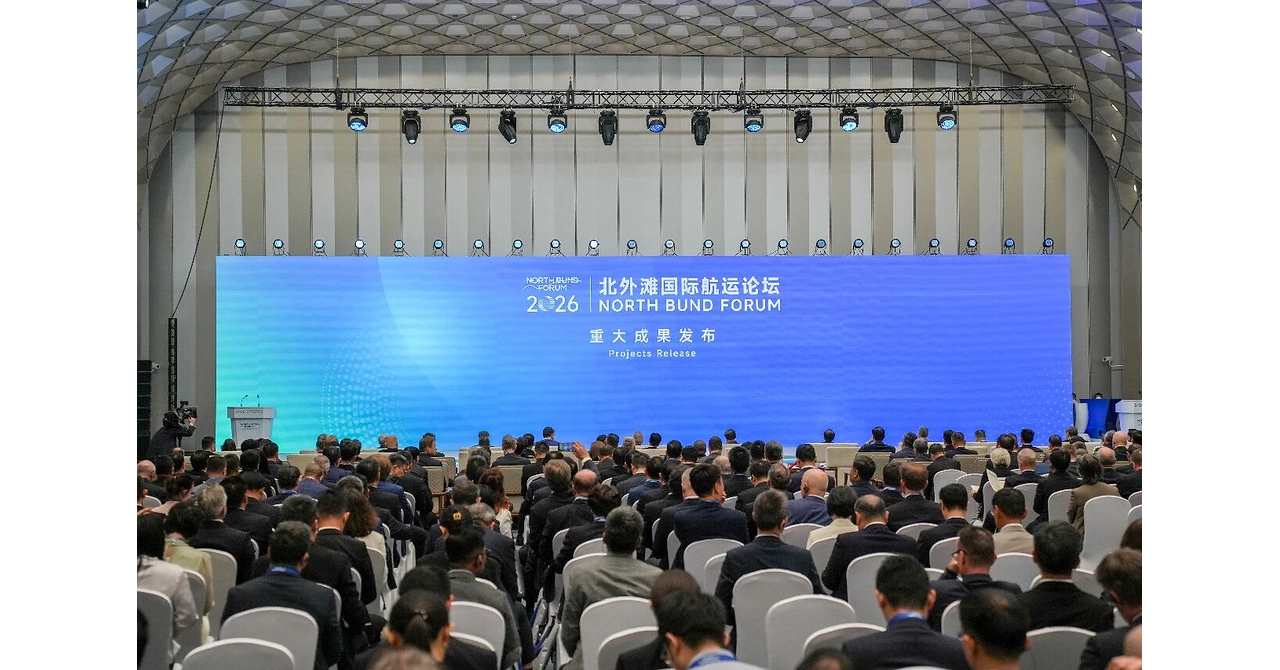
The 2026 North Bund Forum unveiled 20 shipping-related initiatives, including eight government-led efforts and 12 focused on green transition and high-end shipping services. China's Ministry of Transport and the IMO signed an MoU covering maritime capacity-building, the China-France green shipping corridor, and talent mobility. Shanghai ranked second globally in the 2026 shipping-center index and handled more than 55.06 million TEUs in 2025, remaining the world's busiest container port for a 16th consecutive year.
Analysis
This is a standards-and-coordination signal, not yet a shipping earnings catalyst. The investable mechanism is whether green-fuel certification and corridor cooperation create interoperable rules that let cargo owners pay for verified lower-emissions transport. If so, value can accrue to certification and classification providers, fuel-handling and propulsion-equipment suppliers, and ports able to provide compliant bunkering; shipowners may initially bear retrofit, fuel-premium, and reporting costs before contracts allow pass-through. A fragmented certification regime would instead add compliance expense without a durable green-freight premium.
The Shanghai ranking is a longer-horizon competitive signal for maritime services and policy influence, but an index position and port throughput do not establish that shipping finance, insurance, or high-value services are migrating from London or other hubs. The forum’s announcements are not evidence of binding IMO rules, funded projects, firm fuel offtake, or vessel orders. Treat the near-term market impact as limited.
Over 1–3 months, verify the corridor’s operating scope, participating carriers, certification methodology, fuel volumes, and any procurement or retrofit commitments. Over 6–18 months, the thesis strengthens only if rules are recognized across jurisdictions and reported green-fuel use translates into contracted revenue or equipment orders. The contrarian risk is that investors overread policy signaling as immediate capex; the upside risk is that common standards lower adoption friction faster than expected. Falsifiers include no cross-border recognition, no disclosed volumes or contracts, or evidence that compliant-fuel premiums cannot be passed through.
AllMind Terminal
AI-powered research, real-time alerts, and portfolio analytics for institutional investors.
Request TrialMarket Sentiment
Overall Sentiment
mildly positive
Sentiment Score
0.25
Key Decisions for Investors
- No immediate directional position on this announcement alone: it lacks named commercial commitments and measurable earnings impact.
- Set an alert for published certification criteria, corridor carrier participation, verified fuel volumes, and orders from shipowners. If these emerge, assess marine equipment and classification/certification providers for revenue exposure rather than buying shipping broadly.
- Conditional relative-value idea: prefer diversified marine equipment suppliers with demonstrable fuel-flexibility or retrofit order exposure over undifferentiated shipowners only after orders are disclosed; abandon the thesis if adoption remains pilot-scale or customers cannot pass through fuel and retrofit costs.
- Track London and other maritime-service hubs for actual relocation of financing, insurance, arbitration, or headquarters activity before treating Shanghai’s index gain as a competitor earnings threat.
More News
- Asia stocks fall as AI rout batters S.Korea; Japan spooked by strong CPI
- SK Hynix shares slide after chipmaker scraps Solidigm IPO plans
- Why is SK Hynix stock sliding today?
- Apple’s iPhone Duo Hits Stores in Face of Short Supply and High Demand
- Gold Holds Near Three-Month Low as AI Jitters Fuel Volatility
- OpenAI nears up to $30 billion funding round at $1.25 trillion valuation led by UAE investors