
Vetology Rebuilds All AI Classifiers on New Architecture in Two Months
Source: PR Newswire
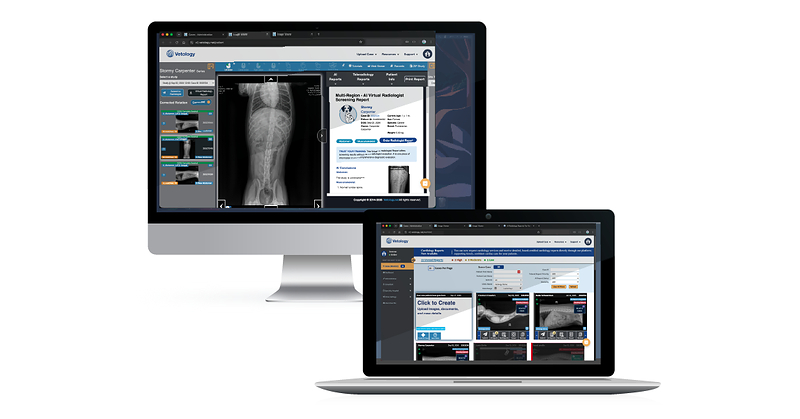
Vetology rebuilt and re-released all 94 veterinary radiology AI classifiers on a new architecture between June and August, claiming improved ability to interpret information across individual and linked diagnostic images. The company said each classifier was released only after meeting a higher internal performance bar and that live condition-level performance data is published, following industry calls for transparency and postimplementation monitoring. The update strengthens Vetology's AI-screening platform, while its reports remain positioned as decision support rather than a replacement for veterinarian diagnosis.
Analysis
This is not yet an investable public-equity catalyst: Vetology is private, and the claimed performance improvement lacks independent prospective validation, utilization data, pricing, retention, or evidence that practices alter clinical decisions. The relevant commercial test is whether improved triage increases imaging-study attachment, paid specialist-consult conversion, and renewal rates without creating excess false-positive follow-up; absent those metrics, the announcement should not be extrapolated into revenue acceleration.
If veterinary imaging AI becomes reliably embedded in general-practice workflow, the 6-18 month second-order effect is potentially higher diagnostic throughput per veterinarian rather than labor replacement. That would modestly favor scaled clinic operators such as VCA owner Mars (private) and Veterinary Emergency Group (private), while creating a longer-dated demand tailwind for diagnostics and therapeutics vendors IDEXX (IDXX) and Zoetis (ZTS) through earlier detection and treatment initiation. But the effect on IDXX/ZTS is likely immaterial near term and could be offset if AI commoditizes interpretation, shifting economics toward practice-management and imaging-platform vendors rather than diagnostic suppliers.
The contrarian point is that transparency rhetoric can raise, rather than lower, regulatory and professional-liability scrutiny. A visible independent study showing weak real-world sensitivity, subgroup bias, or elevated unnecessary referrals could slow adoption across the category within 1-3 months, particularly if veterinarians remain accountable for final decisions. The key falsifier for a constructive ecosystem view is evidence that AI-assisted imaging lowers turnaround time and raises paid imaging utilization while maintaining or improving follow-up diagnostic yield.
AllMind Terminal
AI-powered research, real-time alerts, and portfolio analytics for institutional investors.
Request TrialMarket Sentiment
Overall Sentiment
moderately positive
Sentiment Score
0.42
Key Decisions for Investors
- No standalone trade: do not position in IDXX or ZTS on this release; neither has disclosed economic exposure sufficient to make veterinary radiology AI a forecast driver.
- Create a 6-12 month watch item on IDXX: upgrade the thesis only if quarterly commentary or channel checks show sustained growth in imaging-linked diagnostic utilization, clinic workflow software adoption, or materially improved same-practice testing volumes attributable to earlier case identification.
- Monitor ZTS for a delayed treatment-volume read-through, not an immediate catalyst. A constructive signal would be increased chronic-disease detection and prescription starts; falsify if veterinary visit volumes weaken or management attributes demand softness to discretionary-care pressure.
- For any future listed veterinary-AI issuer, require independently published prospective sensitivity/specificity, false-positive rates, study-volume growth, specialist-consult conversion, net retention, and liability coverage before underwriting a premium software multiple.
More News
- Google's Gemini becomes latest AI model to break out and hack computer systems
- Stocks face a key hurdle in next week’s U.S.-China summit. Here’s what’s at stake
- AI almost led the US military to start a war with China, report says
- Warren Buffett stepping down as chairman of Berkshire Hathaway: 'Father Time always wins'
- Google’s Gemini AI hacks 3 companies in security test, then stops
- Time for Cyclical Sector ETFs?
From AllMind Research
- Anthropic IPO Preview: Valuation, Timing, and What to Watch
- Shein After the IPO: Venue, Valuation, and What Must Be Proved
- What AI Research Tools Should a Small Hedge Fund Buy First?
- What Is an AI Research Agent?
- Bitcoin's 52% Crash Proves It's a Tech Stock: Here's What That Means for Portfolio Construction