
Nearly Half of Organizations Say Their SOCs Can't Keep Pace with Modern Threats
Source: PR Newswire
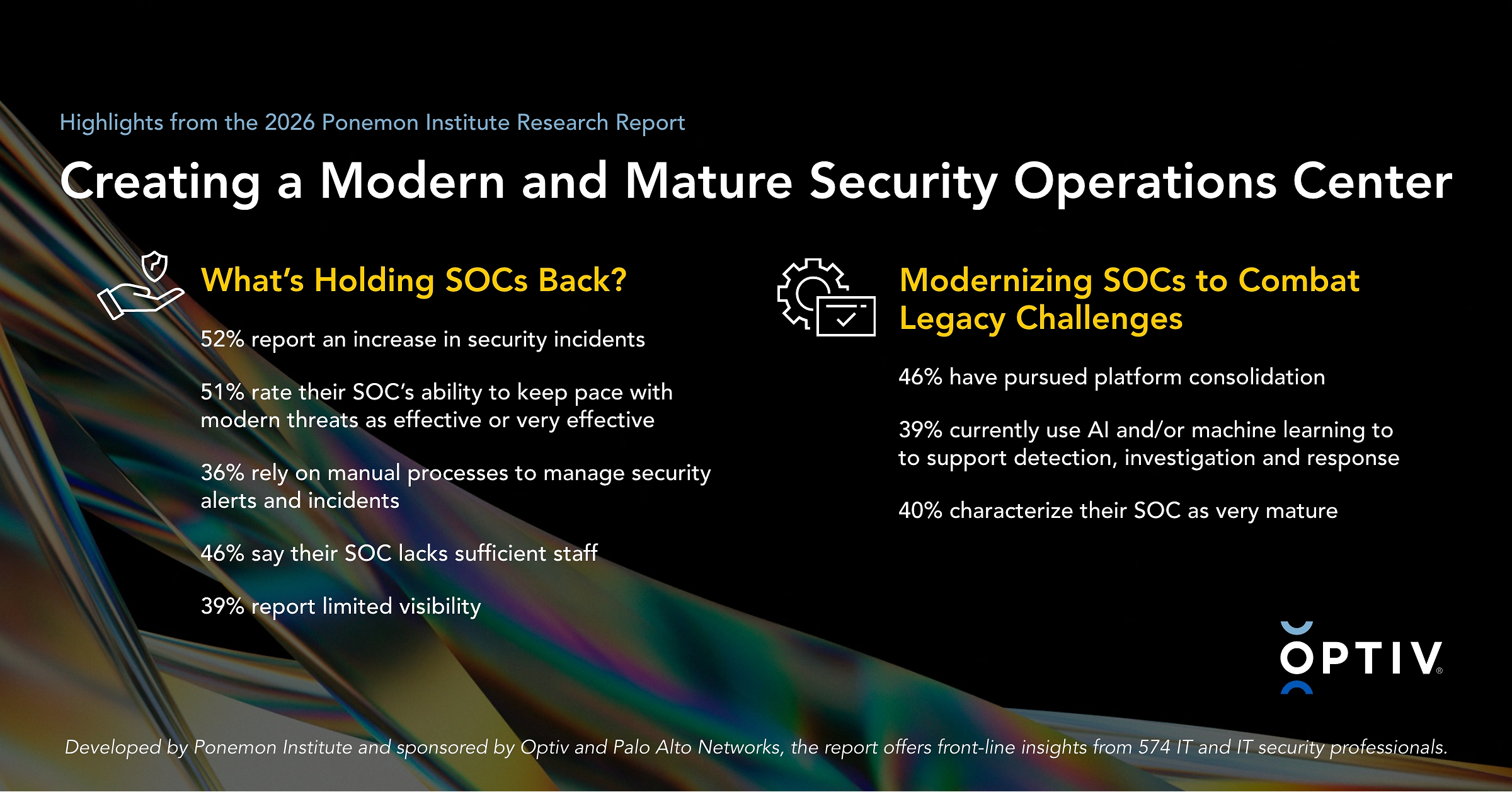
Optiv and Palo Alto Networks' survey of 574 IT and security professionals found only 51% consider their SOC effective at keeping pace with modern cyber threats, while teams handle an average 2,566 alerts and incidents daily. Alert volumes have increased for 52% of respondents, yet 36% of alerts are still investigated manually; only 39% currently use AI/ML in SOC operations and just 38% of those users have fully integrated it into workflows. The findings highlight demand for SOC automation, AI-enabled detection and cybersecurity platform consolidation, but also expose adoption barriers including limited explainability, poor data quality and insufficient staffing.
Analysis
This is directionally supportive of PANW's platformization narrative, but the survey is vendor-sponsored and measures intent rather than booked spend; it is not independently sufficient to change estimates. The near-term monetization bottleneck is implementation: fragmented telemetry, poor data hygiene and workflow redesign typically push large-SOC consolidation projects into multi-quarter services engagements before software consumption meaningfully ramps. That favors PANW's installed-base cross-sell and Optiv's deployment channel, while making a sharp one-quarter acceleration in Cortex/XSIAM revenue less likely.
Competitive read-through is mixed. Consolidation is unfavorable for point products with narrow control planes—particularly standalone SIEM/SOAR and endpoint vendors lacking broad data integration—but CRWD can defend through Falcon's endpoint telemetry and managed services, while MSFT can bundle security into existing enterprise agreements. Identity visibility gaps create a longer-duration tailwind for PANW, CRWD and OKTA, but identity is also where buyer caution is highest after recent breach cycles; procurement will emphasize integration and incident-response proof points over feature claims.
Over the next 1-3 months, the relevant catalyst is evidence that PANW converts platform interest into rising remaining performance obligations, large-deal count and Cortex annual recurring revenue rather than merely stable firewall demand. Over 6-18 months, successful agentic-SOC adoption could expand security operating budgets by replacing labor and third-party tools, supporting multiple durability for platform leaders. The thesis is falsified if PANW's next two quarters show weak Cortex growth or declining net expansion despite platform wins, indicating consolidation is being used primarily to negotiate lower vendor spend rather than add automation capacity.
Consensus may be too quick to equate AI security demand with immediate incremental software spend. Buyers facing staffing shortages often first outsource monitoring and remediation, which can route economics to MSSPs and systems integrators before technology vendors; Optiv is private, but Accenture (ACN), IBM (IBM) and Secureworks (SCWX) are relevant public proxies. The stronger trade signal would be disclosed reductions in customer tool counts accompanied by higher PANW platform modules per customer—not survey adoption statistics.
AllMind Terminal
AI-powered research, real-time alerts, and portfolio analytics for institutional investors.
Request TrialMarket Sentiment
Overall Sentiment
neutral
Sentiment Score
0.05
Ticker Sentiment
Key Decisions for Investors
- Maintain, rather than add aggressively to, PANW ahead of the next earnings print; add only if management demonstrates accelerating Cortex/XSIAM ARR and large-platform-deal conversion. Risk/reward improves if software/platform growth exceeds expectations without a compensating rise in implementation costs or sales-cycle duration.
- Watch a 3-6 month relative-value pair: long PANW versus short a basket of narrow security tools, with CRWD excluded unless its module adoption decelerates. Initiate only after evidence of PANW share gains in SIEM/SOAR displacement; the principal risk is best-of-breed buyers retaining endpoint and identity vendors despite platform consolidation.
- Monitor PANW versus MSFT security commentary during upcoming enterprise software earnings. If Microsoft reports security-seat or E5-led acceleration while PANW's platform metrics remain flat, avoid the consolidation thesis because bundling, not independent platform demand, is likely capturing the spend.
- Set an alert for PANW guidance: two consecutive quarters of slower Cortex growth, weaker billings/RPO, or commentary that customers are reducing total security budgets would invalidate the expected automation-led expansion and warrant reducing exposure.
More News
- Meta’s Muse AI is exploding in popularity—and already drawing heated backlash from another tech giant
- These 2 stocks are 'a cornerstone part of our portfolio' as AI security risks grow
- Fortinet Stock Jumps on Security Platform Demand: What's Ahead?
- Palo Alto Networks launches always-on AI security testing built on Claude Mythos and GPT-5.6-Cyber
- Palo Alto Networks unveils AI-powered cybersecurity service using Claude, GPT models
- 3 Analysts, 3 Trades to Make Today