
AGCO and Agility Robotics Advance Smart Manufacturing with Humanoid Robot Pilot in Hesston, Kansas, Facility
Source: prnewswire.com
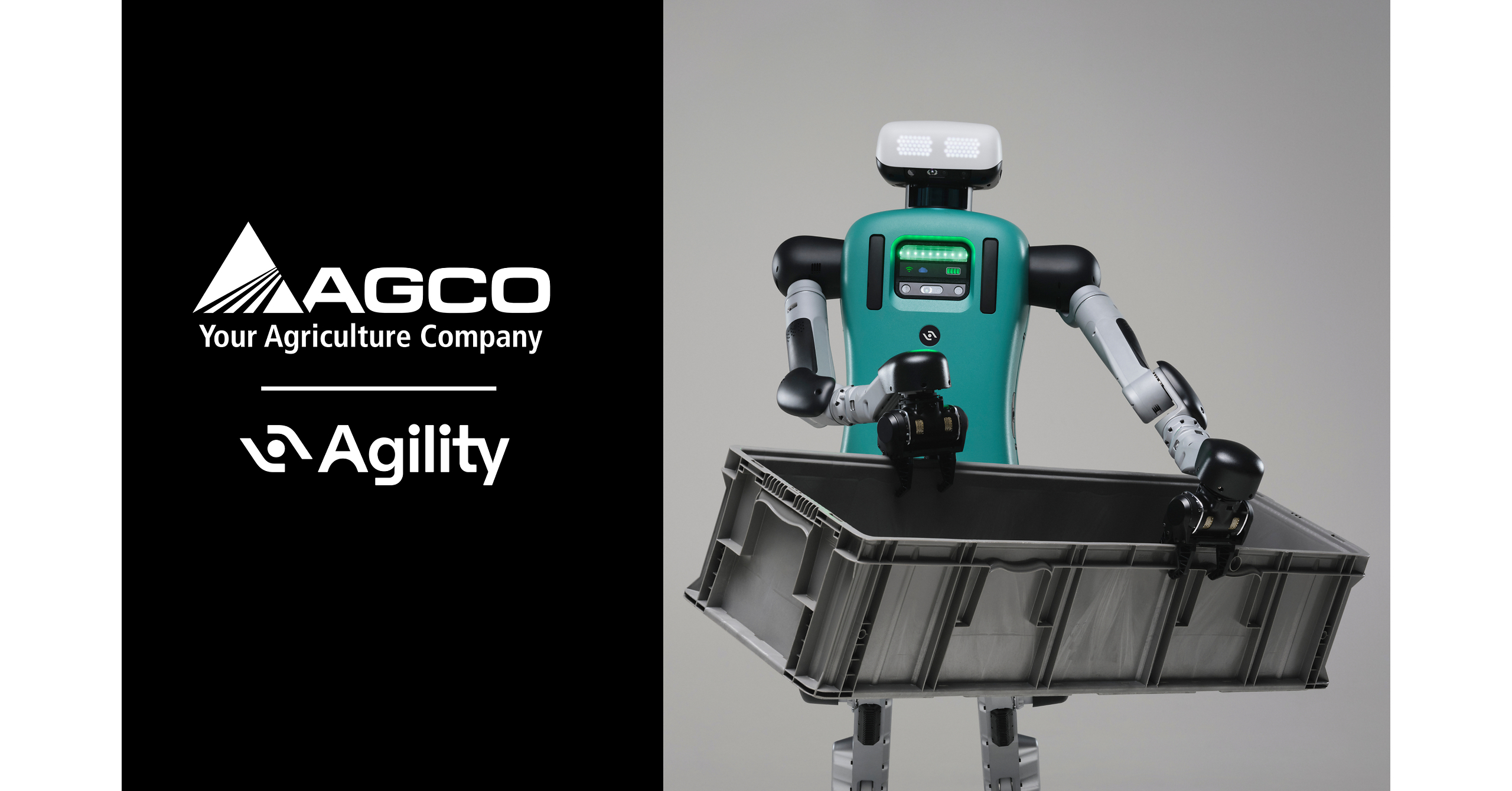
AGCO and Agility Robotics signed a commercial agreement for a U.S. pilot of Digit humanoid robots, expected to begin in 2027 at AGCO’s Hesston, Kansas, facility. The robots will initially handle parts sorting and stacking and tote placement, targeting repetitive or physically demanding tasks to support safety and manufacturing efficiency; no financial terms or quantified productivity targets were disclosed.
Analysis
The investable signal is strategic optionality, not near-term earnings. The initial work—parts handling and tote placement at one facility, with a pilot not expected until 2027—does not establish a material AGCO cost or productivity benefit. The bigger question is whether a general-purpose humanoid can outperform task-specific automation after integration, maintenance, safety, and fleet-management costs. If it can, AGCO could gain flexibility where fixed automation is uneconomic; if not, the program is a contained experiment rather than a margin catalyst.
For AGCO, the announcement may support a modest innovation narrative, but any durable multiple or margin case needs quantified deployment, uptime, labor hours displaced or redeployed, and return on invested capital. Agility Robotics is a private company, so there is no direct public-equity expression. GXO, Toyota, and Schaeffler are named as other deployments, but this announcement alone does not demonstrate commercial success or a financial benefit at those companies. Broader read-through to industrial automation vendors is possible, but humanoids could complement rather than displace conventional robotics and material-handling systems.
Near term, expect limited fundamental impact; over 1–3 months, watch for evidence of additional customer deployments and measurable operating results. Over 6–18 months, repeatability across sites—not the pilot announcement—will determine whether this changes factory labor economics. The contrarian risk is that investors extrapolate a compelling AI/robotics narrative from a low-scope trial before costs and reliability are proven. The thesis weakens if the pilot is delayed, does not expand, or AGCO reports no measurable productivity or safety improvement.
AllMind Terminal
AI-powered research, real-time alerts, and portfolio analytics for institutional investors.
Request TrialMarket Sentiment
Overall Sentiment
mildly positive
Sentiment Score
0.25
Ticker Sentiment
Key Decisions for Investors
- No event-driven AGCO trade: the pilot is too early and narrow to support a defensible earnings estimate or price target.
- Treat AGCO as a watch item; revisit only when the company discloses deployment scale, robot uptime, integration and operating costs, and quantified labor or throughput outcomes.
- Monitor announcements from GXO, Toyota, and Schaeffler for independently verifiable operating metrics, not just additional pilot or partnership language; do not infer financial impact from participation alone.
- Falsification/watch trigger: a material pilot delay, failure to expand beyond the initial facility, safety or reliability issues, or evidence that conventional automation delivers better economics would undercut the humanoid-automation thesis.
More News
- Volkswagen bet on Xpeng to save its China business. It’s not going to plan
- Australian data center operator NextDC's shares plunge 40% after it slashes earnings forecast
- Elon Musk says Tesla and SpaceX are weighing a $3.5 trillion merger—without him in the room
- Neoclouds Lose Silver Lining as Elice, CoreWeave Dive: Evening Briefing Americas
- Anthropic May Spend $750 Billion on Computing Costs, WSJ Reports
- This Janus Henderson fund manager owns CoreWeave debt — here's why he's sticking with it