
N7 Foundation Convenes Senior Officials from Abraham Accords Countries to Discuss Regional Cooperation and the Future of the Middle East and Beyond
Source: PR Newswire
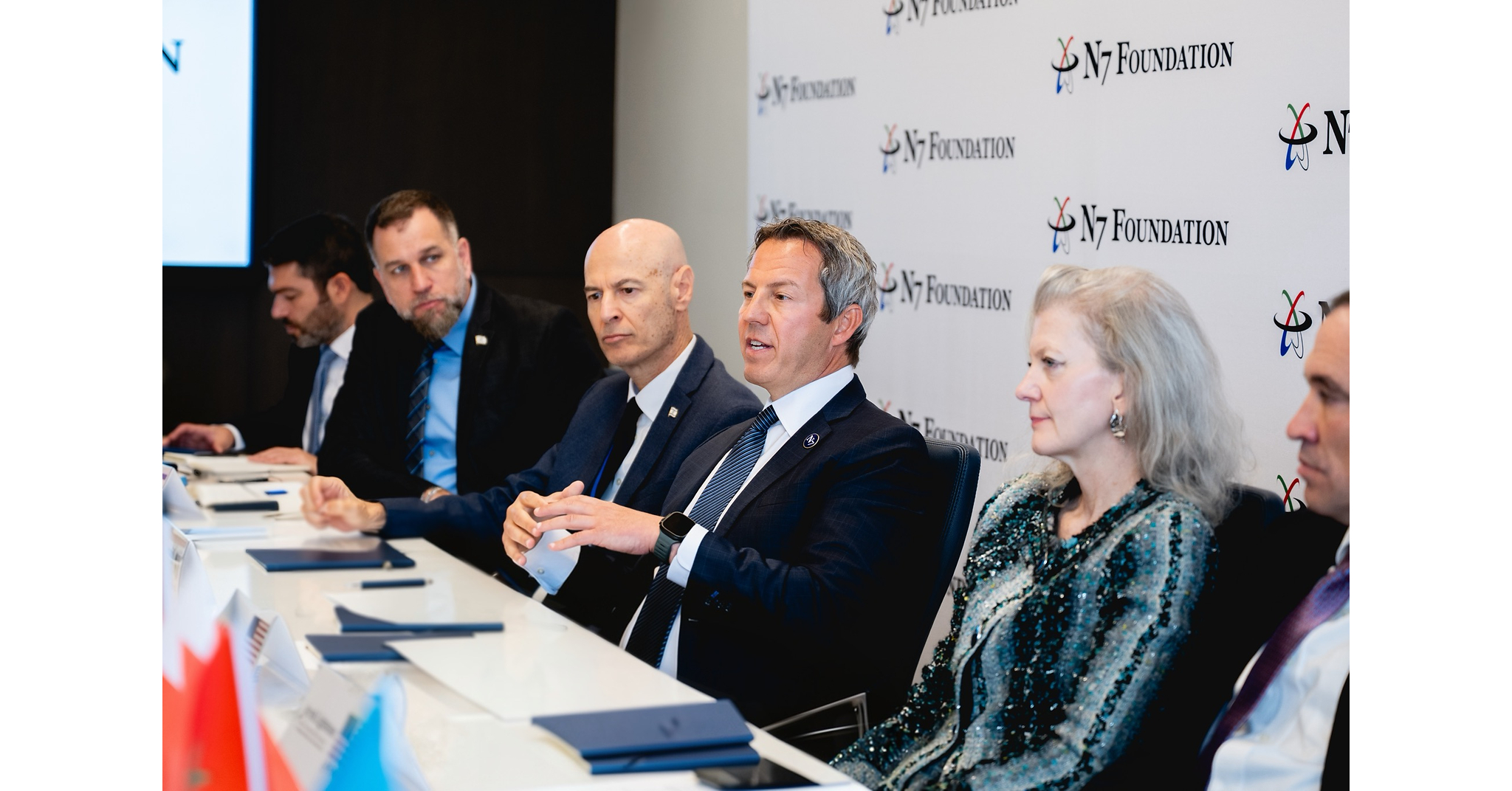
The N7 Foundation convened the first meeting of Abraham Accords countries since January 2023, with U.S., Bahraini, Israeli, Kazakh, Moroccan and UAE officials reaffirming regional cooperation goals. Kazakhstan's forthcoming accession to the Accords was welcomed, while participants emphasized durable multilateral mechanisms to advance regional stability, security, integration and economic prosperity. The meeting signals constructive diplomatic momentum but included no announced commercial agreements, policy commitments, or quantified economic measures.
Analysis
This is not yet an investable policy action: no funding commitments, trade agreements, security guarantees, or implementation timetable are disclosed. The near-term market effect should therefore be negligible; treating this as a risk-on signal for Israeli or Gulf assets would be premature, particularly given that participation in a private-policy forum does not establish durable diplomatic alignment.
The relevant 1-3 month watchpoint is whether the discussion produces state-backed project pipelines in logistics, energy interconnection, water, fintech, or defense procurement. Kazakhstan’s involvement could eventually create an incremental Central Asia-to-Gulf/Israeli trade and technology channel, but its economic significance depends on customs, financing, and transport agreements rather than diplomatic affiliation alone. Potential second-order beneficiaries of actual corridor investment would include Dubai logistics exposure (DP World, private), regional ports, and cybersecurity/defense vendors serving cross-border infrastructure.
Over 6-18 months, the larger market implication is a lower regional-risk premium only if cooperation persists through adverse political events and is accompanied by commercial volume. That would support selective normalization of valuation discounts in Israeli equities and Gulf infrastructure assets, while reducing upside convexity in energy-security hedges. The contrarian view is that markets may correctly assign little value to this announcement: prior regional normalization initiatives have generated headlines faster than bankable cross-border capex.
Falsification for the constructive read is straightforward: absence of government-endorsed memoranda with named projects and financing within a quarter, renewed diplomatic downgrades, or escalation that disrupts Red Sea/Gulf shipping. Conversely, announced transport, digital-trade, or energy projects with sovereign backing would justify reassessing regional logistics and infrastructure exposure.
AllMind Terminal
AI-powered research, real-time alerts, and portfolio analytics for institutional investors.
Request TrialMarket Sentiment
Overall Sentiment
mildly positive
Sentiment Score
0.30
Key Decisions for Investors
- No immediate directional trade. Keep this as an event-driven watch item rather than buying Israeli or Gulf risk on a non-binding policy convening.
- Monitor the next 90 days for sovereign-backed projects, financing vehicles, or customs/transit agreements; only then evaluate long regional proxies such as EIS (Israel ETF) or UAE-focused infrastructure/logistics exposure where liquidity permits.
- For portfolios carrying Red Sea/Gulf disruption hedges, do not reduce protection solely on this development; require confirmation through lower shipping-risk indicators and sustained diplomatic engagement.
- Set an alert for disclosed cross-border energy, port, data-center, water, or defense contracts. Named counterparties, capex size, financing source, and execution timeline are the missing data required to form a tradable thesis.
More News
- Saudi, Turkish, Pakistani chiefs plan urgent talks amid Yemen fighting
- US 30-Year Yield Hits Highest Since 2004
- Oil falls amid optimism over potential diplomatic solution to the Iran conflict
- Trump Versus Xi: How Their High-Stakes Summits Compare
- SEBI Allows Portfolio Managers to Invest Overseas, Short Equity Options
- Trump, Xi Address AI, Taiwan During State Visit
From AllMind Research
- Anthropic IPO Preview: Valuation, Timing, and What to Watch
- Shein After the IPO: Venue, Valuation, and What Must Be Proved
- What AI Research Tools Should a Small Hedge Fund Buy First?
- What Is an AI Research Agent?
- Bitcoin's 52% Crash Proves It's a Tech Stock: Here's What That Means for Portfolio Construction